

November 15, 2026, 7:55 am | Read time: 3 minutes
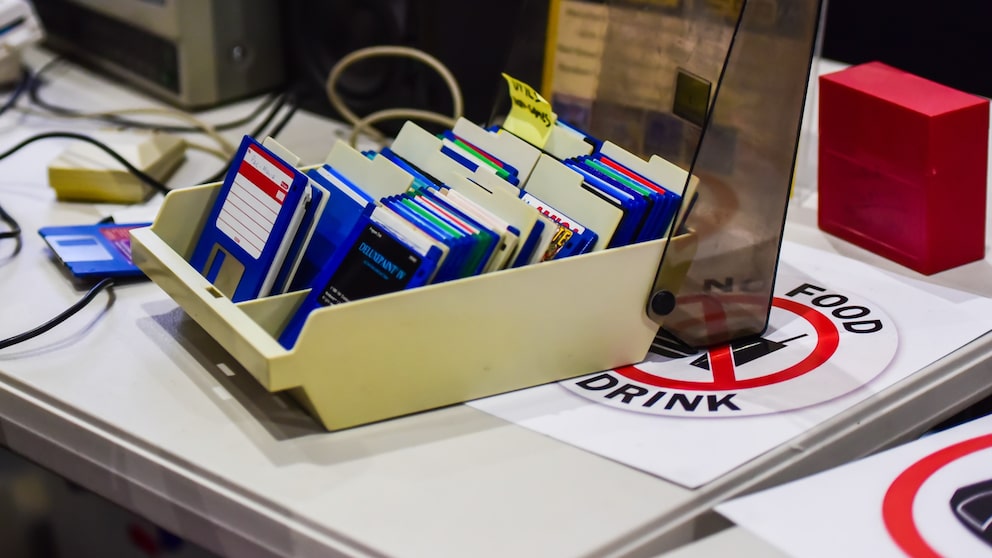
In everyday private life, the floppy disk is long a relic. In American air traffic control, however, it remains part of the technical infrastructure.
The U.S. Federal Aviation Administration (FAA) plans to modernize several decades-old systems that still rely on floppy disks. These data carriers are used in systems that provide air traffic controllers with important weather information. Modern computers have long since lacked the necessary drives, but the old technology has persisted in air traffic control.
This is set to change. A new display system will replace four predecessor systems from the 1980s. By the end of 2028, the technology is expected to be installed at a total of 435 locations. The first installations will be at airports in Atlantic City, Nashville, and Rochester, as well as data centers in Atlanta and Salt Lake City. In the future, the necessary information will be consolidated on a single display.
New technology aims to replace more than just the floppy disk
Through the new system, air traffic controllers will receive alerts about technical malfunctions, restricted airspaces, and weather reports from pilots. Additionally, according to the FAA, the information can be immediately shared with other facilities. The transition is intended not only to make the floppy disk obsolete but also to integrate several previously separate systems.
At the same time, maintaining the old technology is likely to become increasingly difficult. Floppy disks have not been produced in large quantities for years. Available supplies are mostly leftover stock and used items. For operators of decades-old systems, the effort to procure functioning hardware and suitable data carriers is increasing.
Germany and Japan also held on to floppy disks for a long time
Other examples also show that technically outdated storage media can survive for a long time in critical infrastructure. In San Francisco, for instance, public transportation is still controlled using floppy disks. In 2024, the German Bundeswehr sought replacements for 8-inch floppy disk drives on Brandenburg-class frigates. A new storage solution was to replace the old drives while the rest of the onboard measurement technology continued to be used.
Also of interest: Airlines change online check-in! New requirement coming
The situation in Japan was even more unusual. There, floppy disks were required for certain official applications and reports until just a few years ago. Business representatives criticized this practice as early as 2021 and called for digital submission options. By June 2024, the Japanese government finally eliminated 1,034 regulations that required floppy disks and similar storage media. Now, U.S. air traffic control is also beginning to phase out one of the longest-lasting relics of computer technology from its operations.