

November 19, 2026, 11:24 am | Read time: 8 minutes
The Xiaomi 18 Pro Max is the manufacturer’s new flagship smartphone. It replaces the previous Ultra model, succeeding the Xiaomi 17 Ultra. Xiaomi introduces features such as two 200-megapixel cameras, a new Qualcomm processor, a large battery, and a second display on the back. The test reveals what this unusual package can do. Prices start at 1,599 euros.
Xiaomi 18 Pro Max with Second Display
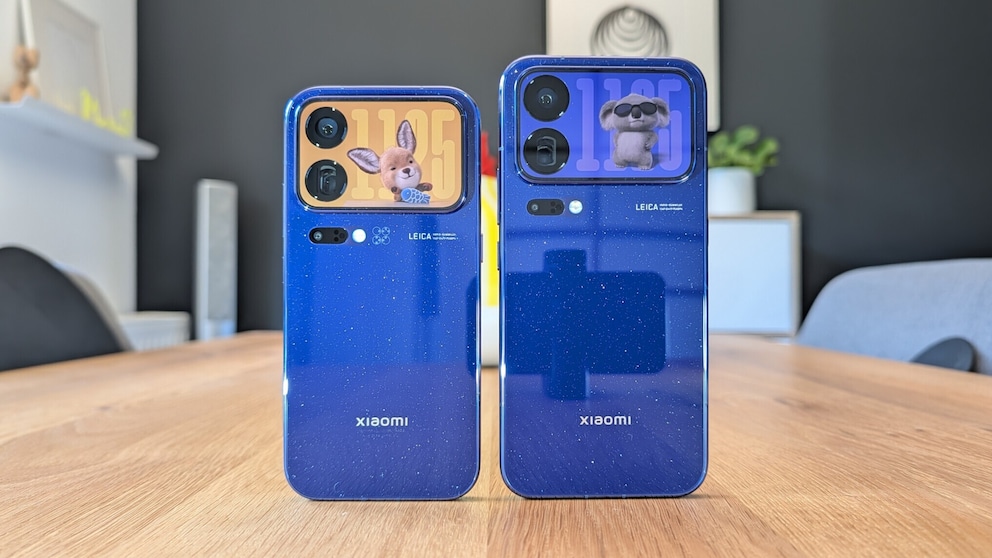
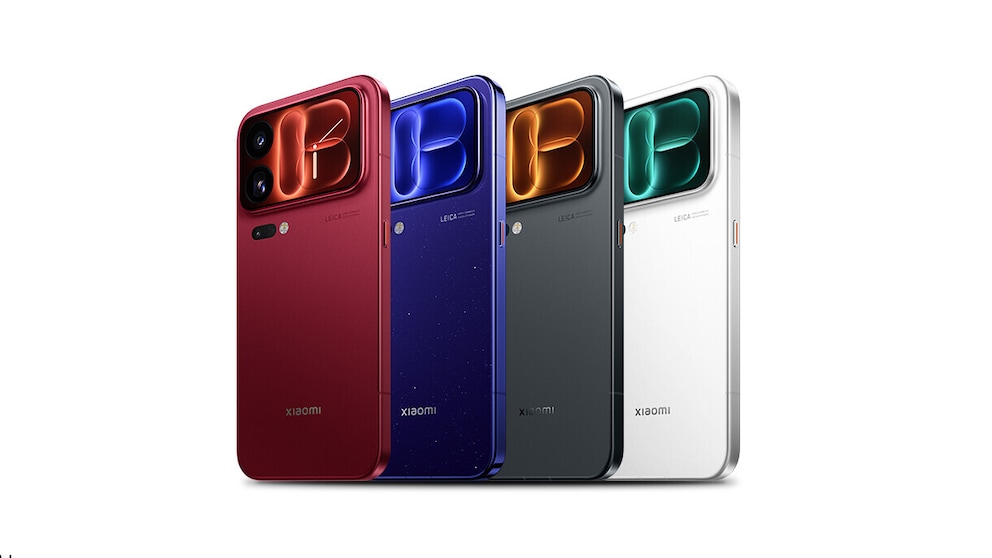
In terms of design, Xiaomi opts for clean lines. Only the corners of the display and the edges are rounded. The frame is made of polished metal, and under the glass back, it sparkles like a starry sky. This looks striking but also attracts fingerprints. Alternatively, there are versions with matte surfaces and a fiberglass back.
With its 6.89-inch OLED display, the Xiaomi 18 Pro Max measures 163.39 × 77.6 millimeters and weighs 233 grams. The Xiaomi 18 Pro is noticeably more compact at 151.8 × 72 millimeters and 204 grams. The large camera block on the back prevents the smartphone from slipping easily through the hand. Additionally, the devices lie slightly tilted but stable on the table, allowing for wobble-free operation.
On the left side, there is an AI button. Functions such as “Silent Mode,” “Do Not Disturb,” “Device-wide Privacy Display,” “Voice Notes,” or “AI Translation Conversation” can be assigned for short and long presses. The functions can also be completely disabled. This is practical, for example, when the smartphone is lying on a surface while taking photos and the button could otherwise be accidentally triggered.
What the Second Display Can Do
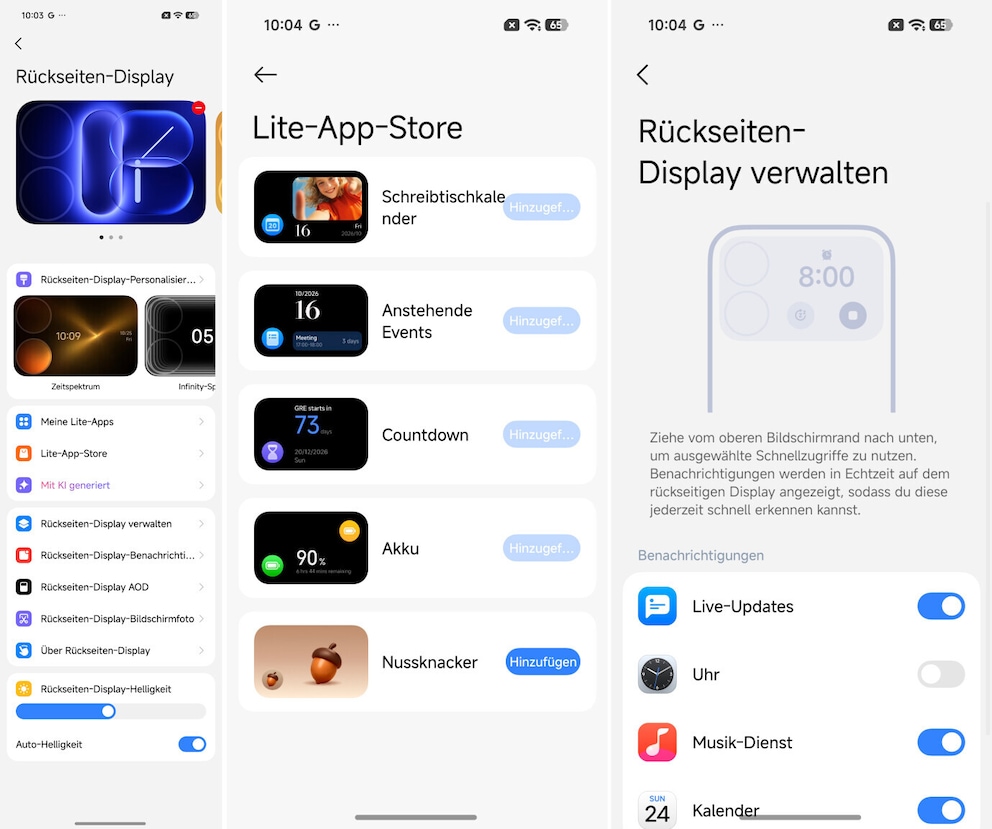
The most striking feature is on the back. There, a second touchscreen, apart from the camera lenses, almost completely fills the camera module. It can display messages, weather, navigation, calls, date, or appointments.
Additionally, the display serves as a control monitor for the main camera, allowing selfies to be taken with the main camera. For videos, the screen can serve as a teleprompter. Animated backgrounds even react to gestures like “thumbs up” or “heart.” Custom ideas can also be created using AI.
Brilliantly Bright OLED Display
The main display of the Xiaomi 18 Pro Max measures 6.89 inches and has a resolution of 2624 × 1208 pixels. The Xiaomi 18 Pro measures 6.39 inches and 2436 × 1120 pixels. Both models achieve 419 ppi. The refresh rate is up to 120 hertz, and the touch sampling rate is 300 hertz.
Xiaomi states a peak brightness of 4,000 nits. However, in the test lab of colleagues from COMPUTER BILD, even higher values were measured: 4,980 candela per square meter for HDR content and 5,700 cd/m² in standard mode. No other tested phone display has been brighter so far. The Xiaomi 17 Ultra already reached around 3,500 candela.
However, the enormous brightness no longer provides an advantage in evaluation. The Xiaomi 18 Pro Max cannot distinguish itself from the Samsung Galaxy S26 Ultra, which is less than half as bright at just under 2,500 candela. However, the Samsung model is better anti-reflective. Xiaomi’s Dragon Crystal Glass 3.0 still has room for improvement in this regard. The color accuracy is good but not perfect. The smartphone covers the color spaces well.
Also new is a kind of privacy mode. It is supposed to make it difficult to view the display from the side and can be limited to specific areas. In the test, however, it was less effective than on the Galaxy S26 Ultra. While Samsung significantly darkens protected content from the side, the effect is weaker on Xiaomi even at the highest level. However, the smartphone can warn if someone is looking over your shoulder unnoticed.
Snapdragon Ensures High Speed
The Snapdragon 8 Elite Extreme Gen 6 powers the Xiaomi 18 Pro Max. The Qualcomm processor is manufactured using a 2-nanometer process and reaches up to 5 gigahertz. Motorola’s Signature 27 also uses the chip. It is accompanied by an Adreno GPU, Qualcomm’s AI Engine, and 12 gigabytes of LPDDR5X RAM.
Storage options include 256 or 512 gigabytes according to the UFS-4.1 standard. The working speed in the test is excellent, ranking between similarly named iPhones and the predecessor. Although the processor does not set new benchmark records, it still earns a top speed rating.
Two Cameras Offer 200 Megapixels
Xiaomi once again relies on its collaboration with Leica for the camera. At first glance, however, only two lenses are visible on the back. A third lens, an ultra-wide-angle camera, is hidden along with the flash LED below the camera module.
The ultra-wide-angle camera with an f/2.4 aperture has a resolution of up to 50 megapixels and covers an angle of 102 degrees. The main camera with an f/1.67 aperture achieves up to 200 megapixels. In standard mode, the images are downscaled to 12.5 megapixels. The 1/1.28-inch Light-Hunter-960L sensor is used. The equivalent focal length is 23 millimeters, with 28 or 35 millimeters as alternative standards.
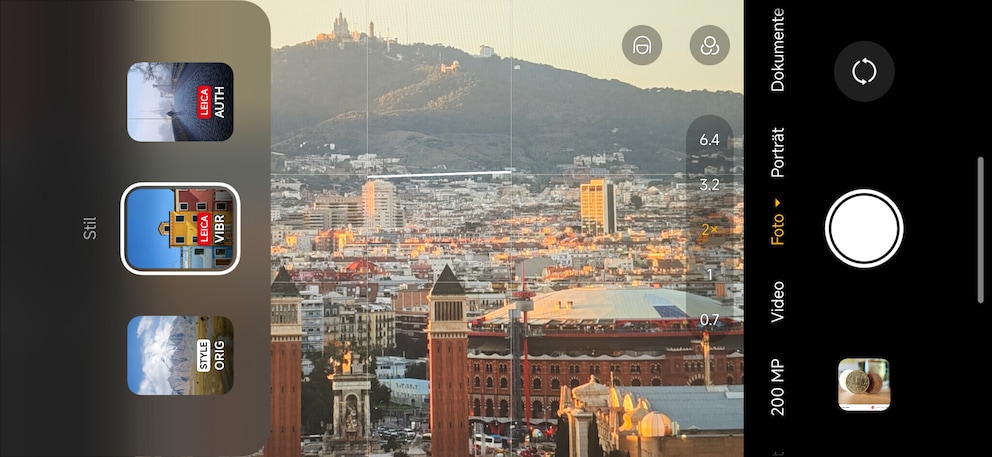
Unlike the Xiaomi 18 Pro, the sensor supports LOFIC. This technology is intended to increase the dynamic range in low light, allowing for more balanced lighting conditions. However, in the test course, no significant advantage for the Pro Max was observed in poor lighting.
The periscope telephoto camera with an f/2.4 aperture also has a resolution of 200 megapixels. It offers 3.2x optical magnification and an equivalent focal length of 75 millimeters. In normal mode, images are produced at 12.5 megapixels. Pixel cropping allows for 6.4x magnification or a focal length of 150 millimeters without digital interpolation. Additionally, the smartphone digitally zooms up to 120x and heavily filters the image. This results in little image noise and many sharp, albeit artificially created, edges. Close-ups are possible with the telephoto camera from twelve centimeters.
How Good the Camera Is in the Test
On the photo test stand, photos in daylight, low light, and telephoto shots with 4x magnification each received a “very good” rating. Overall, the camera quality is almost identical to the iPhone 18 Pro Max, with only a thousandth of a difference.
Both Xiaomi models have a front camera with 50 megapixels. Since the main camera can also be used for selfies thanks to the additional display, its quality was considered for the selfie rating. It received a score of 1.2 in daylight and 1.5 in low light.
The smartphone records videos in 8K at 30 frames per second. At 4K and lower resolutions, up to 120 fps is possible. Dolby Vision is also supported. In the test, exposure tracking and autofocus responded very quickly. The image stabilization was also convincing, with no visible pumping or shaking while walking.
Also interesting: Giant display without folds! Xiaomi is testing a completely new smartphone
Smaller Battery with Strong Runtime
Compared to the Chinese model, the battery of the Xiaomi 18 Pro Max is smaller. Instead of 8,500 milliampere-hours, the capacity is 7,050 mAh. A silicon content of 28 percent is supposed to enable high energy density.
However, pure capacity is not the only factor determining runtime. This is also shown by the iPhone 18 Pro Max, which achieved 19:43 hours in the continuous use test with 5,400 mAh. Xiaomi’s 18 Pro Max reaches 19:52 hours in COMPUTER BILD’s smartphone battery test. The smaller Xiaomi 18 Pro also achieves a strong 18:21 hours with 6,000 mAh.
Charging for 15 minutes with the power adapter is enough for 32 percent. After 51 minutes, the battery is fully charged. In the test, a maximum of 92.3 watts was measured, while the manufacturer’s specification is 100 watts. Both models support up to 50 watts wirelessly. They can also charge other devices such as smartphones or headphones. Reverse charging via cable is possible with up to 27 watts.

Highlights of MWC 2026

iPhone 18 Pro (Max) Review – A Pro Camera in Your Pocket
Features and Update Promise
The Xiaomi 18 Pro has two stereo speakers, while the Pro Max even has three speakers. Both models support Dolby Atmos, Spatial Audio, Hi-Res Audio, Hi-Res Audio Wireless, Wi-Fi 7, and Bluetooth 6.0. USB 3.2 Gen 1 is also included.
Unlocking is done via a 3D ultrasonic fingerprint sensor in the display. It works even with wet fingers and is quick to set up. The operating system is HyperOS 4 based on Android 17. Xiaomi promises five years of operating system updates and six years of security updates. Samsung and Google each offer seven years.
The prices at a glance:
- Xiaomi 18 Pro with 12/256 GB: 1,399 euros
- Xiaomi 18 Pro with 12/512 GB: 1,599 euros
- Xiaomi 18 Pro Max with 12/256 GB: 1,599 euros
- Xiaomi 18 Pro Max with 12/512 GB: 1,799 euros
Conclusion on the Xiaomi 18 Pro Max
The Xiaomi 18 Pro and 18 Pro Max stand out from many other smartphones, especially with their additional display on the back. The second screen is not just a gimmick but helps with selfies using the main camera, among other things.
However, the very good test score is mainly due to the classic smartphone qualities: high speed, an extremely bright display, a very good camera, and strong battery life. There are no major differences between the two models. Overall, the Xiaomi 18 models are practically on par with similarly named smartphones from Apple. Samsung remains slightly ahead in terms of operating speed and main camera, thus defending the top spot on the smartphone leaderboard.
There is still room for improvement. A flush and freely assignable AI button and a better anti-reflective display with a more effective privacy mode would be desirable.