


July 17, 2026, 12:42 pm | Read time: 5 minutes
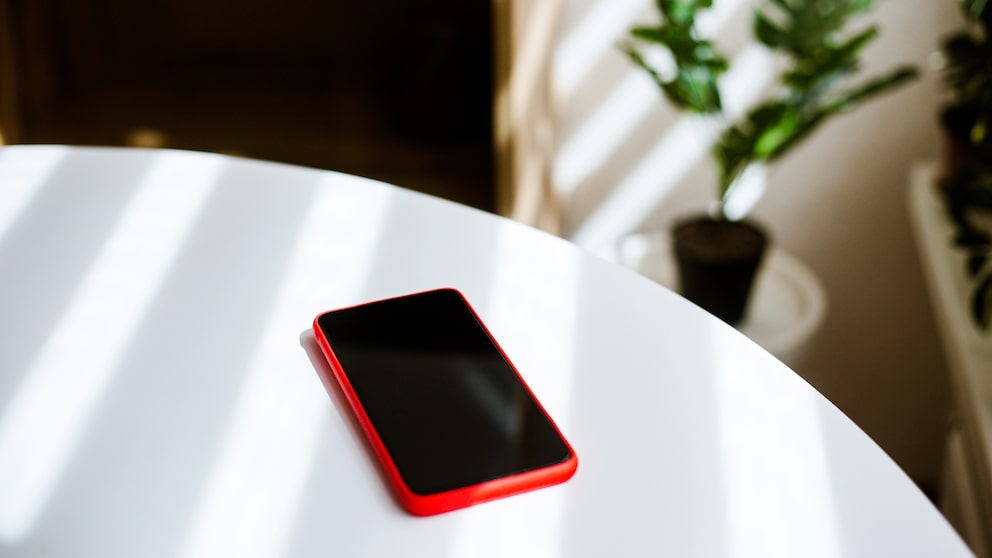
Placing your smartphone on the table next to you is the most normal thing for many people. But it shouldn’t be! This is also supported by the results of a U.S. study.
We prefer to have our smartphones always by our side. However, this has a significant impact on our brain performance, as scientists led by Adrian F. Ward from the University of Texas found in a study. The study observed about 800 participants in two experiments to determine how the location of the smartphone specifically affects our brain’s performance. One group placed their phone on the table, another put it in their pocket, and a third group had their smartphone in another room. A test checked the cognitive abilities of the participants to find out if the location of the smartphone had any impact on the brain.
Overview
Best to store the smartphone in another room
The results were astonishing, as they suggest that the mere presence of the phone leads to reduced available cognitive performance and impairs brain function. And this, even though the tested individuals knew they should now devote their full attention to the test.
The participants who stored their phone in another room performed the best on the test. For those who placed the phone on the table, it didn’t matter whether the smartphone was on or off. The position of the display also played no role. Even if the person didn’t use the phone, the mere presence of the device was enough to divert the owner’s attention. The cognitive performance of the participants was then significantly reduced.
Also interesting: Don’t take your phone to the bathroom!
Mere presence of the phone leads to less concentration
“We see a linear trend suggesting that as the smartphone becomes more visible, the available cognitive capacity of the participants decreases,” said Ward in a statement. “You don’t consciously think about your smartphone, but this process—the process you need to not think about something—uses some of your limited cognitive resources,” Ward continued. Brain performance is massively restricted when we have our phone nearby. But not because the individuals were distracted by notifications on their phone. “The mere presence of their smartphone was enough to reduce their cognitive abilities,” the scientist explains.
Daniel Oppenheimer, a professor of psychology at the University of California, has already researched this altered concentration ability for other objects. “We know that phones are very desirable and many people are addicted to their phones. In this sense, it’s not so surprising that a visible phone nearby would be a strain on mental resources. But this study is the first to actually demonstrate this effect. Given the prevalence of phones in modern society, this has important implications,” Oppenheimer told “The Atlantic”.
Also interesting: Restart your smartphone once a week

Apple Boss on Smartphone Use: “I’m Worried”

Do Students Get Smarter With AI–or Do They Forget How to Think?
Smartphone on the table has emotional effects
Another study from 2018 also addresses another fact. Researchers from the University of British Columbia were able to prove that a smartphone on the table during a shared meal not only negatively affects cognitive performance. It also influences emotions.
Ryan Dwyer, one of the main authors of the study, writes: “When we use our phones while spending time with people who are important to us, we enjoy the experience less than if we put our devices away.” This also makes us unhappier in the long term.
For the study, about 300 participants were asked to eat in small groups with close individuals in a restaurant. Part of the test group was then asked to place the smartphone on the table for the duration of the meal. The other part was asked to put the device away. None of the participants were informed of the purpose of the study.
After the meal, all participants were asked subjective questions. The result was clear. If the phone was on the table, many reported being distracted and engaging in less conversation with their counterpart. According to the test subjects, general well-being and enjoyment of the meal also suffered due to the presence of the smartphone. The comparison was always the statements of the other group, where the smartphone was not on the table.
Simply put away technology
And another observation caught the researchers’ attention. “We thought people would be less bored if they had access to their smartphones because they could more easily distract themselves when there was a pause in conversation,” Dwyer said. But that wasn’t the case. Instead, there was more boredom at the tables where a smartphone was present.
Perhaps users will think of these studies when they want to place their smartphone on the table during an important task or a shared meal. If the phone is not within reach, you can complete the task much faster or simply enjoy the time with friends and family.