

August 23, 2025, 2:19 pm | Read time: 5 minutes
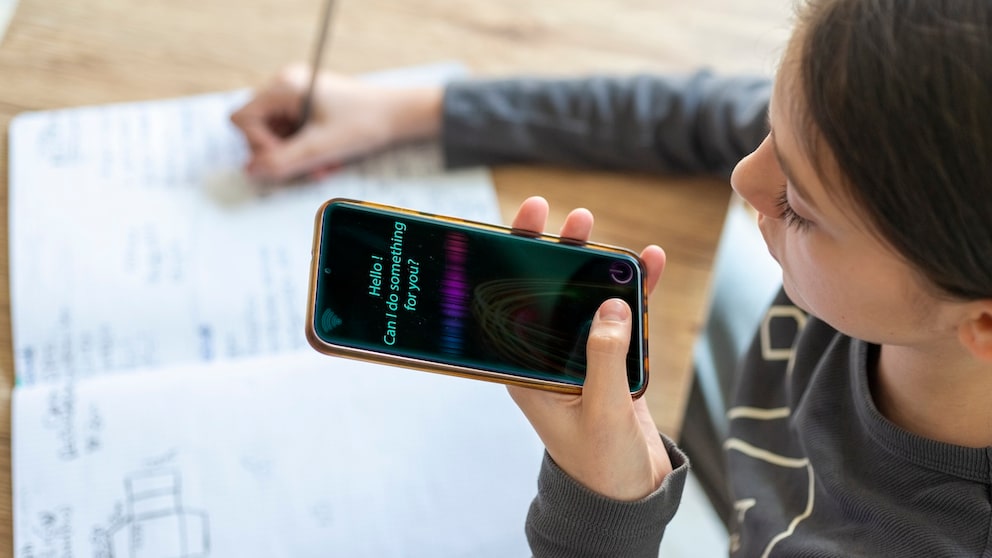
Digital technologies are shaping the daily lives of increasingly younger people. Artificial intelligence (AI) is now being used in schools. AI-powered tools aim to personalize learning and relieve teachers; students also use them for research, learning, and completing homework. But you might remember: Just a few years ago, educational institutions were extremely opposed to these then-new technologies and strictly banned their use. Nowadays, they are used almost excessively (at least by many adults). TECHBOOK explores whether AI truly holds potential for students or if it might cause more harm.
Does AI Make People or Students Smarter–or Dumber?
Do you use AI to make tasks in your daily life or work easier? Many people do. It’s no wonder, as bots can break down complex issues in seconds and summarize extensive texts, for example. However, there’s a certain danger lurking here. The ease of using these helpful technologies might tempt people to rely on them constantly. This would mean, simply put, that only a minimal amount of independent thinking would be required.
Perhaps you’ve caught yourself asking ChatGPT or Google AI something you could have answered yourself with just a few seconds of thought. Research is also examining whether AI, which is supposed to enrich and benefit us, might actually make people–to put it bluntly–dumber. The topic is particularly interesting given that AI is increasingly being used in schools.
Study Shows AI Limits Critical Thinking Ability
“Use it or lose it” is a principle that applies in many ways beyond medicine. In sports, it generally refers to muscles that atrophy if not regularly trained. It’s also not surprising that memory training can counteract mental decline. The opposite occurs when every small thinking task is handed over to AI instead of being solved independently. Science refers to this as “cognitive offloading,” and it can apparently limit critical thinking abilities, as a study has already shown.
The study was conducted at a research facility of the Swiss Business School. It involved 666 British participants of various age groups (17 to 25, 26 to 45, and 46+) and educational levels. The research team provided them with questionnaires to determine how often and in which areas thinking tasks were outsourced to AI. In another test phase, they assessed the participants’ cognitive performance. The evaluation revealed that frequent AI use acted as a “mental laziness program”–those participants scored noticeably worse.
Read also: What Are “Smart Schools” Anyway?
Can Students Benefit from AI Use Under Guidance?
The results of a pilot project in Nigeria’s Edo state present a slightly different picture. There, 800 randomly selected high school students–under the guidance of teachers, which seems to be a crucial point–used a generative AI in afternoon courses to supplement English lessons. A subsequent comparison with students who did not use AI showed significantly better performance in the AI group, both in English and digital skills. Girls, in particular, benefited from their AI-supported lessons.
Another study offers yet another perspective. An international research team examined the impact of generative AI on human learning in high school math classes. They used either a simple ChatGPT-like tutor or a version with built-in learning aids. Both versions initially improved performance significantly–the specialized tutor even more so. The problem arose later: When students were denied access to AI, they performed worse than those who had never used AI. Apparently, they had become too reliant on AI as a “crutch.”
In summary, the study authors still draw a positive conclusion. AI can promote learning, but it must be used in a way that does not replace independent thinking and practice processes.
Read also: ChatGPT Invents Crimes! Data Protection Officers File Complaint

How Minecraft or Super Mario Aim to Make Learning Easier

What Are “Smart Schools”?
AI Offers Potential for Students Under Certain Conditions
Researchers from the universities of Potsdam and Augsburg have developed a guideline on “AI in Schools” for the Federal Ministry for Education, Family, Seniors, Women, and Youth (BMBFSFJ). The authors worked closely with educational practitioners to provide a well-founded assessment of the topic, which can be considered a guide for using AI tools in the classroom.
The article provides an overview of the current state of the discussion on AI in schools from both scientific and practical perspectives. Based on empirical observations and previous research findings, the authors are convinced of AI’s potential for educational processes. They also believe in “relief potential for teachers.” However, they also point out possible “problematic consequences.” These could arise if students completely outsource learning tasks to AI instead of solving them themselves.
No Definitive Conclusion Possible Yet
The effect is highly context-dependent and not sufficiently supported by studies. Nevertheless, experts recommend using AI technologies in schools in a targeted and informed manner. This includes those not originally developed for education, such as ChatGPT and similar generative tools. They could also support research, text production, or problem-solving processes. Similarly, not every AI application is suitable for every purpose, and its use should be regularly reviewed.
Teachers must be informed about both the opportunities and potential risks, based on the latest research findings, to integrate the tools effectively into teaching. Only then can educational success and independent thinking be ensured. For this, it is essential that students learn media literacy and a critical and reflective approach to AI. Schools can support teachers through guidelines, manuals, or training, according to the authors.
It is still not possible to make an evidence-based statement about whether AI applications weaken students’ independent thinking. Nor are there enough studies to prove the opposite: that they promote it.