


May 30, 2021, 7:10 am | Read time: 14 minutes
Currently, there are eight iPhone models available on the Apple site in various storage and color options. We explore the pros and cons of each model and determine which iPhone is worth it for whom.
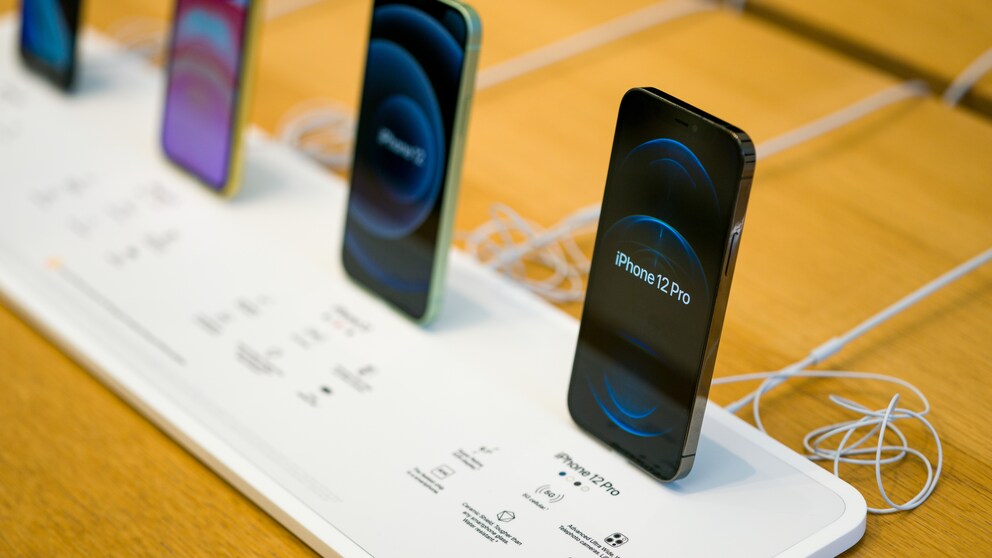
Apple is currently selling eight current iPhone models in its store: iPhone 13 and 13 mini, iPhone 13 Pro and 13 Pro Max, iPhone 12 and 12 mini, as well as iPhone SE 2020 and iPhone 11. This raises the question: Who is each iPhone suitable for? And: What distinguishes the regular 13 models from the Pro models? We answer these questions in the TECHBOOK buying guide.
iPhone 13 Pro and 13 Pro Max
The Pro models have only slightly differed from the “regular” iPhone in the past two generations. In the 12 series, all models have an OLED screen, the same Apple chip, and largely the same features. The Pro models can really only stand out with the additional camera lens, a TOF sensor, and HDR video with 60 instead of 30 frames per second (FPS). With the 13 series, this changes, as the new Pro models offer significant advantages over the standard models.
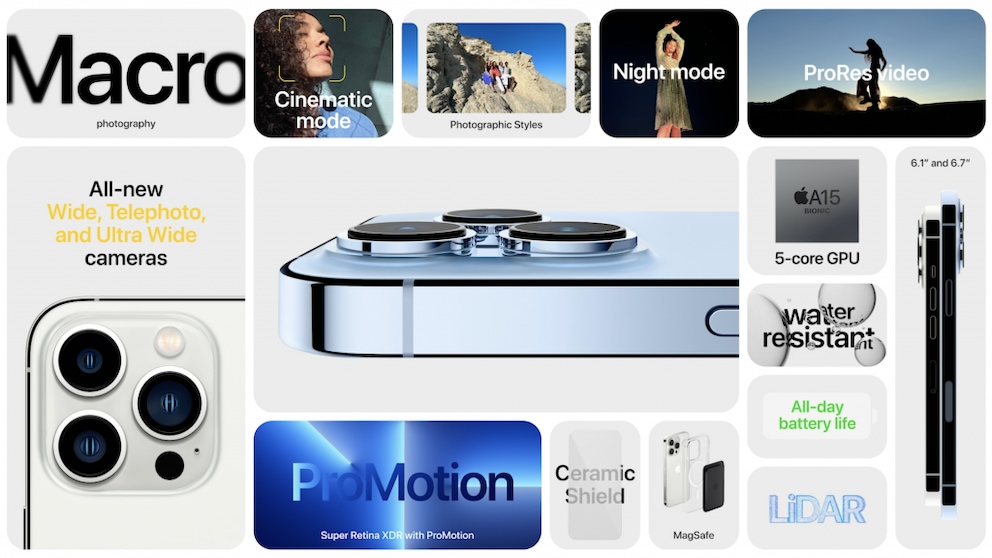
Display with ProMotion Technology
For the Pro variants of the iPhone 13, Apple is widening the gap with the standard models again. Because if you want the new ProMotion display, you must buy an iPhone 13 Pro or Pro Max. The ProMotion technology allows for a variable refresh rate up to 120 hertz. This finally puts the iPhone on par with Android smartphones. With ProMotion, displayed content and movements on the screen appear even smoother. The technology can automatically throttle the rate, for example, when only a still image is displayed, reducing battery consumption.
New Cinematic Video Features
Besides ProMotion, the iPhone 13 Pro/Pro Max has other advantages. For the first time, it has one more graphics core than the standard model–even though both have the new Apple A15 Bionic. With five instead of four graphics cores, the Pro models now support Apple’s ProRes codec and have a Cinematic mode.
ProRes is Apple’s lossless compression format and is best suited for editing videos in Final Cut Pro. The advantage is that the previous codec formats H.264 (AVC) and H.265 (HEVC) do not need to be converted to ProRes first. This makes the iPhone 13 Pro/Pro Max even better integrated into video production with Final Cut Pro.ADVERTISEMENTMaximum freedom with unlimited dataTO THE OFFER | o2
The Cinematic mode allows for filming with depth of field on an iPhone for the first time. Similar to the portrait mode for photos, the background is blurred to highlight the subject or object in focus. This effect, also known as “bokeh,” is usually only found in high-end film cameras with a correspondingly large sensor. On the iPhone 13 Pro/Pro Max, Apple uses a combination of TOF sensor and software to simulate this effect.
Read also: iPhone 13 Pro with 128 GB comes with reduced functionality
Who Should Buy an iPhone 13 Pro or 13 Pro Max?
Whether you’re coming from the iPhone 12 or 12 Pro or older iPhones, upgrading to the iPhone 13 Pro/Pro Max is definitely worth it. Apple has previously treated the Pro models rather neglectfully, offering little added value over the standard models. But with the new Pro models, the 120-hertz ProMotion technology finally comes to the iPhone–alone justifying the purchase. Additionally, there are new video features, which have always been one of the main arguments for buyers of the Pro models. The integration of ProRes and the new Cinematic mode with depth of field make the iPhone 13 Pro/Pro Max an absolute film machine. The Pro models are also finally available with up to 1 TB of storage, so filmmakers have enough space for their files.
Whether you should buy an iPhone 13 Pro or Pro Max depends solely on your preferences. The two models only differ in size. The 13 Pro comes with a 6.1-inch display, the 13 Pro Max with 6.7 inches. The cameras, which were still different in both models in the 12 series, are now exactly the same.
It’s pleasing that Apple has not increased the price of the already expensive Pro models. The iPhone 13 Pro with 128 GB is still available for 1149 euros. The iPhone 13 Pro Max with 128 GB costs 1249 euros. The new 1 TB version costs 1729 euros for the 13 Pro and 1829 euros for the 13 Pro Max.
iPhone 13 and 13 mini
The introduction of the new standard iPhone did not quite meet our expectations. It’s great that Apple finally equips the base version with 128 GB instead of just 64 GB of storage and the new A15 Bionic is even faster. Nevertheless, the better features are only available for the more expensive Pro models.
New Camera Features
The cameras in the iPhone 13 are marginally better than in the predecessor, and Sensor Shift promises sharp images even in poor lighting conditions. But the difference is likely to be minor in reality–especially since there is also a night mode and OIS on the 12 and even the 11. New in the iPhone 13 are intelligent autofocus functions. The focus automatically shifts in videos, for example, when another person enters the frame or a person’s gaze direction changes. This is certainly interesting for someone who films a lot with the iPhone. However, those should rather buy an iPhone 13 Pro (Max) to also get additional features like the video portrait mode, telephoto lens, and Apple ProRes.
Slight Changes to the Display
The screen in the iPhone 13 is brighter at 800 nits than in the predecessor and has a slightly smaller notch. While not much changes compared to the iPhone 12, iPhone 11 owners in particular may now have additional reasons to upgrade. The iPhone 11 still has an LCD panel, while the iPhone 13 (and iPhone 12) come with an OLED display. The screen technology allows for richer colors and deep blacks. Those coming from an iPhone 11 will get a better screen with a smaller notch, higher brightness, and TrueTone with the iPhone 13.
More Battery Life
One reason to upgrade to the iPhone 13 mini could be particularly interesting for owners of the iPhone 12 mini. The battery life of the first mini iPhone in years is abysmal due to the small battery and 5G support. The iPhone 13 mini is supposed to offer one and a half hours more runtime. The standard iPhone 13 even offers two and a half hours more, although the runtime was already sufficient for a full day before.
Colors and Prices of the iPhone 13 and 13 mini
iPhone 13 and 13 mini are available in the colors Pink, Blue, Midnight, Starlight, and PRODUCT(RED). Here are the prices for the two variants:
13: 128 GB for 799 euros, 256 GB for 919 euros, 512 GB for 1149 euros
13 mini: 128 GB for 899 euros, 256 GB for 1019 euros, 512 GB for 1249 euros
Who Should Buy an iPhone 13 or 13 mini?
Those who own an iPhone 12 have little reason to switch to the iPhone 13. The cameras are marginally better, the notch is smaller, and the battery life is longer. At least the price remains the same at 899 euros despite double the storage in the base version. Still, the iPhone 13 Pro tempts with additional features. Whether the Pro is an alternative for iPhone 12 owners can be read in the next section.
A special case is the iPhone 12 mini, which will have disappointed many buyers with its poor battery life. With the iPhone 13 mini, Apple corrects this mistake to some extent. So, if you’re dissatisfied with the 12 mini but want to stick with the small form factor, you should go for the 13 mini. Here, too, the entry price remains the same at 799 euros, even though there is double the storage.
For iPhone 11 owners, we can count the reasons to buy the iPhone 13 on one hand. The most important is certainly the significantly better screen and to some extent the new camera. Overall, it may be worth switching to the iPhone 13, especially if you’re a fan of the angular case design.
For those who still have an iPhone Xr, Xs, Xs Max, or older, the iPhone 13 is a clear recommendation. A lot has happened since then, and even the small improvements over the years add up to a big upgrade.

Should I Buy an iPhone 13, and If So, Which Model?

iPhone SE for 299 Euros at Aldi–Is the Offer Worth It?
iPhone 12 and 12 mini
The iPhone 12 is currently the “standard” iPhone and the direct successor to the iPhone 11. With the 12 mini, Apple now also offers a more compact version, which is almost identical in terms of features.
Dual Camera System
Both the 12 and 12 mini have a dual camera on the back, consisting of a main camera and an ultra-wide-angle lens. The wider angle of the second camera allows users to capture even more image area. But the wide field of view can also be used for dramatic effects in videos. The ultra-wide-angle camera has a 12-megapixel sensor and an f/2.4 aperture. The selfie camera, like in the iPhone 11, has a 12-megapixel resolution. However, the main camera is new with 12 megapixels, f/1.6, and optical image stabilization (OIS). Both rear cameras support 4K recording at 60 FPS and slow-motion videos in 1080p resolution at 240 FPS. They can also film 4K with Dolby Vision HDR (High Dynamic Range) and 30 FPS.
Current Chip and OLED Display
This is made possible by Apple’s A14 Bionic chip, which provides a significant performance boost over the A13 Bionic in the iPhone 11. iPhone 12 and 12 mini have four gigabytes of RAM, putting them on par with the Pro models. Both have an integrated 5G modem.
The iPhone 12 and 12 mini are the first non-Pro models to have an OLED screen. Not only is the panel more energy-efficient, but the display is also more color-accurate thanks to Dolby Vision and HDR10. The typical brightness remains the same at 625 nits, but the maximum is significantly higher at 1200 nits. The screen is 6.1 inches on the iPhone 12, the same size as on the iPhone 11 (and iPhone Xr). However, due to the new housing with flat instead of rounded edges and thinner screen bezels, the iPhone itself is more compact. The iPhone 12 mini is significantly smaller with a 5.4-inch diagonal.
Like the iPhone 11, the iPhone 12 and 12 mini are dust and water-resistant according to IP68. However, Apple specifies up to 6 meters of water depth for 30 minutes–4 meters more than before.
Differences Between iPhone 12 and 12 mini
The “standard” iPhone 12 and the 12 mini mainly differ in price and size. The iPhone 12 mini is 100 euros cheaper than the iPhone 12 at 799 euros. Due to the smaller size, the 12 mini has a few small limitations. The battery is significantly smaller at 2227 mAh, and the runtime is correspondingly shorter. The mini also supports wireless charging via MagSafe with a maximum of 12 watts instead of 15 watts in the iPhone 12. Additionally, the volume of the built-in speakers is smaller, and the sound is slightly quieter.
Small Compromises Compared to the Pro Models
The differences from the Pro models can be counted on one hand. iPhone 12 and 12 mini have aluminum instead of steel frames, no telephoto camera, and no Lidar sensor, as well as less storage and RAM. Dolby Vision recordings are limited to 4K at 30 FPS, while the Pro models can handle up to 60 FPS.
| Advantages | Disadvantages |
| + Very fast processor | – Maximum 256 GB storage |
| + Dual camera | – Only 64 GB in the base version |
| + Excellent photos and videos | – Large notch |
| + IP68 up to 6 meters depth | – Poor battery life in iPhone 12 mini |
| + Good battery life in iPhone 12 | – No power adapter included |
Colors and Prices of the iPhone 12 and 12 mini
iPhone 12 and 12 mini are available in the colors Black, Blue, Green, Purple, and (PRODUCT)RED. The iPhone 12 mini starts at 679 euros for the 64 GB version, with double the storage (128 GB) available for 729 euros. The largest version with 256 GB costs 849 euros. The iPhone 12 with 64 GB costs 799 euros, with 128 GB available for 50 euros more. The most expensive version of the model with 256 GB storage costs 969 euros.
Who Should Buy an iPhone 12 or 12 mini?
The iPhone 12 mini is recommended for those who long for compact smartphones. It is also the cheapest iPhone with a dual camera and OLED screen at 679 euros. Unfortunately, this comes at the expense of battery life, which is why we recommend the larger iPhone 12. For a little more money, you get a larger screen and, above all, more battery life. For both models, we recommend going straight for the 128 GB variant, as the 50-euro surcharge is worth it in any case.
iPhone SE (2020)
There were long-standing rumors about a new, affordable iPhone–and indeed: In April 2020, Apple introduced the successor to the now five-year-old iPhone SE. However, the new iPhone SE 2020 has nothing in common with the original in terms of appearance. Instead, it is the design successor to the iPhone 8. Externally, the iPhone 8 and the iPhone SE 2020 are hardly distinguishable. The only difference is that the Apple logo on the SE is in the middle of the back, while on the 8 it is slightly above.
Components from the Kit
In fact, the iPhone SE consists largely of components from the iPhone 8: housing, battery, front camera, home button–everything is practically identical. Not only does every case for the iPhone 8 also fit the iPhone SE, but even internal parts like the battery, home button, and other smaller components are interchangeable. A wise decision by Apple, as the company did not have to invest additional money in research and development–all the important components are already available.
This means that the iPhone SE is identical to the iPhone 8 in many respects. The 4.7-inch LCD panel has a resolution of 750 x 1334 pixels, but Apple has removed the 3D Touch function from the SE. This is no surprise, as the company has now moved away from the technology in other iPhones. In the iPhone SE, Touch ID makes a return, so the smartphone is unlocked again via fingerprint. Face ID remains reserved for the more expensive models. Like the iPhone 8, the iPhone SE also supports wireless charging, but as with all other iPhones, the power is limited to a weak 7.5 watts despite QI certification. It charges faster with a power adapter that outputs at least 18 watts. Unfortunately, only a tiny 5-watt charger is included in the box.
Top Performance at a Great Price
The iPhone SE has made a huge leap forward in terms of performance. Apple has equipped the budget iPhone with its current A13 Bionic. This means it is on par with the iPhone 11 and iPhone 11 Pro in terms of processor and graphics performance. Only due to the smaller 3 GB of RAM is the SE slightly slower. The performance boost is particularly noticeable in photos and videos. Here, the SE can process HDR much better and even outperforms the iPhone Xr–it is almost on par with the iPhone 11 and 11 Pro in terms of recording quality.
Disappointing about the iPhone SE 2020, however, is the tiny battery, which, even with the more efficient A13 Bionic, barely provides enough energy for a day without charging. We also find the somewhat outdated design with the wide display bezels strange, although bearable. Additionally, we would have liked an additional camera on the back–all things that would likely have driven up the price of the smartphone.
Read also: iPhone SE 2020 review–probably the cheapest Apple entry
| Advantages | Disadvantages |
|---|---|
| + Cheapest price for a current iPhone | – Only single camera |
| + Very fast processor | – No Face ID |
| + Excellent photos and videos | – Maximum 256 GB storage |
| – Only 3 GB RAM | |
| – Outdated design | |
| – Poor screen-to-body ratio of only 65.4% | |
| – Only IP67 | |
| – Poor battery life | |
| – Only 5-watt power adapter included |
Colors and Prices of the iPhone SE 2020
The new edition of the iPhone SE comes in the colors White, Black, and (PRODUCT)RED. The base version with 64 GB of storage starts at 479 euros. For 50 euros more (529 euros), there is 128 GB. Apple no longer offers the 256 GB variant.
Who Should Buy an iPhone SE 2020?
If you want an iPhone with still competitive performance and excellent camera for relatively little money, the iPhone SE is the right choice. However, SE buyers will have to do without a modern design, which we think is bearable. The rather meager battery performance may weigh more heavily here. Those looking for a more handy iPhone and for whom the iPhone 11 Pro is already too large might find the SE appealing.
Also interesting: Why the battery indicator on the iPhone is sometimes yellow