



September 15, 2021, 12:02 pm | Read time: 7 minutes
iPhone 13 mini, iPhone 13, iPhone 13 Pro, or iPhone 13 Pro Max–the new iPhone generation offers a tough choice. But which model is actually worth it for whom?
The new iPhone 13 models go on sale September 24. Apple is promoting a range of improvements and new features. TECHBOOK has summarized the differences between the standard and Pro versions and which iPhone is worth it for whom.
Overview
iPhone 13 and 13 mini a rather modest upgrade
The unveiling of the new standard iPhone didn’t quite meet our expectations. It’s great that Apple finally equips the base version with 128 GB instead of just 64 GB of storage, and the new A15 Bionic is even faster. However, the better features are reserved for the more expensive Pro models.
New Camera Features
The cameras in the iPhone 13 are marginally better than in the predecessor, and Sensor Shift promises sharp images even in low light conditions. But the difference is likely to be minor in reality–especially since the 12 and even the 11 have a night mode and OIS. New in the iPhone 13 are intelligent autofocus functions. This automatically shifts focus in videos, such as when another person enters the frame or a person’s gaze changes. This is certainly interesting for someone who films a lot with the iPhone. However, those individuals should opt for an iPhone 13 Pro (Max) to get additional features like the video portrait mode, telephoto lens, and Apple ProRes.

Slight Changes to the Display
The screen in the iPhone 13 is brighter at 800 nits than its predecessor and has a slightly smaller notch. While this doesn’t change much compared to the iPhone 12, iPhone 11 owners might now have additional reasons to upgrade. The iPhone 11 still has an LCD panel, while the iPhone 13 (and iPhone 12) come with an OLED display. This screen technology allows for richer colors and deep blacks. Those upgrading from an iPhone 11 will get a better screen with a smaller notch, higher brightness, and TrueTone with the iPhone 13.
More Battery Life
One reason to upgrade to the iPhone 13 mini could be particularly interesting for iPhone 12 mini owners. The battery life of the first mini iPhone in years is abysmal due to the small battery and 5G support. The iPhone 13 mini is supposed to offer an additional one and a half hours of battery life. The standard iPhone 13 even offers two and a half hours more, although the battery life was already sufficient for a full day.
Who Should Buy an iPhone 13 or 13 mini?
Upgrade from iPhone 12 or 12 mini
If you own an iPhone 12, there’s little reason to switch to the iPhone 13. The cameras are marginally better, the notch is smaller, and the battery life is longer. At least the price remains the same at 899 euros despite double the storage in the base version. Still, the iPhone 13 Pro tempts with additional features. Whether the Pro is an alternative for iPhone 12 owners can be read in the next section.
A special case is the iPhone 12 mini, which may have disappointed many buyers with its poor battery life. With the iPhone 13 mini, Apple corrects this flaw to some extent. So, if you’re dissatisfied with the 12 mini but want to stick with the small form factor, you should opt for the 13 mini. Here too, the entry price remains at 799 euros, even though it offers double the storage.
Upgrade from iPhone 11 or Older
For iPhone 11 owners, we can count the reasons to buy the iPhone 13 on one hand. The most important is certainly the significantly better screen and to some extent the new camera. Overall, it may be worth switching to the iPhone 13, especially if you’re a fan of the angular design.
For those who still have an iPhone Xr, Xs, Xs Max, or older, the iPhone 13 is a clear recommendation. Much has changed since then, and even the small improvements over the years add up to a significant upgrade.
Which iPhone Is Best for Me?

Apple has discontinued production of the iPhone 12 mini.
iPhone 13 Pro and 13 Pro Max tempt with better display and new video features
The Pro models have only slightly differed from the “normal” iPhone in the past two generations. In the 12 series, all models have an OLED screen, the same Apple chip, and largely the same features. The Pro models can really only stand out with the additional camera lens, a TOF sensor, and HDR video with 60 instead of 30 frames per second (FPS). With the 13 series, this changes, as the new Pro models offer significant advantages over the standard models.
Screen with ProMotion Technology
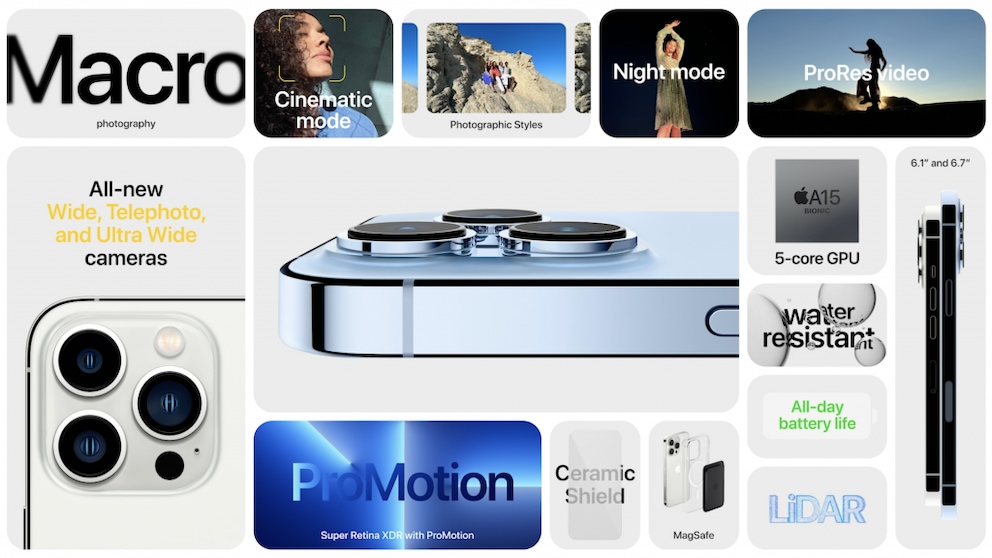
For the Pro variants of the iPhone 13, Apple widens the gap to the standard models again. If you want the new ProMotion display, you must buy an iPhone 13 Pro or Pro Max. The ProMotion technology allows for a variable refresh rate up to 120 Hertz. This finally puts the iPhone on par with Android smartphones. With ProMotion, displayed content and movements on the screen appear even smoother. The technology can automatically throttle the rate, for example, when only a still image is displayed, reducing battery consumption.
New Cinematic Video Features
Besides ProMotion, the iPhone 13 Pro/Pro Max has other advantages. For the first time, it has one more graphics core than the standard model–even though both have the new Apple A15 Bionic. With five instead of four graphics cores, the Pro models now support Apple’s ProRes codec and have a Cinematic mode.
ProRes is Apple’s lossless compression format and is best suited for editing videos in Final Cut Pro. The advantage is that the previous codec formats H.264 (AVC) and H.265 (HEVC) do not need to be converted to ProRes first. This makes the iPhone 13 Pro/Pro Max even better integrated into video production with Final Cut Pro.
The Cinematic mode allows for filming with depth of field on an iPhone for the first time. Similar to the portrait mode for photos, the background is blurred to highlight the subject or object in focus. This effect, also known as “bokeh,” is practically only found in high-end film cameras with a correspondingly large sensor. On the iPhone 13 Pro/Pro Max, Apple uses a combination of a TOF sensor and software to simulate this effect.
Read also: iPhone 13 Pro with 128 GB comes with reduced functionality
Who Should Buy an iPhone 13 Pro or 13 Pro Max?
Whether you’re coming from the iPhone 12 or 12 Pro or older iPhones, upgrading to the iPhone 13 Pro/Pro Max is definitely worth it. Apple has previously treated the Pro models rather neglectfully, offering little added value over the standard models. But with the new Pro models, the 120-Hertz ProMotion technology finally comes to the iPhone–this alone justifies the purchase. Additionally, there are new video features, which have always been one of the main arguments for Pro model buyers. The integration of ProRes and the new Cinematic mode with depth of field make the iPhone 13 Pro/Pro Max an absolute film machine. The Pro models are finally available with up to 1 TB of storage, giving filmmakers enough space for their files.
Whether you should buy an iPhone 13 Pro or Pro Max depends solely on your preferences. The two models differ only in size. The 13 Pro comes with a 6.1-inch display, the 13 Pro Max with 6.7 inches. The cameras, which were still different in both models in the 12 series, are now exactly the same.
It’s pleasing that Apple hasn’t increased the price of the already expensive Pro models. The iPhone 13 Pro with 128 GB is still available for 1,149 euros. The iPhone 13 Pro Max with 128 GB costs 1,249 euros. The new 1 TB version costs 1,729 euros for the 13 Pro and 1,829 euros for the 13 Pro Max.