


September 12, 2023, 8:40 pm | Read time: 6 minutes
Apple has unveiled the iPhone 15 and iPhone 15 Plus. Both models form the new base of Apple’s lineup, complementing the more expensive Pro models. TECHBOOK reveals what the new Apple smartphones have to offer.
In 2022, Apple first significantly separated the Pro models from the base devices. While the former come with a new processor and some entirely new camera functions, the more affordable smartphones feature tried-and-true features and hardware. This is also the case this year with the iPhone 15 and iPhone 15 Plus.
Overview
Apple has once again introduced four models this year. In addition to the iPhone 15 and 15 Plus as base models, there are also the iPhone 15 Pro and Pro Max. Detailed information about both Pro models can be found in another news article.
iPhone 15 and 15 Plus Get Dynamic Island
The iPhone 15 is the most affordable model in the lineup and thus essentially the entry-level model. At 6.1 inches, it is also smaller compared to the 6.7-inch iPhone 15 Plus. The resolution is 2556 x 1179 pixels or 2796 x 1290 pixels for the Plus.
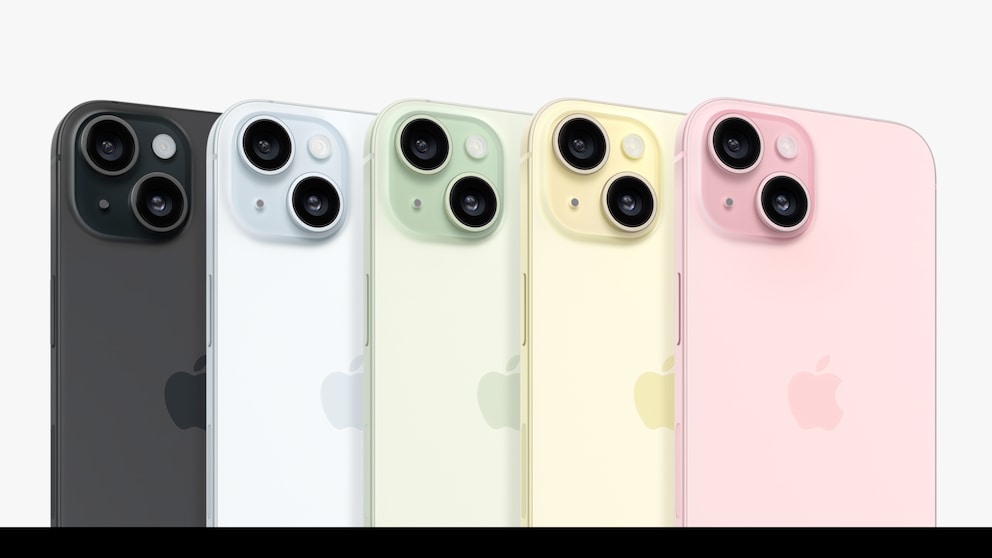
Visually, the smartphones have not changed compared to the iPhone 14. However, there are new colors. Users can choose from light and fairly delicate shades, including gray, light blue, yellow, green, and pink. It’s nice that Apple has also color-coordinated the cables with the smartphone colors. They are now colorful as well.
Notably, there is no (PRODUCT)RED version for the iPhone 15 or 15 Plus. In recent years, the deep red color variant was always available right at launch. Apple may plan to release this as a lineup refresh in spring 2024.
Overall, the innovations in the iPhone 15 and 15 Plus are limited. However, Apple has included some features that were previously reserved for last year’s Pro models. They have essentially been passed down to the current base models.
Read also: New Apple Watch 9 Can Be Controlled Without Touch
Dynamic Island Comes to the More Affordable Models
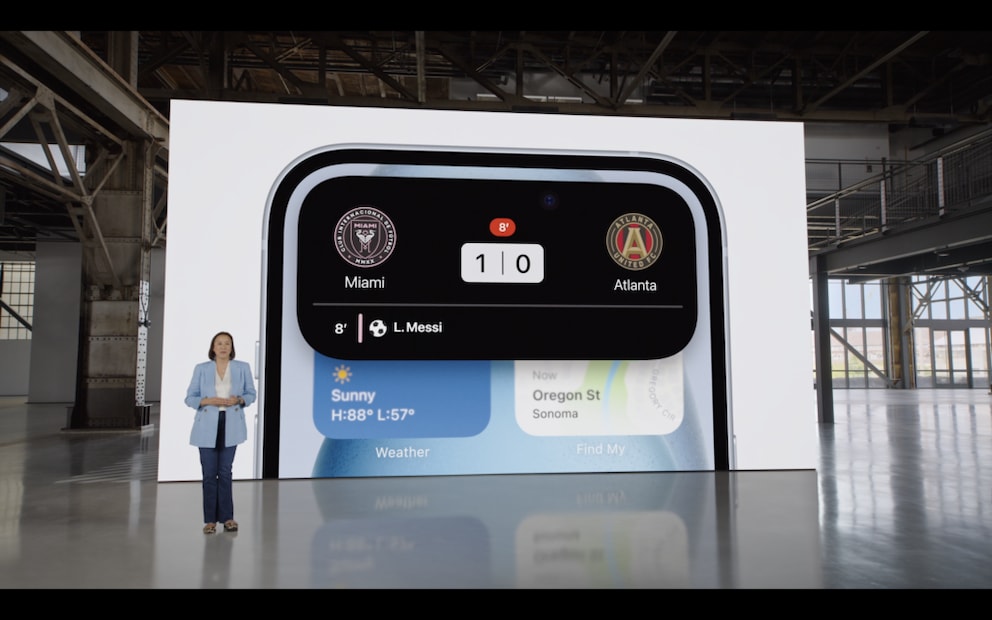
This includes the notch introduced in 2022 called Dynamic Island. It allows users to keep track of ongoing activities such as music playback or timers. Dynamic Island supports various apps, including music streaming services, messengers, and Apple Pay, as well as features like AirPlay, memos, HotSpot, or NFC.
In its normal state, the notch area covers the display cutouts where the Face ID sensors and selfie camera are located. However, the area can dynamically change its size and shape depending on what’s happening on the screen. When you minimize an app, it appears at the top of the area. Holding it down reveals context-based elements, such as playback controls for the Apple Music app. Dynamic Island also displays notifications and alerts. It’s essentially a small multitasking control that allows additional actions without leaving an app.
Users will still have to do without an Always-on or ProMotion display on the iPhone 15 (Plus). Both features remain exclusive to the Pro models. However, compared to the iPhone 14, the maximum display brightness has been increased. It now stands at an impressive 2000 nits.
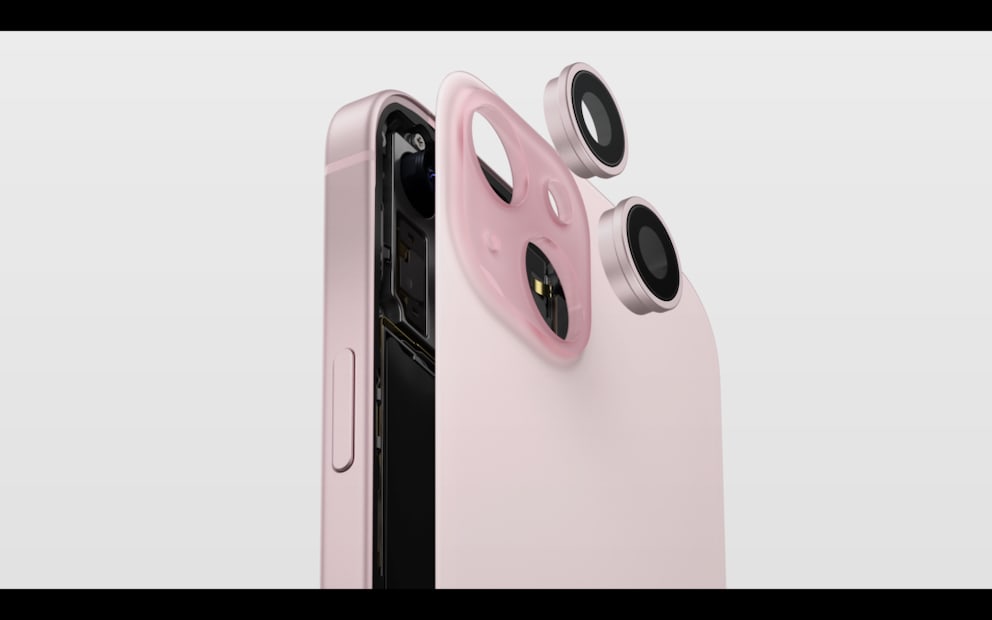
The smartphones are made of aluminum and feature hardened glass on the front and back. Additionally, the manufacturer focuses on recycled materials, using up to 100 percent recycled cobalt in the battery, for example. Apple is placing a strong emphasis on sustainability this year, which is also a key focus for the new Apple Watch 9 and Ultra 2 smartwatches.
Learn more: What Can the “Dynamic Island” Feature Do on the iPhone 14 Pro?
iPhone 15 Now with 48-MP Camera
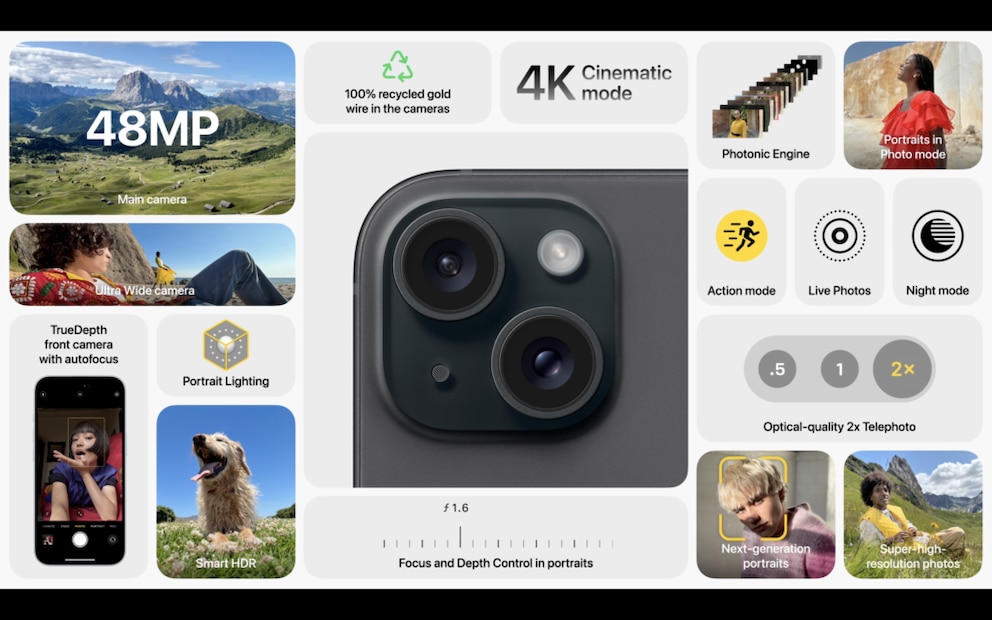
Among the other improvements compared to the iPhone 14 is the camera. Apple has equipped the wide-angle lens with 48 megapixels, a significant increase from the previous 12 megapixels. It features a bright f/1.6 aperture and an optical image stabilizer with sensor shift. The higher resolution allows for a trick we already know from the 14 Pro: the camera can zoom in twice without loss of quality by simply cropping the central 12 megapixels of the 48-megapixel sensor.
The second camera remains an ultra-wide-angle lens with 12 megapixels, an f/2.4 aperture, and a 120-degree field of view.
The iPhone 15 and iPhone 15 Plus come with an improved night mode and allow for Smart HDR photography. In the latter, the iPhone adjusts suboptimal lighting conditions to better highlight colors and the overall subject. However, little has changed in terms of video. They are still possible in 4K at a maximum of 60 fps and can be stabilized thanks to Action Mode.
Apple has retained the familiar 12-megapixel sensor for the front camera. It also features an f/1.9 aperture, autofocus, and a Retina flash. The TrueDepth camera is not only responsible for selfies but also enables Face ID.
Read also: iOS 17 is here! These are the best new features
Apple Passes the A16 Bionic to the Base Models
The entry-level class of the 15 series receives a performance upgrade with the A16 Bionic. Originally used in the iPhone 14 Pro, the chip was passed down a year after its introduction, just like Dynamic Island. This once again shows that Apple focuses less on the latest features and innovations for its more affordable devices, instead opting for tried-and-true features and hardware.
Nevertheless, the A16 Bionic offers a very solid foundation and good performance with its six 64-bit ARM cores. The chip also features an integrated Neural Engine for AI calculations and Apple’s A16 5-core GPU. Users can choose between 128 GB, 256 GB, or 512 GB of storage.

The Real Highlight of the iPhone 15

Hardly Any iPhones Are Ready for iOS 18
iPhone 15 Gets USB-C
Completely new in the iPhone 15 series is USB-C. Apple did not voluntarily part with the Lightning connector but implemented the new port due to an EU regulation to standardize charging ports. However, the iPhone 15 (Plus) does not use the faster USB 3 with 10 Gbit/s but the 20 times slower and now outdated USB 2.0. Here, the maximum speeds are 480 Mbit/s. USB 3 remains exclusive to the current Pro models.
In line with the new USB port, Apple also includes a USB-C-to-USB-C cable in the package. These now have a braided fiber sheath, making them more durable than the pure plastic cables Apple has previously shipped. It’s also nice that the color consistency mentioned earlier is maintained. The cables come in the same color as the chosen iPhone.
The new cable allows the iPhone to be directly connected to the MacBook and charged. Alternatively, wireless charging via MagSafe is also supported. The maximum speed here is up to 15 watts, which is rather average.
Read also: This is what Apple’s 179-euro cable looks like inside
Availability and Prices
The iPhone 15 and 15 Plus can be pre-ordered starting September 15 at 2 p.m. Apple will begin sales on September 22. The iPhone 15 is available starting at 949 euros, while buyers will need to pay at least 1,099 euros for the Plus model. These prices apply to the 128 GB version; those who want more storage will pay more. Apple lists the following prices: