


November 26, 2025, 9:07 am | Read time: 3 minutes
Foldable smartphones continue to evolve. However, manufacturers have long been trying to tackle one of the biggest issues with foldables: the display crease.
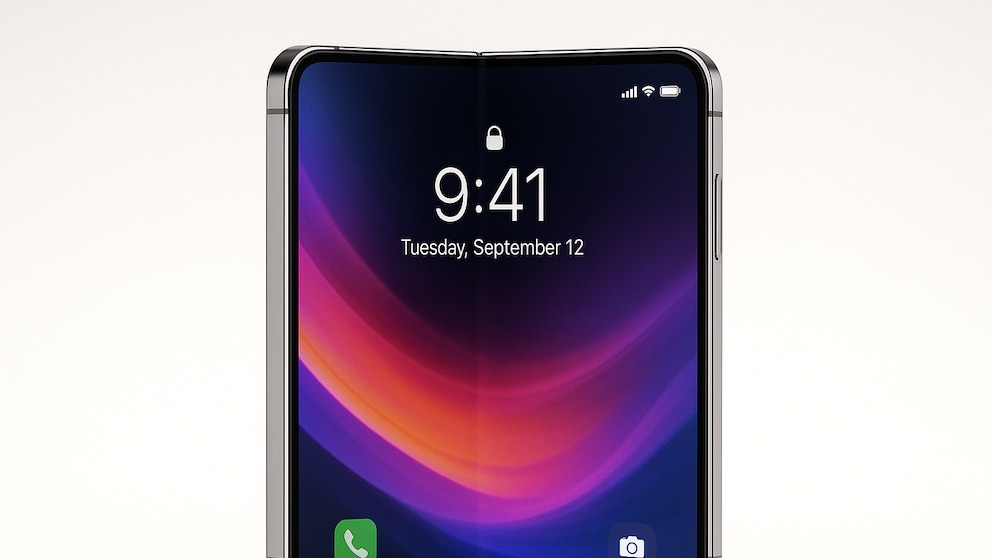
The folding mechanism creates a point at the transition between the halves of the device where the display is uneven because it lacks a stabilizing back. This is understandable, as it needs to remain flexible to bend. While newer generations of foldables have largely managed to reduce the crease, it remains visible. Apple seems to have solved this problem with the iPhone Fold.
Crease-Free iPhone Fold
According to a recent report from the Taiwanese news site “UDN,” Apple has made a breakthrough in developing its first foldable iPhone. The iPhone Fold could set a new standard for foldable smartphones in 2026.
Sources from Apple’s supply chain indicate that Apple has found a new approach for a truly crease-free iPhone Fold. This would give the upcoming model a significant selling point for its planned market launch next year. Manufacturers like Samsung, Huawei, Oppo, and Vivo regularly release new models–yet the crease in the display has remained a technical limitation. If the iPhone Fold indeed features a crease-free display, it would be a major step ahead of the competition.
Also of interest: iPhone Fold to Feature an Entirely New Camera
Apple is also collaborating with its partners on the hinges to create high-strength hinge components from “liquid metal.” This material is characterized by low deformation and high toughness–qualities that are expected to significantly enhance durability when folding and provide a particularly pleasant feel.
First Step Toward Mass Production
As reported by TECHBOOK, the inner screen is to be supplied exclusively by Samsung Display. However, Apple is responsible for the panel structure, material processing, and lamination process. According to “UDN,” suppliers Shin Zu Shing and Amphenol have been tasked with manufacturing a bearing for the hinge that is intended to prevent the formation of a crease in the display.
According to “UDN,” Foxconn has already set up a production line for the iPhone Fold. The device is reportedly already in the Engineering Validation Test (EVT) phase. This is the first step toward mass production, where the manufacturer tests whether the technical design functions as intended. The production of initial prototypes begins to identify and fix mechanical or thermal issues in individual components. Following EVT, the Design Validation Test (DVT) and finally the Production Validation Test (PVT) will take place before the device enters mass production.