



November 11, 2026, 11:22 am | Read time: 4 minutes
Whether it’s an iPhone, Samsung Galaxy, or a budget mobile phone, most people simply refer to it as a “handy” in everyday life. In shops and product descriptions, however, it’s almost always called a “smartphone.” But why is that? Are “handy” and “smartphone” just two words for the same device, or is there actually a difference?
The short answer is: Every smartphone is a handy, but not every handy is a smartphone. At least, if you take the terms a bit more precisely.
What exactly is a Handy?
In German usage, “handy” initially refers to a portable mobile phone. Originally, this meant devices whose main functions were making calls and sending SMS while on the go.
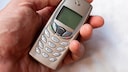
Anyone who owned a mobile phone in the 1990s or early 2000s likely remembers: Instead of a large touchscreen, there was a numeric keypad, often a small display, and a relatively limited range of functions. Later, extras were added. Handys got color displays, cameras, games, MP3 players, and even some internet access. Models like the Nokia 3310 are emblematic of this era.
Such devices still exist today. They are often referred to as feature phones. Simple button phones, in particular, continue to rely on the classic concept.
What makes a Handy a Smartphone?
A smartphone is also a mobile phone. However, its capabilities go far beyond calls and SMS.
The main difference is not so much that a smartphone can access the internet or has a camera. Many older handys could do that too. The key is the combination of a comprehensive operating system and the ability to expand the device’s functions with apps.
Modern smartphones, for example, run on Android or Apple’s iOS. Users can install apps and use their device for a wide range of purposes: navigation, online banking, video streaming, photo editing, social media, games, or even as a digital car key.
Thus, a smartphone is essentially a small computer that can also make calls. However, the line is not always clear-cut. Especially in the 2000s, there were many mobile phones that already had surprisingly many features of today’s smartphones. The transition from handy to smartphone was therefore more gradual than overnight.
So why do we still say “Handy”?
This is where a peculiarity of the German language comes into play. Although “handy” sounds English, it is not the usual English term for a mobile phone. Asking for a “handy” in the UK or the U.S. might cause confusion. More common terms are “mobile phone,” “cell phone,” or simply “phone.”
In Germany, however, “handy” has become the everyday term for mobile phones. And the term has simply kept up with technological changes.
When smartphones conquered the mass market in the late 2000s, the word handy didn’t disappear. Instead, its meaning expanded. Today, it can just as easily refer to an iPhone or Galaxy smartphone as to a simple button phone.
Similarly, the word “telephone” works: Although today’s devices have little in common with telephones from 50 years ago, we immediately understand what is meant.
Who Still Benefits from Keypad Phones

The Beginnings of Mobile Communications – How the World of Cell Phones Came About
So is an iPhone a Handy?
Yes. An iPhone is both a smartphone and a handy. Likewise, the current Galaxy devices from Samsung or Pixel models from Google are smartphones and thus also handys.
Conversely, the equation doesn’t always work. A simple mobile phone with buttons, primarily intended for making calls and writing SMS, can easily be called a handy. However, it is not a smartphone.
This is ultimately where the difference lies: “Handy” is the broader everyday term in German, while “smartphone” more precisely describes a specific type of modern mobile phone.
Also interesting: 7 old handys that are really valuable today
Smartphone or Handy–Which Term is Correct?
In everyday life? Both.
When someone says “I forgot my handy,” they don’t need to add that it’s technically a smartphone. In Germany, everyone understands what is meant. However, when describing a device, “smartphone” is more precise. A smartphone implies certain features that a simple handy does not necessarily have.
And so the good old “handy” is likely to stick around for quite a while, despite smartphones, apps, and touchscreens. While the devices have fundamentally changed, the German name has simply remained.
In short: The smartphone hasn’t really replaced the handy. It has rather become the dominant form of the handy today.