

July 7, 2026, 6:17 am | Read time: 3 minutes
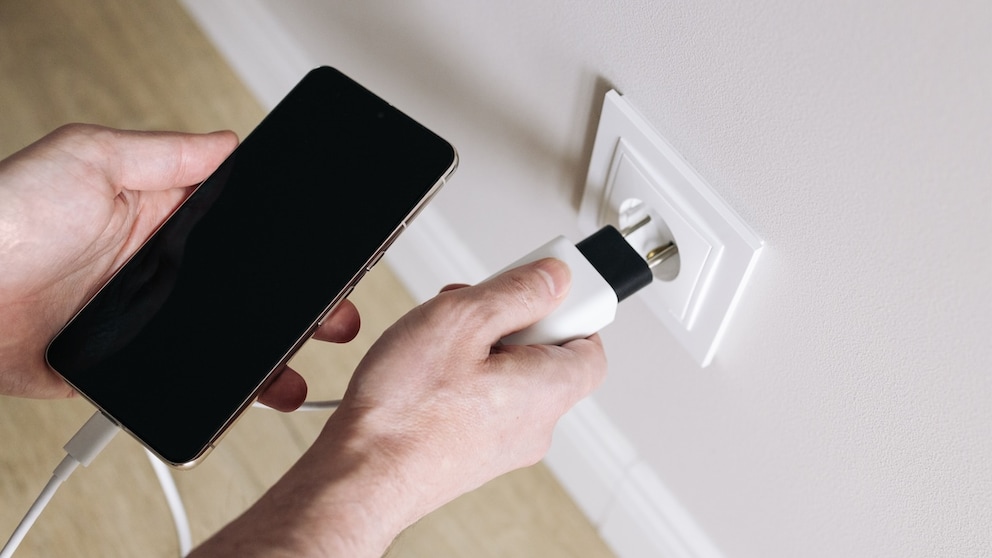
Charging a smartphone with a charger? It’s not rocket science: Just plug it in, and the rest takes care of itself. But many don’t know there’s a small potential error beforehand. There’s a specific order to follow when connecting devices to power. Ignoring it could risk damage to the device in the worst case. More on this at TECHBOOK.
Among the many tech myths circulating today, some involve smartphone charging. While most focus on percentages and fast charging, another detail is often overlooked: the recommended order for connecting the charger.
The Correct Order for Charging a Smartphone
Most of us unplug chargers when not in use—for safety reasons and to avoid unnecessary power consumption. When the smartphone needs a recharge, the phone, cable, and power adapter must be connected. And this is where a question arises: What should be connected first? Does it matter? Some manufacturers say otherwise.
Among them is Huawei. On the support page of the hardware company, you can read the following recommendation: “Before charging, the plug should first be connected to the outlet.” Doing it the other way around is considered a mistake. When unplugging, you should first disconnect the phone and then remove the power adapter from the outlet.
Do Charging Errors Cause Smartphone Damage?
Huawei cites a physical effect known as overvoltage or inrush current. Whenever a charger is supplied with power from the outlet, there can be a brief voltage spike—also called “inrush current.” This lasts only fractions of a second but can theoretically stress sensitive components.
The recommendation to first connect the charger to the outlet and then the smartphone is meant to keep the small voltage spike away from the phone. According to Huawei, such overvoltage can lead to various problems, including reduced battery life, performance drops, data loss, unexpected restarts, screen flickering, or even circuit damage.
5 Tips for Properly Charging Your Smartphone Battery

How to Protect Electronic Devices During a Thunderstorm
Expert Insights
TECHBOOK spoke with Faruk Gadzo, IT CTO at a large German e-commerce company. He confirms that it’s generally safer to connect the power adapter to the outlet first and then the smartphone. However, he also notes that there’s no need to worry if you don’t follow this order every time. “A well-maintained branded power adapter won’t send a voltage spike to the phone,” Gadzo assures.
The recommendation is more about the brief milliseconds right after plugging in, during which a power adapter could theoretically generate voltage spikes at the USB outputs. This becomes problematic mainly with very cheap or damaged power adapters. “At the other end of the quality spectrum is the 1-euro adapter with a faulty capacitor,” the expert says. In the worst case, such devices could pass significantly high voltages to the smartphone.
Also of interest: Why You Should Never Charge Your Smartphone Next to the Bed
Conclusion
You’re certainly not making a mistake by following Huawei’s recommendation, which our expert also supports: first connect the charger to the power, then the smartphone. However, this isn’t strictly necessary in practice, as modern smartphones and high-quality power adapters are designed to handle typical voltage spikes in everyday use. What’s clear: More important for battery health are heat management, charging quality, and the power adapter used.