


August 19, 2023, 4:10 pm | Read time: 3 minutes
During a proper thunderstorm, there are loud crashes and flashes. A lightning strike can easily cause power surges and damage electronic devices. But how can you protect yourself against this?
A severe thunderstorm can be costly. In recent years, insurance companies have recorded significant damage due to lightning strikes. The reason: Often, affected individuals have to repair or replace expensive heating or blind control systems. If lightning strikes nearby, secondary currents can travel through power lines into the house and thus into the electronics. And a surge protector doesn’t always help.
Overview
Surge protection can help–but has limits
Household appliances are generally required to withstand certain surges up to 1,000 volts for a short time. This doesn’t mean they will continue to operate without damage, but you can turn them back on after an outage. However, if an older device has already experienced several of these surges, the likelihood of a short circuit increases. Additionally, if lightning strikes the ground, it involves a voltage of up to one million volts.
Also read: 5 clever devices to protect yourself from burglars
Almost Everyone Makes This Mistake When Charging Their Phone

4 Tips for Your Own Gaming Desk
Protect devices from surge damage
So how can you protect against this? Modern houses offer coarse, medium, and fine protection. The coarse protection is located where the cable enters the house from the street, where the voltage is already reduced. The medium protection is in the distribution box, and the fine protection is at the outlet.
However, coarse and medium protection are not for amateurs, experts warn. Fine protection is provided by outlets and power strips with surge protection, also for telephone and network sockets.
Beforehand, you should ensure that the electrical installations meet current technical standards. The outlets in the house must be grounded. There are also special plug adapters for the Ethernet connection of a modem or antenna connections.
Plug adapters directly into the wall
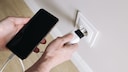
A plug adapter can only be effective if it has good contact with the ground wire of the external installation. Users should not use a power strip or extension cord; the protection belongs directly in the wall outlet. Experts therefore advise paying attention to brand names and a certification mark when purchasing.
Read more from our colleagues at myHOMEBOOK: Is it dangerous to shower during a thunderstorm?
The best protection remains unplugging the device. This applies not only to the power plug but also to antenna and network cables. Lightning rods installed by professionals help against a direct lightning strike to your house but do not guarantee that a household appliance won’t be damaged or destroyed in a strike. The energy from the lightning can still spread through the cables.