

July 24, 2026, 11:23 am | Read time: 3 minutes
Researchers from Kiel have developed an innovative communication system for batteries. The technology is designed to enable batteries to transmit important status data directly from within—saving both cost and space.
Batteries to Report from Within
In electric cars, home storage systems, and other energy storage devices, monitoring battery cells is crucial for safety and longevity. Until now, sensors have typically measured temperatures on the outside of the cells. The issue is that critical heat often originates inside and can initially go undetected.
A research team from the Christian-Albrechts-University of Kiel has now presented a different approach, reports the “Information Service Science.” Instead of using additional wiring, sensors send their data through existing power connections. The researchers refer to this as a kind of “talking battery” that can deliver information directly from inside the cell.
Also interesting: Chinese smartphone manufacturers shake up the e-car market

What to Consider When Choosing EV Batteries

Researchers Develop Super Battery
Existing Wiring Takes on a Second Role
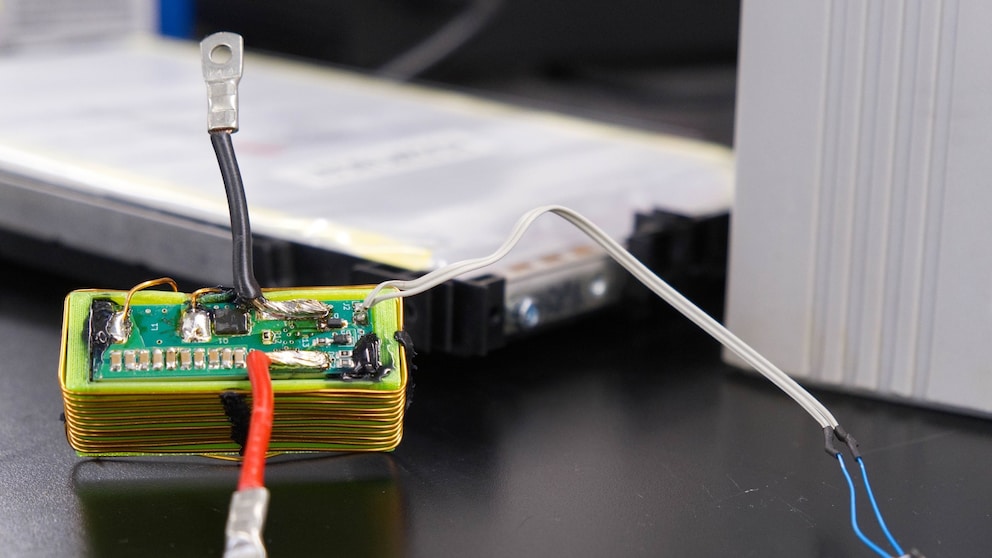
The core of the development is a small electronic circuit. This converts measurements into digital signals and transmits them via the battery’s regular charging lines. As a result, additional data cables are not needed. This could not only save space within the battery but also simplify its design.
According to an initial cost estimate by the Kiel team, the system could be about 35 percent cheaper than conventional solutions with separate sensor and data lines. Moreover, the technology is not limited to temperature measurements. Pressure, gas, or other sensors could also transmit their information through the same communication path, providing a more comprehensive view of the battery’s condition.
More Safety for E-Cars and Home Storage
The researchers see their development as a first step toward intelligent batteries that can continuously monitor and report their condition. This could allow problems to be detected earlier, before they lead to damage or safety risks. This would be a significant advantage, especially for electric cars but also for stationary energy storage systems.
In the long term, the technology is to be further miniaturized. According to the team, integration directly into future battery materials is even conceivable. The scientists see potential applications not only in electric cars but also in home storage systems and facilities for storing wind and solar energy. The battery of the future could thus be much more than an energy storage device—it would also serve as its own information source.