

October 21, 2026, 3:15 pm | Read time: 4 minutes
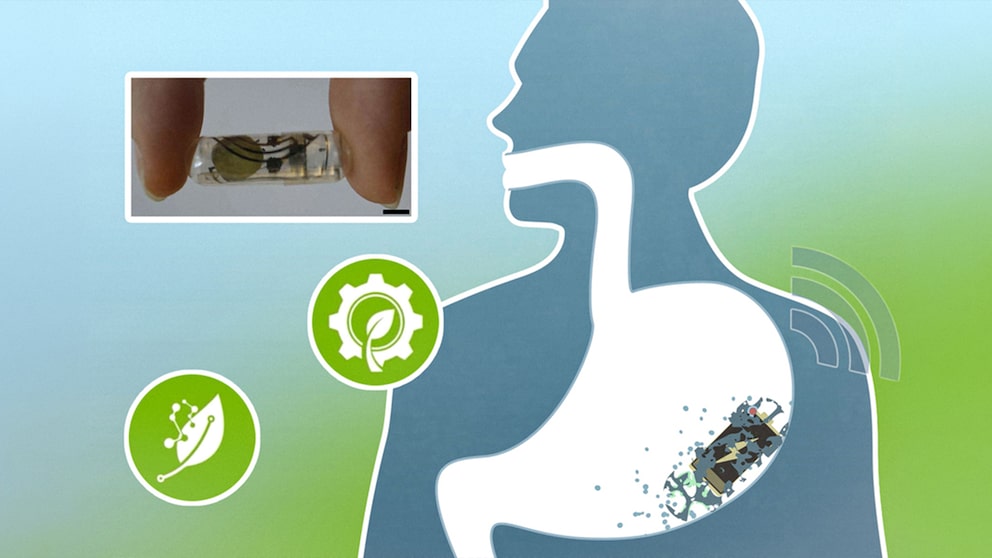
A battery that can be swallowed and then breaks down in the body sounds quite unusual at first. Researchers at the Massachusetts Institute of Technology (MIT) have developed just such a power source. Their battery is intended to power small electronic devices in the digestive tract in the future. However, it will likely be some time before it is actually used in humans.
Battery to Fully Degrade in the Body
Swallowable electronics have been around for a while. Small capsules can, for example, collect data in the body or deliver medication. However, some of these devices require their own power source. So far, small button cells have been used for this purpose. These can contain lithium, silver oxide, or other metals. If their protective casing is damaged in the digestive tract, there is a safety risk, according to the MIT researchers.
The team therefore developed a battery that is not meant to remain in the body permanently after its work is done. It uses magnesium for the anode and molybdenum trioxide for the cathode. An ionic liquid gel serves as the electrolyte. The materials are bioresorbable, meaning the body can gradually break them down and absorb them.
The battery currently comes in two forms. One version is round and measures 7.5 millimeters in diameter, while the other is elongated and 24 millimeters long. Both deliver a voltage of 1.84 volts.
Three Days of Energy in the Digestive Tract
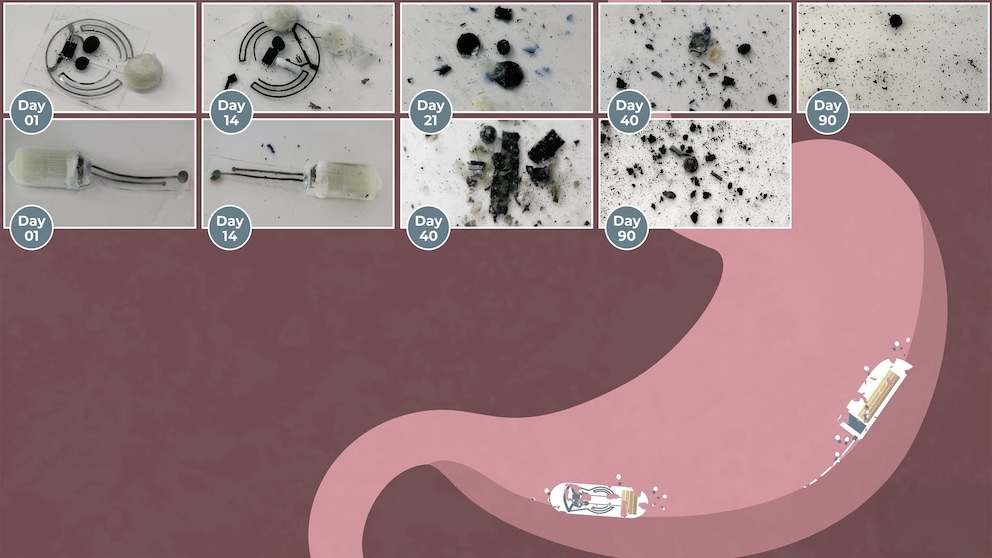
But how long does such a battery actually function in the stomach? To find out, the researchers first tested it in a highly acidic liquid meant to simulate stomach conditions. In this environment, the battery operated normally for about three days. After that, its performance gradually declined. After a few weeks, it had completely disintegrated.
The team then tested the technology on pigs. The researchers wanted to find out if the battery could provide enough energy for medical devices under real conditions. In one experiment, the elongated battery was placed in a capsule that stimulated the stomach lining with a weak electric current. This can encourage certain cells in the stomach to release the hunger hormone ghrelin. After 20 minutes of stimulation, the ghrelin level in the animal experiment increased by about 50 percent. In the long term, such a system could be of interest for conditions associated with nausea or loss of appetite.
Almost the entire device could be made bioresorbable. An exception was the circuit board. Components that the body does not absorb can pass through the digestive tract and be excreted.

Researchers Develop Super Battery

Energizer Develops Child-Safe Button Batteries
The Battery Can Also Power Radio Technology
In a second experiment, the round battery powered an RFID tag. Such a system could be used, for example, to check whether patients have actually taken their medication. The RFID tag made of molybdenum and cellulose is also bioresorbable. In the animal experiment, the technology was able to continuously transmit from the digestive tract. The connection reached up to 1.5 meters.
Also of interest: Scientists find a way to restore old batteries
The technology could also be interesting for the environment. Because the materials used break down, such batteries could not only reduce potential risks in the body. They could also prevent conventional batteries from entering the environment through wastewater after being excreted.
It May Still Be Some Time Before Human Use
Despite the unusual results, this is still preclinical research. The tests have not yet been conducted on humans, and the number of test animals was small. Additionally, in one of the systems, the circuit board used is not biodegradable.
Before such devices can actually be used in patients, researchers need to further investigate their long-term safety. They also aim to further develop the technology so that entire devices become bioresorbable.
A clinical study is already planned for the SAFARI system. According to MIT, it is expected to start in about two years. The idea of a battery that can be swallowed and then dissolves in the body is no longer just an unusual thought experiment. However, it is still a long way from practical everyday use and application in humans.