

May 31, 2026, 7:29 am | Read time: 3 minutes
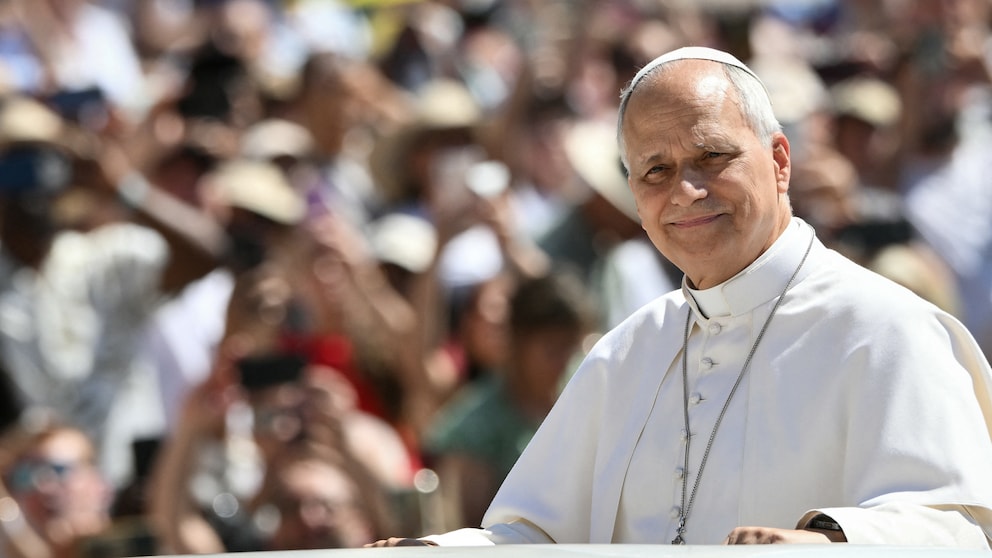
Pope Leo XIV has released a new encyclical titled “Magnifica humanitas.” In it, he addresses the church, society, and the impact of modern technology on humanity. The head of the Catholic Church delves particularly into artificial intelligence. The pope warns against reducing people to mere data, efficiency, or economic value. Instead, he calls for aligning technological developments more closely with responsibility, dignity, and the common good.
However, this very document is now at the center of an AI debate. Several analyses are examining whether artificial intelligence might have assisted in crafting certain passages. This has not been proven yet. Nevertheless, the suspicion is drawing attention because the encyclical explicitly critiques the risks of technology.
Clues from Linguistic Peculiarities
The discussion was sparked by an analysis by LessWrong author Linch Zhang. He examined the English version of the encyclical and discovered several linguistic peculiarities. Notably, the word “genuinely” appears significantly more often than in previous papal writings. Zhang associates this phrasing with the AI family Claude from the company Anthropic.
Additionally, the author points to other linguistic patterns. These include frequently used em dashes and certain three-part sentence structures. For Zhang, these features could indicate the use of AI in drafting or editing.

AI Increasingly Ignores Rules

Why People Fall in Love With Their AI Chatbots
AI Detector Yields Varied Results
For further examinations, Zhang used the AI detector Pangram. The results varied. Some text sections appeared unremarkable according to the analysis, while other parts showed higher values that could suggest AI usage. For the first 20 paragraphs, the tool reported an AI presence of 11 percent. Other samples showed differing values.
According to the author’s assessment, this could mean that not the entire document is affected. It is conceivable that only individual passages were edited or formulated with AI.
Also of interest: Revealed! AI for Companies More Expensive Than Human Staff
The industry magazine “The Verge” also conducted its own test. About 2,000 words from the encyclical were analyzed with Pangram. The tool classified 46 percent of the examined content as AI-generated.
Studies Warn Against Misjudgments
Despite these results, there is still no definitive proof of AI use. Studies show that AI detectors can deliver very different results depending on the text. Therefore, these tools are not considered infallible.
Even Pangram itself points out that misjudgments are possible. The company cites a low error rate for false positives of about 1 in 10,000 for March 2025. Nevertheless, these figures show that false alarms cannot be ruled out.
According to “Reuters,” encyclicals are typically prepared over a long period. Popes carefully select the topics of such writings before the texts are later published in multiple languages. Therefore, individual linguistic peculiarities or fluctuating detector values are not yet sufficient to conclusively prove that a chatbot wrote entire paragraphs of the encyclical.