

April 5, 2026, 2:01 pm | Read time: 6 minutes
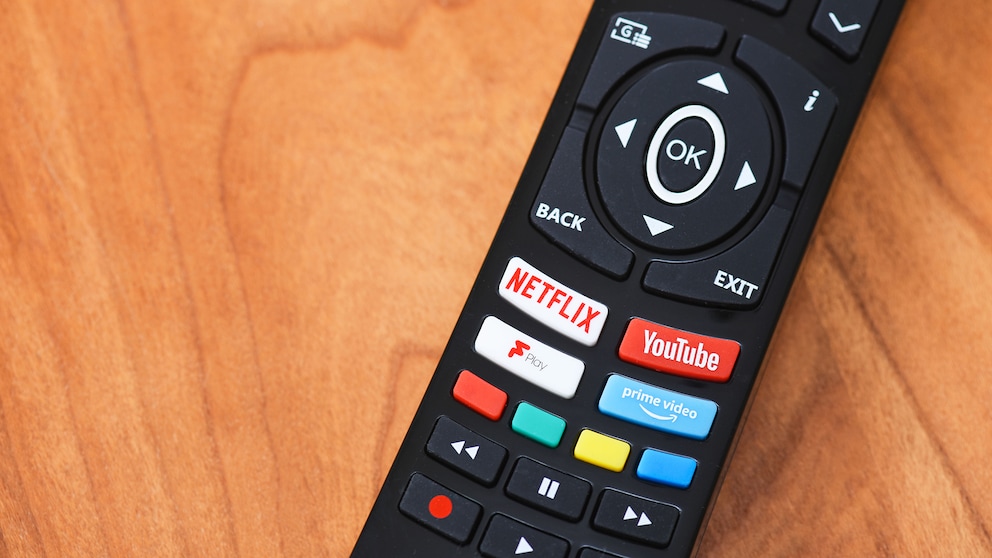
In German households, they are everywhere–on average, four to six per home. Overall, more than 150 million remote controls are estimated to be in circulation, according to GFU Consumer & Home Electronics GmbH. They became truly indispensable only with private television and the sudden explosion of program variety. However, their history began much earlier–with the radio.
More precisely, with radio waves. The technology inventor Nikola Tesla used them as early as 1898 for his “teleautomation.” This oversized remote control is considered the first precursor of a remote control. It was used solely to remotely control a model boat. It did not become a mass product.
After that, not much happened technically for a while. It wasn’t until the 1930s and the beginning of the radio era that the history of the remote control gained momentum. Although there were already early TV sets at that time, it took a while for televisions to become widely available. That’s why the first remote controls for radios appeared. These remote controls were still connected to the receiver by cable. With the push of a button, for example, the volume, pitch, or tone brightness could be changed from the armchair.
Different Development Stages of TV Remote Controls
From the 1950s, televisions spread into living rooms. At the same time, various companies worked on developing a remote control for the “flicker boxes.” Although the first devices controlled radios from a distance, the term “remote control” is classically closely associated with the history of television.
A technical race began. The first TV remote controls still worked with cables. In 1950, a breakthrough was achieved. The U.S. company Zenith Electronics presented the “Lazy Bones.” For the first time, it was possible to switch between channels. However, the excitement was limited, as the selection of TV channels was modest in this early phase.
The U.S. continued to show inventive talent. In 1955, Zenith Electronics introduced the “Flash-Matic.” This device, visually a mix between a hairdryer and a gun, worked without cables and sent a light beam at the push of a button. When this hit one of the corners of the TV, photo cells reacted. These then triggered various functions: turning the device on and off, adjusting the volume, or changing channels. The only downside: If sunlight or other light sources hit the photo cells, they also inadvertently acted as a remote control.
Ultrasound Makes Cables Disappear
Therefore, technical development quickly moved in another direction. Remote controls using ultrasound marked the next development step. As early as 1956, Zenith Electronics again presented the “Space Command” as an advancement. Technically, the device contained small hammers. These struck a metal rod at the push of a button. The resulting vibrations were inaudible to humans but sufficient to control a TV from a distance. Unfortunately, dogs can hear ultrasound tones. When the owner changed the channel, it likely irritated the dog’s hearing.
German companies lagged behind in developing remote controls for TV sets for a long time. Although the company Tonfunk offered the “Magic Switch” as a first wireless remote control for the radio in 1956, it wasn’t until 1961 that Grundig made a splash with the “Magic Mirror.” The accompanying “remote controller” also worked via ultrasound.
Technically, developers were at a standstill for quite a while. However, it became apparent that ultrasound remote controls were not optimal on various levels. The issue of high frequencies affecting dogs’ hearing had long been a concern for developers. Additionally, jangling key rings or clashing metal knitting needles were enough to unintentionally control the TV remotely. Therefore, experts worldwide searched for another technical solution that was less prone to interference.
Well-Known TV Manufacturer Halts Production
How Germany Became the Cradle of TV Sets–and Nearly Lost It All
Infrared, an Invention (Also) from Germany
This time, German developers were pioneers. However, it took a stroke of luck to help the new technology break through. Siemens had been working on infrared remote controls since the early 1970s. In 1974, a first device with this technology was presented at the Munich Electronica trade fair. However, it was a headphone connected to a TV via an infrared interface. The developers already knew that infrared was also excellent for remote control of TV sets. But none of the major German TV brands were interested.
Grundig, for example, politely declined when offered this technology for remote controls. But then there was a problem. Grundig was about to present a new series of TV sets. However, the presentation was delayed because the new TVs were autonomously changing channels. What happened? Unfortunately, the device produced a constant ultrasound tone. A disaster. However, a Grundig developer remembered this new infrared technology. In 1976, Grundig presented the “Telepilot 21,” based on Siemens’ infrared research.
Thus, a new technical standard for remote controls was born. The “Telepilot 21” also set design standards. To this day, the buttons are arranged in a similar system. Modern remote controls are now longer, lighter, and slimmer.
Also interesting: Does the TV remote control still have a future?
Remote Controls Soon Obsolete?
Infrared remote controls remain standard to this day. Technically, not much has changed in recent decades. However, the number of buttons has significantly increased. The “Telepilot 21” had, as you might guess, 21 buttons. Modern remote controls sometimes have twice as many buttons. This is mainly due to the increase in program offerings. In West Germany, there were long only three channels, and in East Germany, there were two programs to choose from. Today, the variety of programs knows almost no bounds, thanks to the internet. In addition to classic TV programs at home and abroad, there are various streaming services. You can channel surf until the buttons glow.
Thanks to voice assistants, a remote control is often no longer needed to change the program. Many smart TVs can be controlled by voice. Your voice might be hoarse, but it can never be misplaced. Not only because of the eternal search for the device, some experts believe that the classic TV remote control could soon be obsolete after more than 75 years.