

October 7, 2024, 5:01 pm | Read time: 12 minutes
To ensure the podcast’s sound quality impresses listeners, a high-quality podcast microphone is essential equipment–this applies to beginners as well as experienced podcast professionals or advanced users. What aspects are important? And which models are worthwhile? TECHBOOK has the answers.
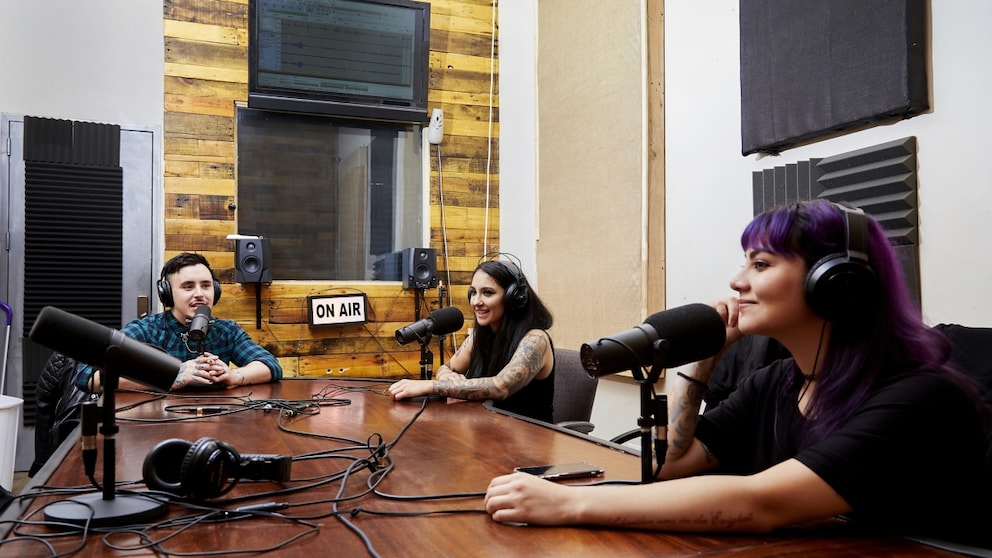
Podcasts have become a popular alternative to music and audiobooks in recent years. No wonder: Thanks to affordable audio software, even the inexperienced can get started without major hurdles. A professional recording studio is not necessary to record a podcast–but a good podcast microphone is. A high-quality device prevents noise or crackling in the recording. Which models are recommended and what criteria play a role in the selection, you will read below.
Overview
Important Purchase Criteria for Podcast Microphones
Anyone who has browsed in a specialty store or online quickly realizes: The selection of microphones is huge. Which microphone is suitable depends primarily on the podcast format. A solo podcast, for example, has different requirements for the mic than an interview podcast. Sensitivity, directional characteristics, and connection play a role in choosing the right microphone.
Sensitivity: Dynamic Microphones and Condenser Microphones
Dynamic microphones capture sound from the front. They register less ambient noise because they are not as sensitive. If you record the podcast in a noisy environment, this is a good choice. However, if you make podcast recordings in a professional studio or acoustically shielded room, you should opt for condenser microphones. These are more sensitive and capture voices in great detail–but possibly also unwanted ambient noise.
Directional Characteristics: Which Microphone is Suitable?
Directional characteristics indicate from which direction the microphone sensitively records sound and from which area it dampens or mutes noises. For podcasters, the so-called cardioid pattern is the most sensible: Sounds coming from the front are finely recorded by such models. Sounds from the side or back, however, are dampened.
Alternatively, for a dialogue podcast or interviews, the figure-eight pattern (bidirectional) is also an option. These models are sensitive in two directions, allowing speakers to sit opposite each other at one microphone.
Occasionally, you will find devices with multiple selectable directional patterns. Two additional options may appear: An omnidirectional pattern captures sound from all directions, while stereo recording primarily captures side sounds. This is practical when multiple audio sources are in front of or around the microphone.
Connection: USB or XLR?
USB microphones can be connected to the computer via the port. The setup works without accessories and is quite simple. Therefore, these variants are ideal for beginners and use on the go. However, they are only suitable for recording one person.
XLR microphones, on the other hand, can also be used for more professional multi-setups, i.e., for recording with multiple mics. The sound is also slightly better than with USB models. In any case, an audio interface is needed as an interface to connect the microphone to the PC. These models are more flexible in their application possibilities, but they are not as suitable for use on the go.

New AirPods Model Finally Gets Pro Features

The Best Headphone Deals for Prime Day 2023
The Best Podcast Microphones at a Glance
You already know what to look for when buying. But which models are worthwhile? TECHBOOK presents the best podcast microphones below and reveals what they can do.
Rode NT-USB
The Rode microphone is a mid-range model that is a good choice for both beginners and experienced podcasters. It consistently receives positive reviews in online retail, is a customer favorite, and one of the best recommendations in this price range. With a USB connection, the microphone is ready to use immediately thanks to plug-and-play and requires no additional driver. It can even be used with iPads via an adapter–though an additional app like “Garageband” or “Rode Rec” is required.
The headphone jack is particularly practical: When headphones are connected to the mic, you can hear yourself during the recording without delay and optimally adjust the sound quality. To adjust the monitoring level, there is a rotary control on the side of the device. The second control is for mixing between the computer signals and the mic. This model is a condenser microphone with a cardioid pattern–it is quite sensitive. It not only captures spoken words but also vocals and instruments in detail.
Audio-Technica ATE2100x-USB
The Audio-Technica ATE2100x-USB is an all-round talent for every budget. This versatile microphone was developed for podcasts, voiceovers, and live performances. The microphone feels very robust and fits well in the hand. To ensure the live podcast is successful, the Audio-Technica ATE2100x-USB has two outputs. For digital recording, there is a USB output, and the XLR output can be used to connect the microphone input to a sound system.
In addition to useful cables, a stand is also included in the delivery. Unwanted noises are reduced by the cardioid pattern. This means that sound from the front is recorded louder than sound from the side. The advantage of this pattern is that unwanted ambient noise or echoes are minimized. The Audio-Technica ATE2100x-USB also includes a high-quality analog-to-digital converter for the best possible playback and a headphone jack for monitoring at the microphone.
Tonor TC30
The Tonor TC30 is a USB condenser microphone that is particularly suitable for beginners looking for an affordable microphone for applications like podcasting, streaming, online meetings, or gaming. It offers simple plug-and-play functionality, compatible with both Windows and Mac operating systems, without requiring additional drivers. The cardioid design optimally captures sound from the front while largely suppressing background noise. This is especially useful when recording in a less-than-ideal environment.
The microphone is compact and comes with a stable desk stand and a shock mount that minimizes vibrations. A USB-C cable is also included, making the connection easy and quick. Although the Tonor TC30 is not a high-end microphone, it offers solid sound quality and is an attractive choice for beginners seeking a reliable solution for everyday use.
Blue Yeti X
Most podcast microphones work with a cardioid pattern and are therefore suitable for a solo podcast–or each speaker needs their own mic. The Yeti X from Blue Microphones, however, can do much more: Podcasters can choose from four different patterns (cardioid, omnidirectional, bidirectional, or stereo) to suit their needs. This makes the Yeti X suitable for interviews, music recordings, or streaming. The pattern can be changed with a button on the back. On the front of the microphone, there is a multifunction button to adjust mic gain, mute, and headphone volume.
The microphone is firmly screwed to the desk stand. There is no shock mount to cushion vibrations and other noise, nor is there a pop filter. However, the Blue model scores with the “Blue VO!CE Effects” software and integration with Logitech G Hub–allowing for individual sound settings via the computer.
Shure MV7+
The Shure MV7+ is also among the best podcast microphones. It is a dynamic mic and thus ideal for recordings outside of studios. The model earns its place on the list mainly thanks to its dual connection: At the bottom of the microphone are both an XLR and a USB-C output. This allows for both analog and digital recordings. The USB connection enables easy connection to mobile devices, which is especially useful for beginners. Professional podcasters connect the device to an audio interface via the XLR port.
The illuminated touch panel on the top of the device allows you to adjust the volume by touch. The operation is cool–but not as intuitive as buttons and therefore takes some getting used to. For further detailed settings, users have access to the “ShurePlus Motiv” desktop app.
It is ideal that the model has an integrated pop filter. Why is this so important for a podcast? An internal or external pop filter captures plosive sounds when speaking (with sounds like “p” or “b”) as well as breathing noises, ensuring a harmonious and consistent sound.
Elgato Wave 3
The Elgato Wave 3 is a microphone that is very easy to handle. Thanks to Clipguard, overdriving is almost impossible, and the multi-layer noise filter excellently filters out the universally unpopular plosive sounds. The Wave Link software provided by the manufacturer was specially designed for the versatile use of the Elgato Wave 3, allowing simultaneous control over many channels. The use is very intuitive. The Elgato Wave 3 makes the hearts of all content creators, whether Twitch, YouTube, Instagram, or podcast, beat faster.
Tonor Q9
Those new to the world of podcasting don’t need an expensive studio setup right away. To get a taste of production, a starter set like the one from Tonor is enough. It offers everything important for the first setup at a top price-performance ratio: In addition to the microphone, there is a microphone arm including a table mount, a shock mount, two filters, and a cable. The all-metal shock mount prevents the recording of unwanted noises and vibrations. The pop filter and foam cover filter out noise. Top: This accessory can also be used for other microphones. The microphone set also makes a good impression in everyday life: In addition to podcast recording, the model is suitable for streaming, gaming, and online meetings.
Volume buttons on the front control the gain. What other devices regulate with a separate mute button, Tonor solves with a longer press of the volume down button–a bit cumbersome in practice. Unfortunately, there is also no headphone jack. However, for the price of around 60 euros, this is acceptable.
HyperX Quadcast
The Quadcast from HyperX is a USB condenser microphone that, like the Yeti X from Blue, features four different directional patterns. This makes it suitable for a variety of recording situations.
For easy operation during recordings, there is a mute button on top of the model. Convenient: The glowing LEDs signal that the microphone is on. At the bottom, there is a dial to adjust the volume. And if you not only want to record your podcast with the device but also like to game, you will benefit from the certification for Discord and TeamSpeak as well as compatibility with the PlayStation 4.
If you like it even more colorful, go for the QuadCast S: The model comes with individually adjustable RGB lighting. Especially in a video podcast, the brightly lit microphone makes quite an impression. However, the additional colored lights cost about 40 euros more.
Samson Q2U
The Samson Q2U is suitable for all applications and combines USB and XLR connectivity, making the Samson Q2U ideal for podcasts, live recordings, and studio recordings. The sturdy design and cardioid pickup pattern provide clear transmission and reduce background noise.
A microphone stand, windscreen, and necessary cables are also included. This makes it easier to get started. A headphone jack with a volume control allows for absolutely latency-free monitoring. The Samson Q2U is compatible with most computer-based audio workstations, allowing recordings to be made with improved control.
Auna Mic-900B
If you’re not sure yet whether you want to regularly record podcasts, you’re initially looking for a device to try out at a low price with a good entry-level mic. In terms of price/performance, the Auna Mic-900B is the best option here, even if it is not suitable for permanent professional use. Auna relies on USB compatibility. The frequency range (30 Hz to 18 kHz) is more than sufficient for speech (and singing) in the first digital steps. Weighing just under 300 grams, this microphone is easy to transport–a protective bag is included in the delivery.
Shure MV88+
The Shure MV88+ is great for podcast recordings but also shines with vocals, instruments, or even videos. Four different directional patterns and numerous other settings are available through the ShurePlus MOTIV program. A microphone stand or desk stand is not included, but with the 5/8-inch microphone clip, the microphone can be attached to many stands. The model is particularly compact and lightweight, making it ideal for use on the go and connecting to mobile devices.
Conclusion
Whether it’s a solo project or an interview conversation–there are now suitable podcast microphones for every endeavor, every recording environment, and every possible further use. If the available budget plays a major role, models like the Auna MIC-900B or the Tonor Q9 offer top models for well under 100 euros. If you’re willing to spend a bit more, high-quality professional microphones like the Shure MV7+ or the Shure MV88+ are available.