

July 6, 2018, 10:02 am | Read time: 6 minutes
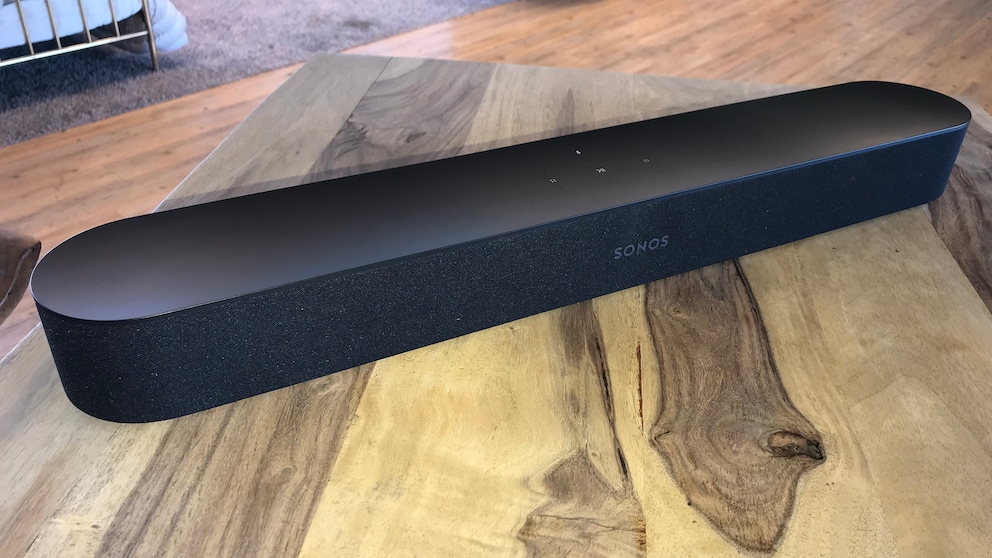
Flat acoustics, incomprehensible voices, and the sound is always too loud or too soft: Modern flat-screen TVs often deliver poor sound quality. The new Sonos Beam is supposed to provide a remedy. TECHBOOK has tested the soundbar against the most important criteria.
Sonos can confidently be called the Mercedes of soundbars. With the Beam soundbar, the company could tap into a new buyer market: Until now, the offered devices Playbar and Playbase, each priced at 799 euros, have been simply too expensive for many interested parties. Sonos now wants to offer them a more affordable alternative for 449 euros. The device will be delivered to German customers in black and white starting July 17. TECHBOOK has already tested the speaker in advance and evaluated it based on five criteria that matter for a soundbar.
Setup and Operation
What good is the best soundbar if the operation is cumbersome and drives you crazy? The setup of the device should be straightforward. To activate the Beam, a Sonos ID–meaning an account with Sonos–is necessary. Quite a bit of personal data is requested during account creation. It’s unclear why–after all, it’s just a speaker. The setup via app (for iOS and Android) wasn’t really comfortable either, as the Beam repeatedly had trouble establishing a connection. Once it’s finally set up and connected to the TV, it can be controlled either via the TV remote, smartphone, Alexa, or touch controls on the device itself–that’s all! The soundbar responded immediately to all commands during the test.
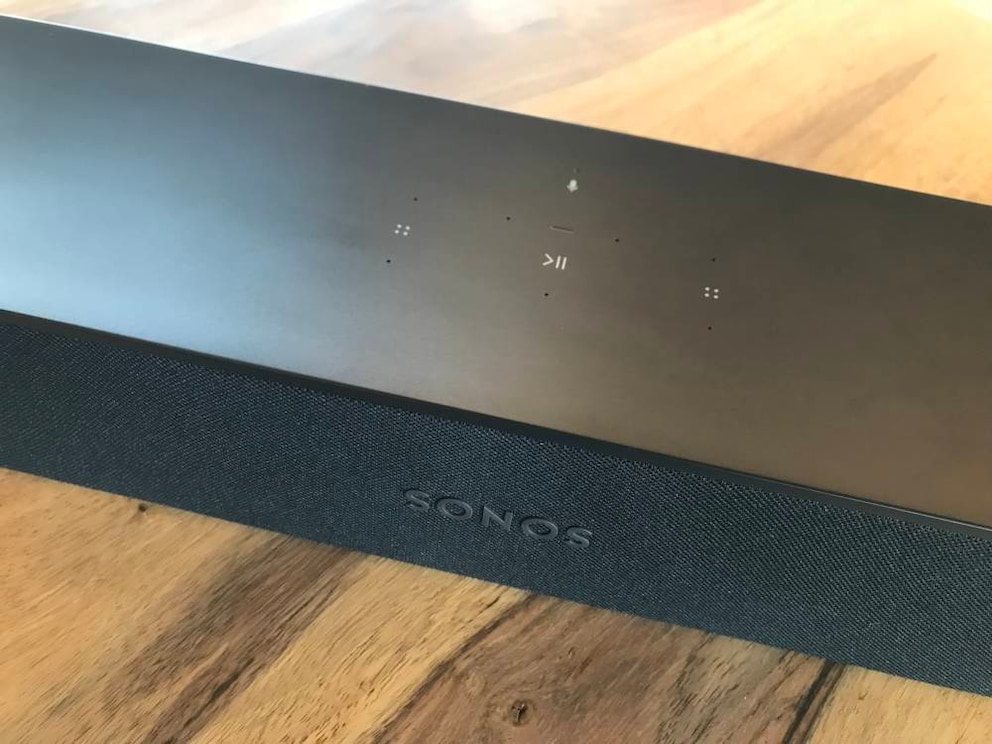
Photo: TECHBOOK / Andreas Filbig
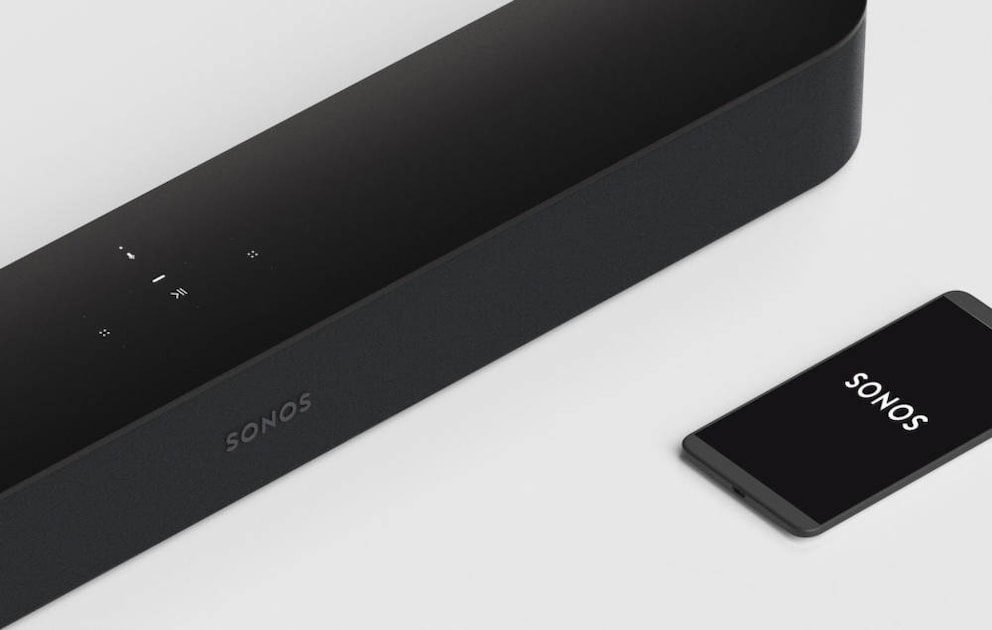
Photo: Sonos
Connectivity
Ideally, a soundbar serves as the speaker hub in the living room. It should be accessible for all devices and suitable for more than just TV playback. The Sonos Beam features an HDMI port for the TV and a LAN connection for the router. Additionally, there’s an adapter for an optical connection (Toslink) if no HDMI port is available on the TV. Wireless connectivity works via Wi-Fi, Bluetooth, and Apple’s Airplay. The device can currently be controlled with Amazon’s voice assistant Alexa, allowing the use of music services like Spotify and Apple Music. Upon release, Google Home and Siri assistants are expected to be added. How they compare, you can read here.
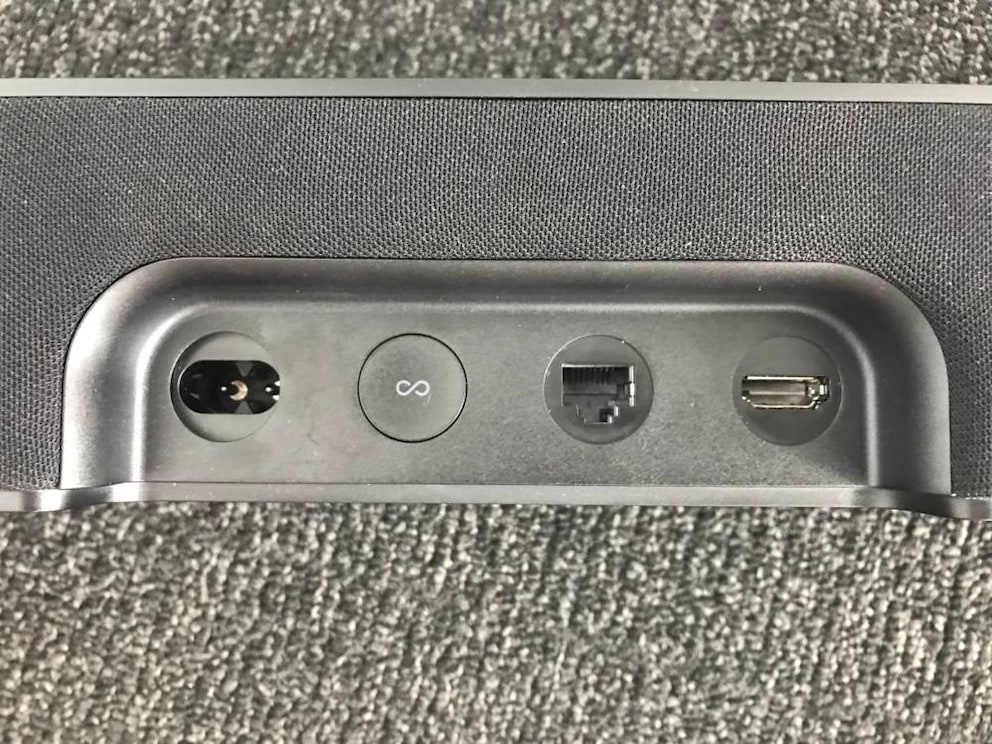
Photo: TECHBOOK / Andreas Filbig
Only retro fans might miss an additional RCA input to connect a turntable or CD player, for example.
TV Sound
The core competency of a soundbar is to replace the weak sound of TV speakers and provide viewers with a great, understandable audio experience. The Sonos Beam excels in this area, with movie dialogues being crystal clear throughout the room. This is ensured by a built-in tweeter. The four woofers provide the necessary power in the voices. Additionally, the Beam features a night mode that automatically balances strong volume differences in movies and series, preventing viewers from being startled by sudden volume increases. However, the Beam does not offer Dolby Atmos–sound from the ceiling.
The combination of woofers, tweeter, and three passive radiators for bass doesn’t have enough power to create a true cinema atmosphere. In the test, the Beam was placed in a 25-square-meter living room with a ceiling height of about 3.50 meters. It’s not really expected to fully and richly fill this space from the compact device (68.5 x 651 x 100 mm). Even during a manufacturer presentation in a sound-optimized, tiny room, this was only achieved with an additional subwoofer priced at a hefty 799 euros.
Music Sound
In times when a stereo system is no longer standard in a living room, soundbars must also excel in music playback. In this field, the Beam competes not only with other soundbars but also with its own voice assistant Sonos One, as well as Apple’s Homepod, Google Home, and Amazon Echo. The Beam shows its strengths from TV playback in the music area as well: Powerful voices and rich sound are achieved by the slim bar when turned up properly. However, the bass still leaves something to be desired, as the Beam is clearly designed to be operated with an extra subwoofer. For a party in your own living room, the soundbar is more than sufficient, as a thorough test by the editorial team on a Friday evening showed. At least the missing bass spares the neighbors’ nerves.
Due to its dimensions alone, strong bass is not to be expected, as bass needs space. In comparison with the speakers of voice assistants, it still comes out ahead, and other soundbars of this size can’t do much better. The only annoyance: While other manufacturers include a subwoofer or at least offer it at a low cost, Sonos requires an additional 799 euros for theirs.

Apple HomePod in TECHBOOK Review

Easily Improve Your TV’s Sound
Price/Performance Ratio
At 449 euros, the Beam is 350 euros cheaper than other models from Sonos, but still not for the tight budget. For its still proud price, the Beam comes across as high-quality and offers a true flood of functions. In our opinion, the overall package doesn’t quite justify the price, as there are now other very good soundbars available on the market for just a third of the price that also offer good sound.
Also interesting: The 3 best soundbars under 150 euros
TECHBOOK Conclusion on the Sonos Beam
Thanks to its stylish design and great TV sound, the Sonos Beam is an asset to any living room. True cinephiles and music lovers will only get their money’s worth with an expensive additional subwoofer. In price comparison with other devices, the Beam only comes out ahead compared to the Sonos Playbar. Here, as with Apple, you pay a lot for the name and design.
Praiseworthy is the variety of functions in the Beam: Combining the three leading voice assistants in one device is excellent. Instead of reaching a completely new customer base, the Beam could rather become a cost-effective alternative for the existing clientele. Those who have no problem spending 1,149 euros for an iPhone X can also confidently consider purchasing a Sonos Beam.