

November 10, 2026, 3:43 pm | Read time: 6 minutes
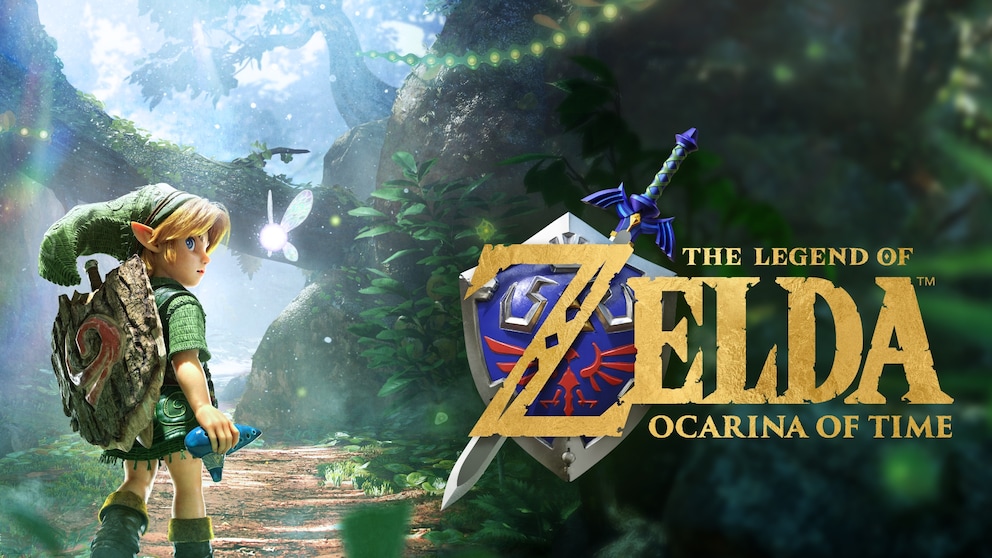
More than a quarter-century after the original, Nintendo dares to remake one of the most esteemed video games ever. TECHBOOK tested how well “The Legend of Zelda: Ocarina of Time” works on the Switch 2.
When “The Legend of Zelda: Ocarina of Time” was released for the Nintendo 64 in 1998, the action-adventure set new standards. To this day, the game holds a top spot on Metacritic’s video game leaderboard with a Metascore of 99 out of 100. Accordingly, the stakes are high for Nintendo with the remake, which is exclusively for the Switch 2.
The remake is produced by Zelda veteran Eiji Aonuma, who was already one of the game directors for the original and is now coordinating a significantly younger team. The result stays true to the original but appears much more modern both technically and in gameplay. It’s clear from the first few minutes that Nintendo hasn’t just increased the resolution. Many elements have been visibly reworked without losing the original character of the game.
Graphics and Sound–Hyrule Has Never Been So Lively
The modernization is most evident in the graphics. Characters, enemies, and environments have significantly more details. Nintendo uses a puppet-like style for the figures, which may take some getting used to but quickly fits into the overall picture. Dense vegetation, ground fog, swirling leaves, and small firefly-like creatures make Hyrule appear much more alive.
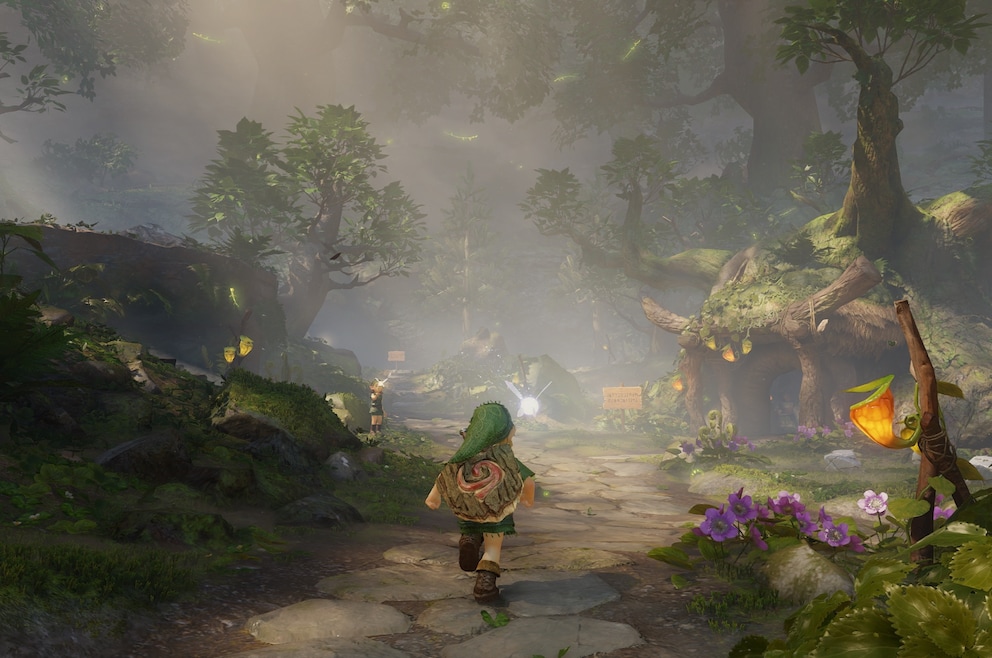
The game also benefits technically from the new hardware. The camera can be freely rotated at any time, the field of view is significantly larger, and in docked mode, the adventure runs at 1080p with 60 frames per second. For comparison, the European N64 version managed only about 17 frames per second. HDR support further enhances colors and contrasts.

The audio overhaul is similarly elaborate. Koji Kondo’s original MIDI soundtrack has been re-recorded with real instruments. Added to this are 5.1 surround sound and partial voice acting in several languages. The German dubbing is particularly convincing, though it is limited to important dialogues in the main story. In other scenes, it remains text-based.
A Classic with a New Gameplay Feel
In terms of content, “Ocarina of Time” remains true to its original. Link grows up as an outsider in the Kokiri Forest and is tasked by a dying wise tree to seek out Princess Zelda in Hyrule Castle. Together, they must stop Ganondorf, who wants to seize the Triforce. The magical-divine artifact can grant its owner any wish and thus become a threat to all of Hyrule.
The roughly 30-hour adventure leads through a diverse fantasy world, numerous dungeons, puzzles, and boss battles. New items continuously expand Link’s abilities. Nintendo changes little in the basic game design but makes many adjustments to the controls. Some areas are larger and offer additional paths and challenges.
The new movement options are particularly noticeable. Link can now jump manually, sprint, and swim much better. Projectile weapons can be aimed using the controller’s motion sensors if desired. There’s also a quick menu for items, a larger starting limit for rupees, and fewer loading times when entering buildings.
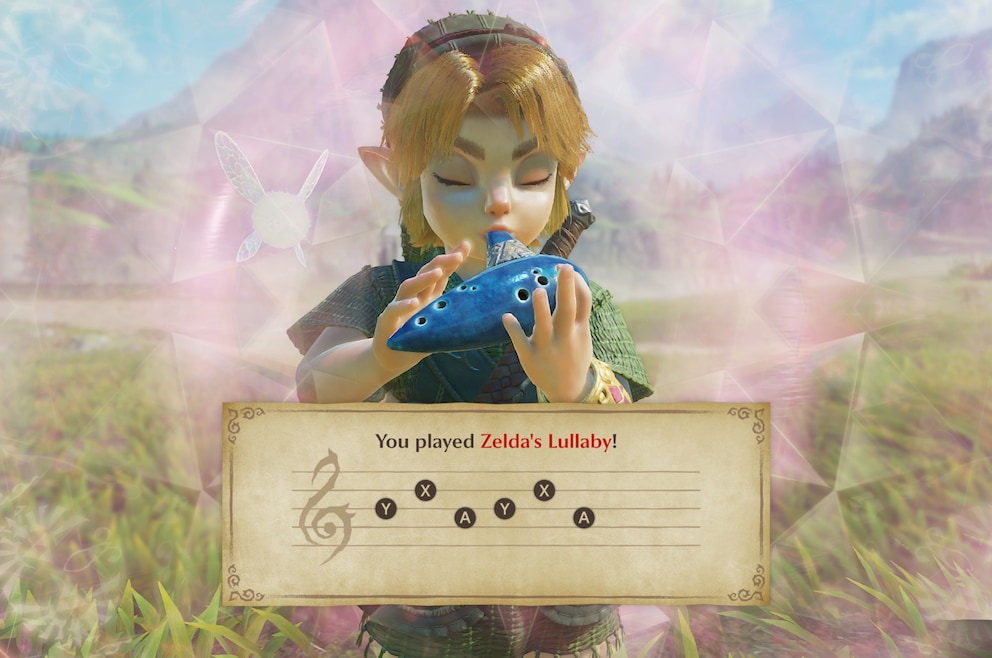
Even the titular ocarina gets a new function. Songs can still be played using the classic controls, or the melodies can now be hummed into the microphone. The ocarina remains a central component of numerous puzzles and events in the game world.

Gamescom 2026 Highlights at a Glance

Nintendo Confirms Live-Action Adaptation of Video Game Classic ‘Zelda’
More Guidance for New Heroes
For newcomers, Nintendo has added the “Traces of Time” menu. It summarizes which tasks have already been completed and what the next step is. This reduces the adventure’s previous disorientation, especially when there are longer breaks between game sessions.
The system is complemented by the free “Zelda Notes” app for Android and iOS. After linking with the game, it displays statistics and progress so far. Small additional challenges earn points, and the app includes a quiz with more than 2,000 questions.
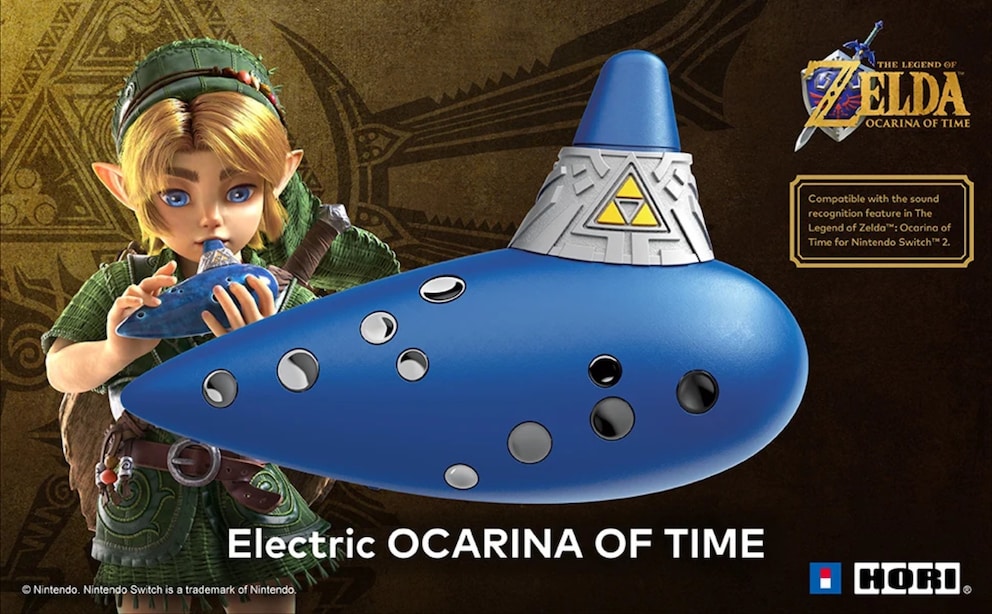
In line with the remake, Nintendo is also releasing an optional tone ocarina. Additionally, an electronic ocarina from Hori will be available starting November 27. It includes twelve stored songs from the game and a free-play mode for original melodies.
Old Magic in a Modern Garb
“The Legend of Zelda: Ocarina of Time” achieves a delicate balance on the Switch 2. The remake preserves the structure and atmosphere of the N64 classic but eliminates many gameplay and technical aging issues. Free camera, 60 frames per second, manual jumping, motion controls, quick menu, and additional aids ensure the adventure feels much more contemporary.
At the same time, the identity of the original remains surprisingly untouched. The new character style may be a matter of taste, and a full voice-over would have been desirable, especially with the successful German dubbing. Overall, however, the improvements clearly prevail. Nintendo modernizes not at any cost, but primarily where “Ocarina of Time” truly shows its age after 27 years.