


February 12, 2026, 9:34 am | Read time: 3 minutes
The gaming brand Razer has been on the market for nearly 30 years. The industry veteran released the first ball mouse for gamers in 1998: the Boomslang. This set the direction for others to follow. The market for gaming accessories is now approaching the 100 billion USD mark. This is reason enough for Razer to celebrate the success of the Boomslang and reissue it with an anniversary model.
Modern Technology Meets Retro Design
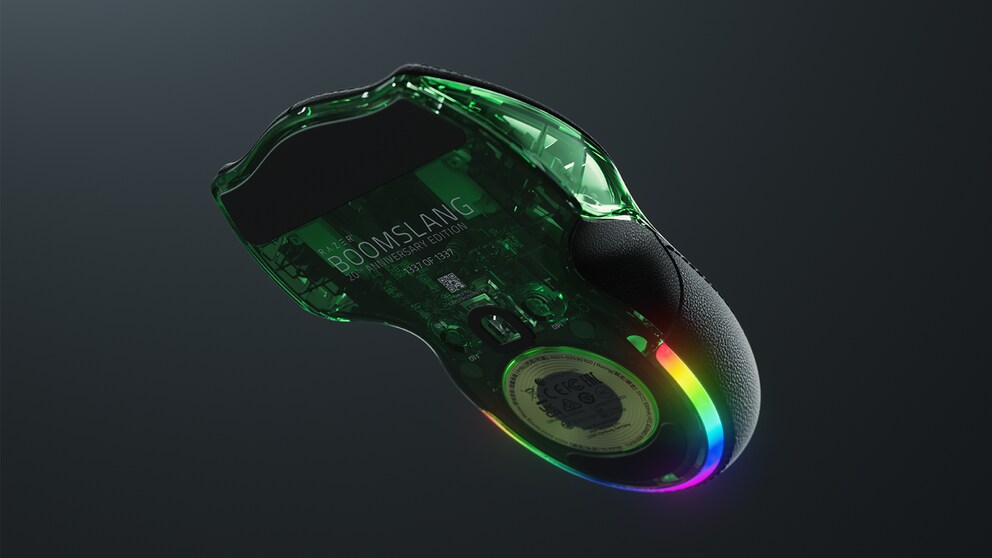
On Tuesday, Razer launched the sale of the Boomslang 20th Anniversary Edition, and the mouse is now completely sold out. Both the limited quantity and the price pay homage to Leetspeak, an informal language in the gaming scene where letters are often replaced with numbers. The 1,337 units of the Boomslang were sold exclusively by Razer for 1,337 euros each. In Leetspeak, “1337” stands for “leet,” meaning “elite”–gamers who are particularly skilled.
The reissue is packed with Razer’s best technology. Instead of a ball like the original, it features the Focus Pro 45K Gen-2 optical sensor. With 45,000 DPI, the sensor has a sleek 2,150 percent higher resolution. The 28 years of development progress are particularly evident here. While dirt on the original’s ball could dramatically affect tracking, Razer promises 99.8 percent accuracy with the remake.
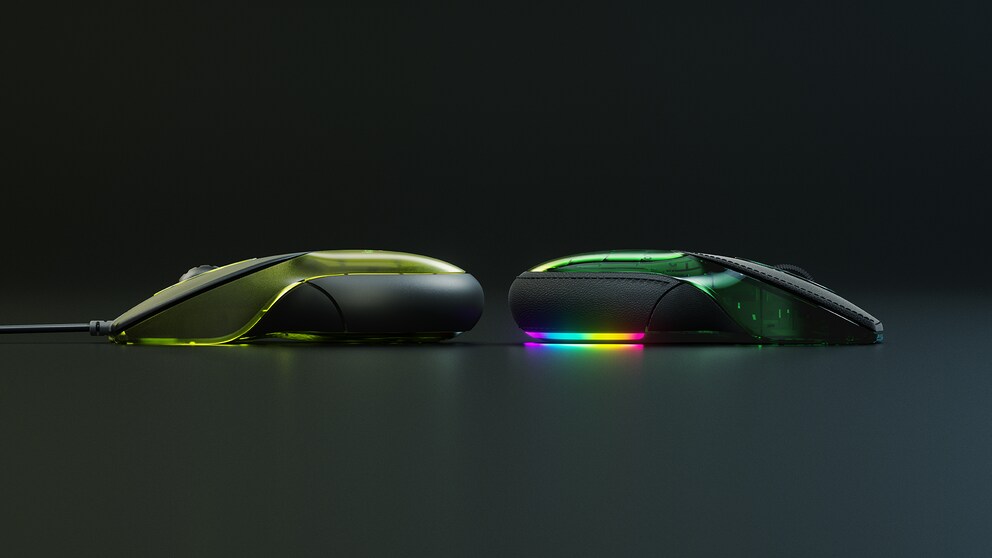
With its own “HyperPolling Wireless Technology” at 8,000 hertz, the Boomslang sends its position to the PC every 0.125 milliseconds. This minimizes input delays. The mouse buttons are designed to be particularly durable, not only because they are covered with leather but also because the optical sensors are rated for up to 100 million clicks.
Instead of the toxic green, translucent casing of the original Boomslang, the Razer reissue features underbody lighting in nine Chroma RGB zones that can be individually configured.

What Equipment Do I Need for PC Gaming?
New Logitech Mouse Folds Smaller Than Many Headphone Cases
What Do You Get for the Money?
1,337 U.S. dollars (about 1,123 euros) is a lot of money for a gaming mouse. However, with its highly limited quantity and nostalgia factor, the product is primarily aimed at collectors. That’s why each sold 20th Anniversary Edition comes with a display frame. Inside, the individual parts of an additional Boomslang reissue are attractively arranged and accented with LED lighting.
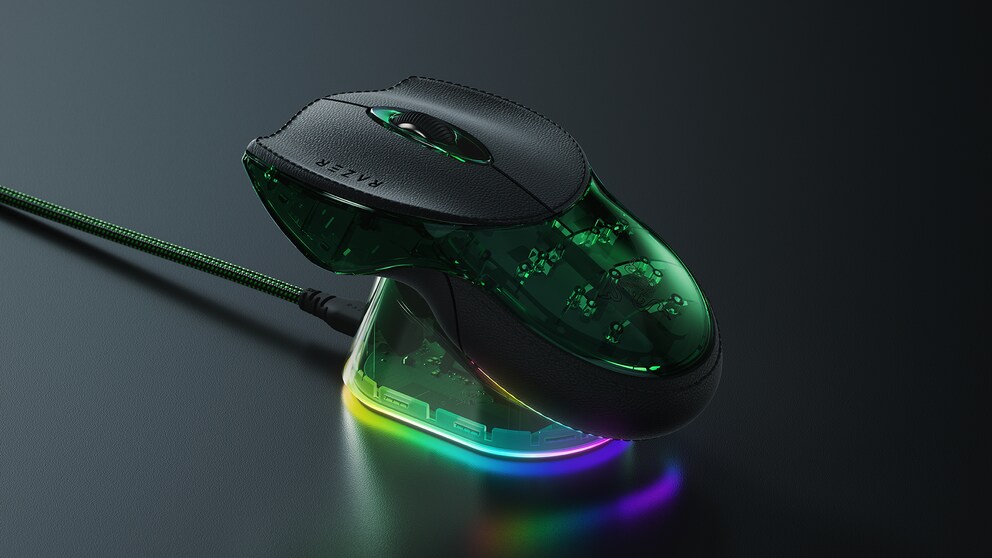
The package also includes a Razer Mouse Dock Pro for wireless charging and a matching cable for the dock (USB-A to USB-C). For those who actually want to use the mouse, a set of glass glide feet is also included.
Boomslang Shaped Razer and the Gaming Industry
The first Razer Boomslang set new standards for a ball mouse with a resolution of 2,000 DPI. Although manufacturers like Microsoft made mice with optical sensors mainstream at the same time, their low resolution made them unsuitable for gamers. The Boomslang also allowed sensitivity to be adjusted during gameplay for the first time, laying the foundation for specialized gaming hardware.
Also of interest: The history of the gaming controller
Its distinctive snakehead shape became a trademark for Razer. Even today, the company names many of its gaming mice after real snakes like Cobra and Viper, as well as mythological figures like Basilisk, Naga, and Orochi.
Razer CEO Min-Liang Tan describes the success of the Boomslang this way: “When we developed the Razer Boomslang, we just wanted to give ourselves an unfair advantage in gaming, and that one spark helped ignite the entire billion-dollar gaming peripheral industry we know today.”