

April 15, 2025, 3:01 pm | Read time: 5 minutes
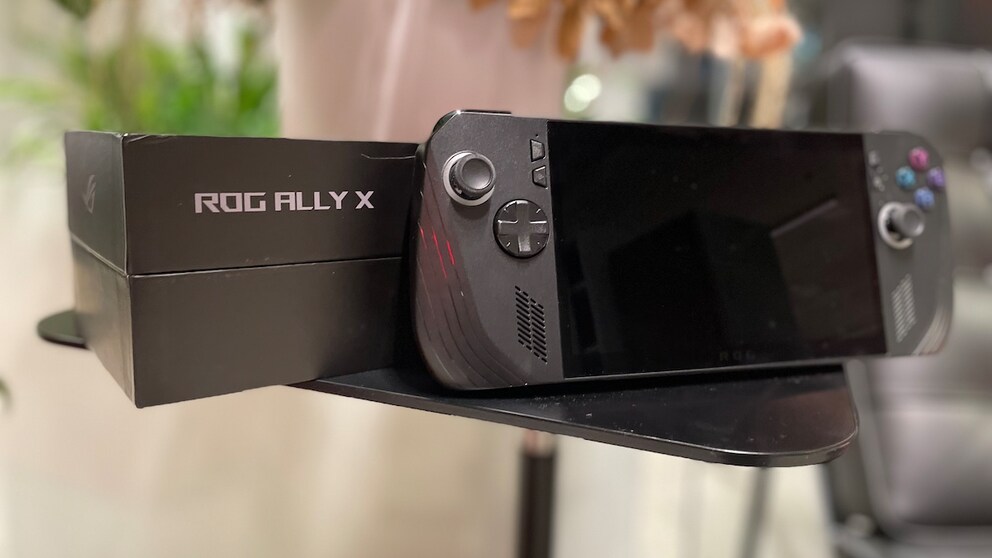
With the ROG Ally X, Asus has launched the successor to its powerful Windows handheld console. This new model stands out with improved battery life and a refined design. TECHBOOK tested the device and reveals who it’s worth it for.
In the realm of handheld consoles, there was long only one name: Nintendo. The Japanese company was a pioneer with the success of its Switch, paving the way for others. Now, the Steam Deck and Asus’s ROG Ally have also established themselves. The latter has received a successor with the ROG Ally X 2024, which aims to address the shortcomings of its predecessor. The test showed that this has largely been successful–though there are still some considerations with the ROG Ally X.
Overview
Old and New Design
First, the obvious: Asus has tweaked the design a bit. While the basic look hasn’t changed, the manufacturer has adjusted the grip recesses on the back. According to their statement, this is to improve ergonomics, and it indeed felt different and good in the test.
Otherwise, the ROG Ally X, like the previous model, features a 7-inch IPS display with Full HD (1920 x 1080 pixels), 120 Hz, and 500 nits. Once again, the device impressed in the test with vibrant colors, Freesync Premium, and good readability outdoors.
However, there have been some changes to the overall dimensions: The console is slightly taller and, more importantly, deeper than the ROG Ally. This also explains the total weight of 678 grams, which is 70 grams heavier, mainly due to the battery. In practice, though, this was hardly noticeable.
Second USB-C Port Makes ROG Ally X More Flexible
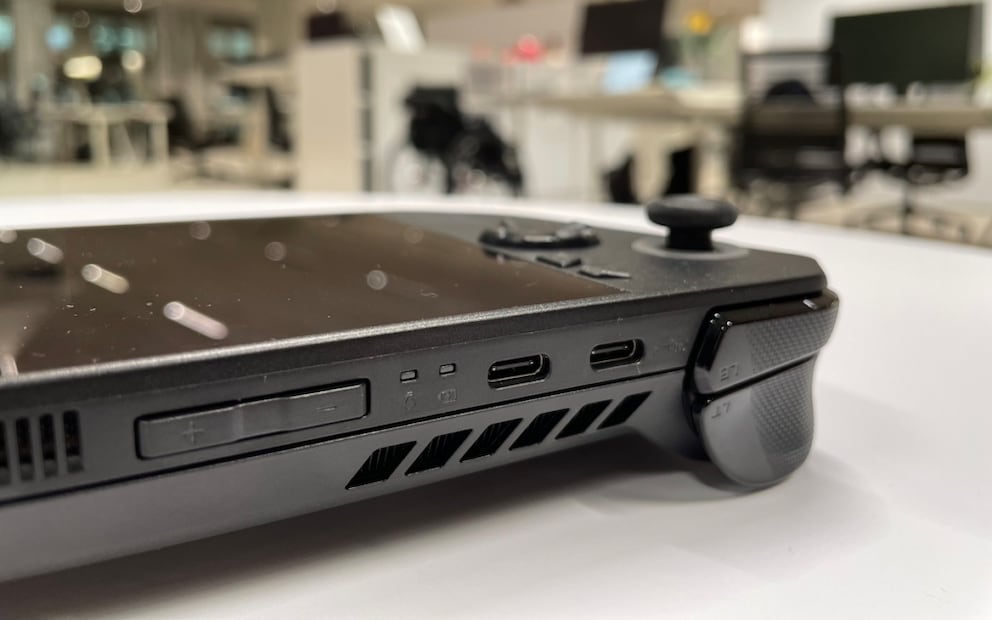
The redesigned rear buttons are smaller but better placed. Asus seems to have listened to customer feedback here. The same goes for the second USB-C port that the ROG Ally X has received, which proved to be extremely practical in the test.
The new port comes with USB4, which is good news for many. It means you no longer have to rely on Asus’s proprietary eGPUs. This simplifies using the ROG Ally X as a small PC replacement, though it’s frustrating for those who bought such technology for the predecessor. As with the ROG Ally, there’s also a microSD card reader and a standard headphone jack.
New SSD or More RAM
Even though Asus has reused the AMD Ryzen Z1 Extreme from the predecessor, there are additional improved components that enhance performance. Key among these is the RAM, which Asus has increased from 16 to 24 GB. The GB LPDDR5X-RAM with 7500 MHz allows 8 GB to be dedicated to the GPU without slowing down the system. This improved the overall performance of the ROG Ally X in the test.
The SSD also contributed to noticeable improvements. The newer version features an M.2-2280 format with 1 terabyte capacity. Those looking to upgrade can easily replace the parts, as only the back of the handheld console needs to be removed–a real plus in terms of longevity.
ROG Ally X with Significantly Improved Battery
One of the biggest criticisms of the predecessor was the battery. Handheld consoles have the great advantage of being flexible and inviting for gaming sessions on the go. However, the first ROG Ally’s energy lasted at best for two hours–with energy-saving titles and reduced brightness. Asus has made significant improvements here.
In the test, the ROG Ally X with its 80-Wh battery lasted significantly longer. With economical use, a runtime of about four hours was possible. More energy-intensive games still ran for two and a half to three hours. This makes the handheld console much more flexible and is definitely a noticeable improvement.
Software and User Experience
Asus once again relies on Windows 11 Home for the operating system–which is a plus in many ways. It allows the use of almost any gaming platform, thanks also to the Armoury Crate SE software. In the test, gaming via Steam, Ubisoft, EA, and GOG worked very well. However, the same applies as with any other handheld console: The titles must be designed for controller use.
Classic Windows applications can also be used on the ROG Ally X. However, an external controller should definitely be used for this. In some situations, it’s still not entirely clear whether to use button presses or the touchscreen. This isn’t an issue when gaming, though.

ROG Ally Review: What Can Asus’ Handheld Console Do?

Microsoft and Asus Introduce Two New Xbox Handhelds
Asus ROG Ally and ROG Ally X Compared
How the ROG Ally X Performed in the Test
Overall, the ROG Ally X proved itself in the test. Many of the predecessor’s weaknesses–except for some control issues outside of games–were addressed. The battery performance and internal storage are particularly noteworthy. However, this comes at a cost: The MSRP is around 900 euros. Used, you can currently find offers around 830 euros, but the console hasn’t significantly dropped in price at retailers yet.
And as good as the hardware is–not everything is perfect. The joysticks are more robust but still lack Hall effect sensors. This means stick drift, similar to the Nintendo Switch, remains a potential issue that can worsen with increased use.
For players who mainly game at home, alternatives like the Lenovo Legion Go with a large 2K display and 144 Hz remain interesting. For Steam users, the Steam Deck OLED with good battery life and image quality is the ultimate choice, though the ROG Ally X can also score in general scope. The predecessor, the Asus ROG Ally (with Z1E), remains a cheaper option with similar performance–currently for significantly less money. With the ROG Ally X, Asus has brought a successful further development to the market that is definitely worth the money.