

September 27, 2026, 5:06 pm | Read time: 4 minutes
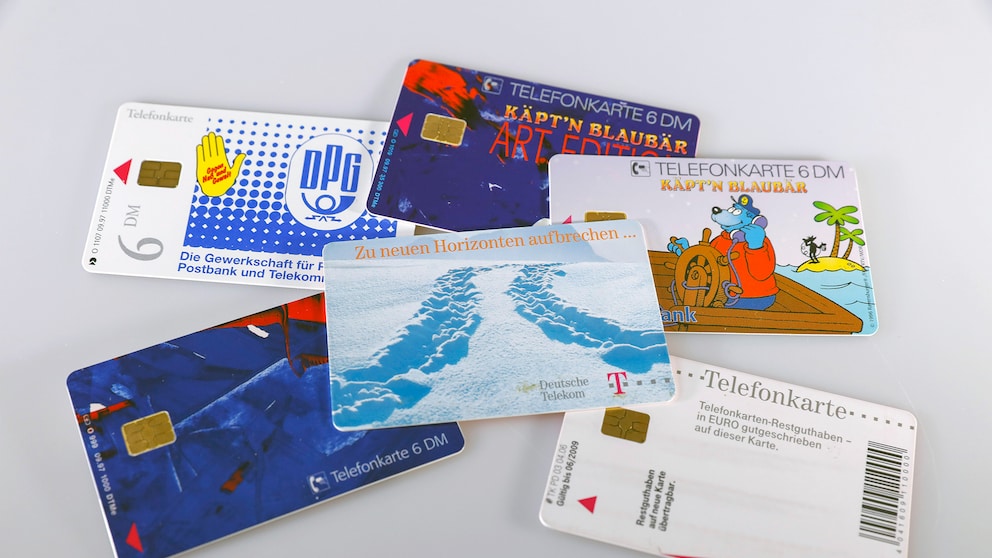
Public payphones are mostly known today by people who have experienced a world without ubiquitous internet. Conversations in a phone booth were always stressful. Either you didn’t have change, or the change wasn’t enough, causing calls to be abruptly cut off. Phone cards promised a solution in the mid-1980s. TECHBOOK spoke with a phone card collector about why they only had a brief heyday and what the colorful cards are worth today.
The idea of making calls without change is older than the phone card itself. As early as the late 19th century, the German Empire sold so-called telephone certificates. Starting in 1883, so-called telephone tickets were available for purchase in Bavarian cities. These allowed you to use a public “telephone station” for a certain period, usually five minutes.
Exactly 100 years later, a test project for phone cards was launched by Deutsche Bundespost in Frankfurt am Main. Special phone booths with card readers were developed for this purpose. Later, similar test runs took place in Bonn/Aachen, Goslar, and Bamberg.
Magnetic Stripe or Chip?
The postal service was unsure whether phone cards should be released with a magnetic stripe or a chip. In 1986, the company decided on the chip card. This variant was considered harder to counterfeit by the postal service.
In December 1986, regular operations for Deutsche Bundespost phone cards began. The colorful, credit card-sized phone cards quickly became a hit. A year after their introduction, the postal service had already sold six million phone cards.
Around this time, Hans-Peter Kroner’s passion for collecting began. “After the phase with the first neutral phone card designs, when Telekom and other companies issued promotional cards with beautiful and interesting motifs,” recalls the avid phone card collector about the beginnings of his hobby.
How Bildschirmtext BTX Brought the Internet to Germany

Telekom discontinues popular service without replacement
Collecting Phone Cards as a Pure Hobby
Unlike stamp collecting, collecting phone cards was a more modern hobby for him, one that Hans-Peter Kroner could be part of from the start. “Shortly after the introduction, empty phone cards were often found in phone booths. These often marked the start of a decades-long collecting passion.”
The value of his collection is now purely ideal. The cards themselves had an actual monetary value. Most cards had a balance of six to 50 Deutsche Marks, equivalent to about three to 25 euros. In Germany, people primarily collect unused phone cards. But the balance on them is worthless, “after Deutsche Telekom AG declared all phone cards expired over ten years ago and also refused to exchange them for valid phone cards or refund the balances,” explains Hans-Peter Kroner about the resulting loss in value when collecting phone cards.
Some collectors did try to challenge Telekom’s decision in court with legal assistance. However, the judges found no irregularities in the company’s decision. “Thus, Telekom was able to achieve a very high extraordinary profit by dissolving the provisions for the phone card balance,” adds the enthusiastic phone card collector.
Today, Hans-Peter Kroner searches for phone cards on usual sales platforms to further complement his collection. “Most cards are offered there for just under one euro,” the collector reports when asked by TECHBOOK. Otherwise, he browses through friends’ collections for phone cards that particularly appeal to him.
“I mainly collect German phone cards from Telekom’s classic series, but also cards from some neighboring countries. I pay particular attention to art motifs,” emphasizes Hans-Peter Kroner. The collector is especially proud of his self-designed phone cards.
Also interesting: Telekom discontinues directory assistance without replacement
Phone Card Boom Ends Quickly
The boom with the colorful plastic cards ended as quickly as it began. The fall of the Berlin Wall initially boosted phone card sales significantly. The postal service immediately set about replacing the old East German coin-operated phones with card phones. As a result, the number of phone cards sold grew to over 100 million by the end of 1993.
In November 1998, the 500 millionth phone card was sold. At the same time, this number marked the beginning of a rapid decline in sales that followed. More and more people were making mobile calls from anywhere, and this trend was increasing. Public phone booths gradually disappeared from cityscapes.
The phone card faded away very slowly. It wasn’t until 2023 that Telekom decommissioned the last still-functional card phones out of service. Until then, phone cards still existed. However, Telekom no longer put much effort into their production. For the company, this chapter was closed long before 2023.
The many German collectors of phone cards like Hans-Peter Kroner will, however, continue to tirelessly search for a nice collectible at flea markets in the digital or analog world.