


February 10, 2021, 5:21 pm | Read time: 4 minutes
Shopping for groceries online, paying at the store checkout with a smartphone, and receiving discounts on products through an app–our shopping habits have changed significantly in recent years. Now, digitalization is reaching the good old shopping cart.
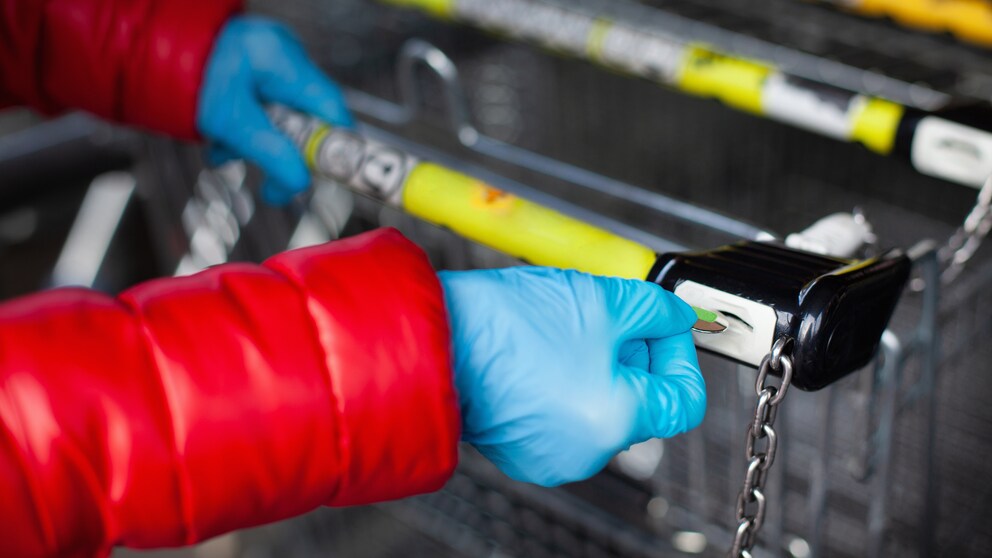
Until now, we’ve grabbed a basket or a shopping cart when shopping–the latter unlocked with a euro coin or a shopping token. But the coin-token system could soon be a thing of the past, at least if companies like Wanzl have their way, as they aim to connect the shopping cart with the smartphone.
Unlocking Shopping Carts with Smartphones
The classic shopping cart has been in Germany since the late 1940s. In the ’80s, the deposit system as we know it today was introduced. Now, about 40 years later, another change is on the horizon. The so-called “Smart Trolley” is set to be unlocked with a smartphone instead of a coin. In the future, customers will only need the app of a supermarket or discount store on their smartphone or smartwatch to unlock the shopping cart. The cart manufacturer Wanzl has not only equipped the carts with the necessary technology but also developed the software. It just needs to be integrated into the respective market apps.
Wanzl sees several advantages in the solution for customers and markets. By linking the smartphone with the shopping cart, users can forgo the coin deposit system and unlock the cart even if they don’t have cash on hand. More and more people today are opting out of cash and instead pay for their purchases by card or even mobile with their phones.
Supermarkets and discount stores, on the other hand, can gain customer-specific information and better track their shopping carts thanks to the connection with the smartphone, as these can be equipped with RFID chips. For example, markets receive information about where the cart is located in the store or outside (keyword theft protection) and can restock when there is a low supply in the parking boxes. They also see how long a shopping trip took, how long customers lingered in front of certain shelves, and can set targeted purchase incentives, such as through coupons and discount promotions.
The return of shopping carts is to be ensured through a bonus system. Wanzl provides various examples for this: a donation to a good cause, the printing of a voucher for the next purchase, or participation in a sweepstake.
Rita Deutschbein and Andreas Filbig from TECHBOOK discuss the pros and cons in the video:
Also read: Secure discount codes, cashback, and reductions when shopping online
How Practical Is the New System Really?
A look at the points raised by Wanzl quickly makes it clear that supermarkets like Edeka and Rewe, as well as discounters like Aldi, Lidl, and Kaufland, stand to benefit. They would receive numerous data about their customers’ purchasing behavior through the use of smartphone-linked shopping carts. However, the conversion would also bring problems for a large portion of users.
There are many people in Germany who deliberately do without a smartphone, cannot afford one, or do not get along with the technology. Think, for example, of older people. They would all be left out if a shopping cart could only be unlocked via smartphone in the future. For this reason, supermarkets and discounters would have to offer models with the old coin deposit system alongside the modern shopping carts. The purchase of the new models and their maintenance is also likely to be expensive–it remains to be seen whether the markets will want to afford the new solution when the old system also works well.
Some of these questions are to be answered by a test of the new smartphone system in shopping carts. Currently, the solution from Wanzl is being tried out in some markets to gather experience and user opinions.