

December 26, 2025, 3:26 pm | Read time: 3 minutes
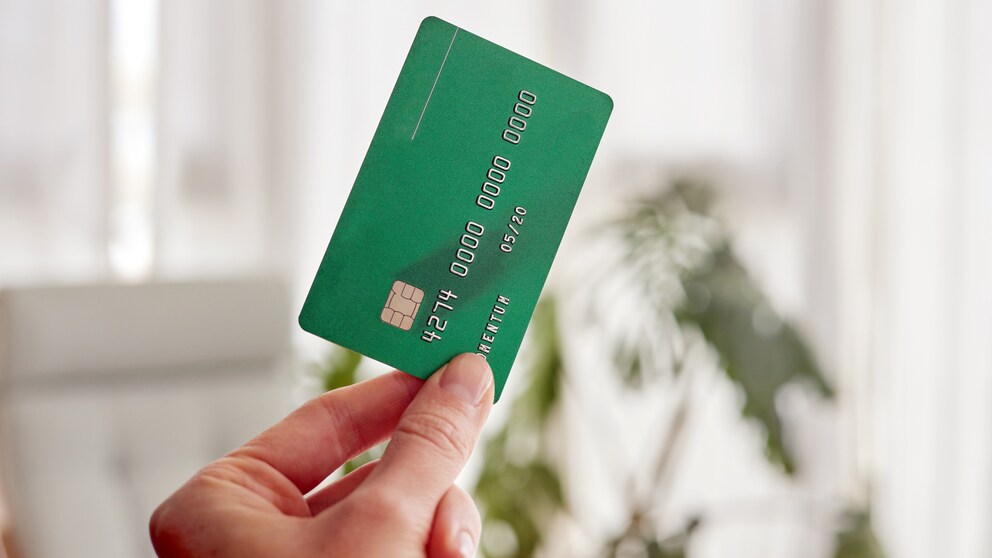
Paying by card has become a standard payment method in Germany, especially since the COVID-19 pandemic. The technology behind it is about to celebrate its 30th anniversary. If you look at the gold or silver chip surface on bank cards, you’ll notice the lining is different. TECHBOOK explains why in this article.
The so-called EMV chip controls cashless card payments. EMV stands for Europay International, MasterCard, and Visa. These three credit card companies advanced the chip technology in the 1990s and established it as a standard in 1996.
The underlying chip on the bank card is not visible. The gold or silver surface serves as a kind of protective coating. The EMV chip lies beneath it. The coating keeps the chip protected when the card is in a wallet or comes into contact with other surfaces.
Different Structure, Same Standard
The lining varies from card to card, even among cards from the same bank. Typical are the honeycomb-like cells at the edge and the center. This can be round, angular, larger, or smaller.
These surfaces are standardized, even if they are differently structured on the surface due to the line pattern. The different design results from bank cards being produced by various manufacturers.
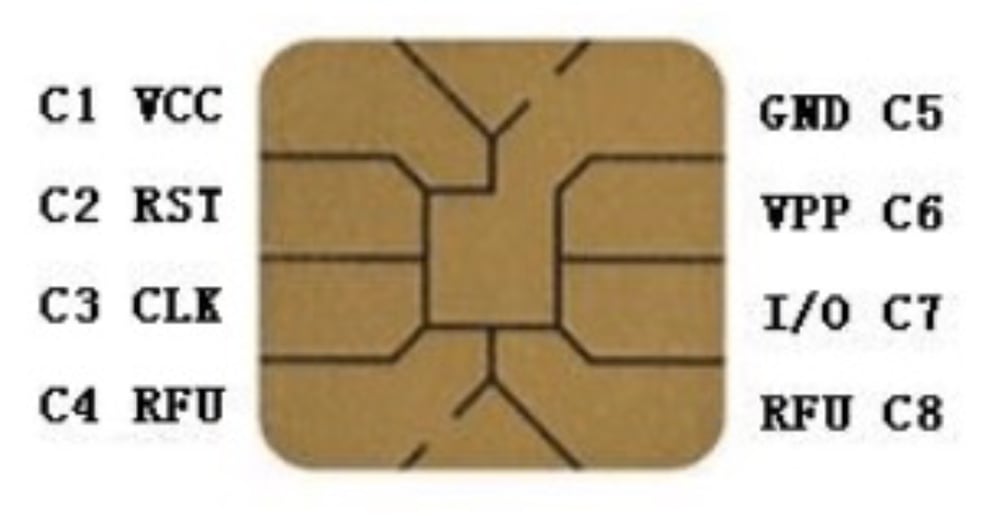
The actual EMV chip has eight contact points or pins. Not all are assigned a function.
| Pin No. | Name | Description |
| 1 | VCC | +5 V or 3.3 V DC (power supply) |
| 2 | RST | Card reset (optional) |
| 3 | CLK | Card clock |
| 4 | RFU | Application-specific (not assigned) |
| 5 | GND | Ground |
| 6 | VPP | +21 V DC (former programming voltage) or not assigned |
| 7 | I/O | Input/Output (data) |
| 8 | RFU | Application-specific (not assigned) |
Also of interest: What Data Is Stored on Bank and Credit Cards–and Where?
How Payment Works with the EMV Chip
When inserting the bank card into a card reader, three things happen:
- The card is activated.
- Transaction data is exchanged.
- The card is deactivated and can be removed.
In terms of data security, the EMV chip on bank cards offers more protection than the magnetic stripe often used on credit cards in the past. A one-time code is generated for each chip transaction. This is used to verify whether the card can be used or if it has been reported lost or stolen. Only after this verification does the bank approve the transaction.
The next generation of EMV chips is already spreading. It is found in many newer smartphone models and is called NFC. This stands for Near Field Communication and enables contactless payment via smartphone through various payment service providers.