

February 13, 2026, 1:53 pm | Read time: 8 minutes
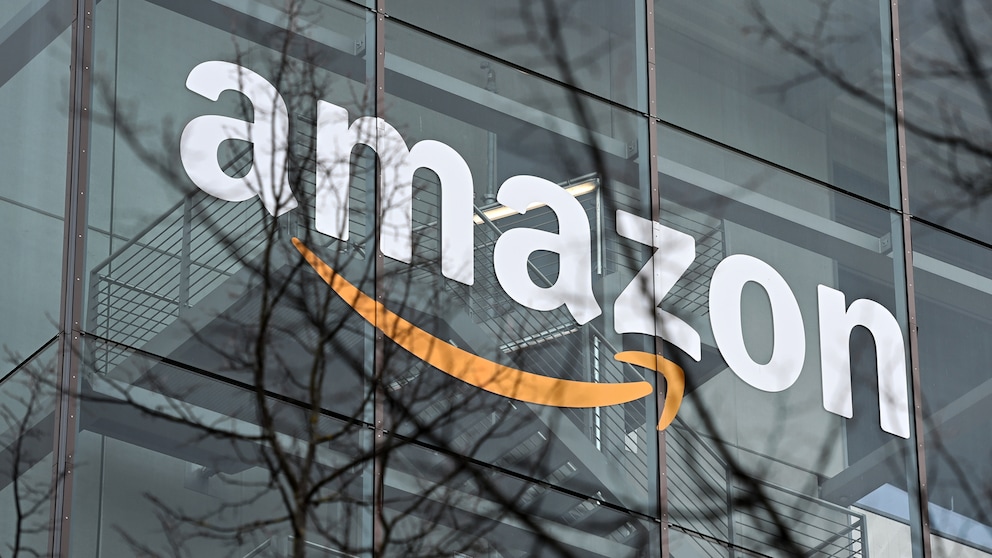
Amazon celebrated its 30th birthday in 2024. A good reason to look back at the journey of the company, which is now one of the largest manufacturers and online retailers.
Major U.S. company stories always begin in a garage. Naturally, this includes the story of Amazon. In 1994, Jeff Bezos left his secure and well-paid Wall Street job at the investment bank D.E. Shaw & Co. He wanted to sell books online. In the then very young World Wide Web, Jeff Bezos saw new sales potential in online business.
The phrase “I’ll just order that quickly on Amazon” is now an indispensable part of our online routine. More than 30 years after its founding, Jeff Bezos has turned the garage book business into the world’s largest online store. However, he is no longer at the helm.
Overview
Books as a Lure
Why books, of all things? Jeff Bezos is often asked this question later. His answer: Because there were millions of books in 1994, but only a fraction of them were available in local bookstores.
Books don’t require much advice, can be shipped easily and quickly, are available in large quantities, and new ones are added daily. The ideal product for building an online business on the internet. At that time, Jeff Bezos wasn’t thinking about world domination. The young entrepreneur simply wanted to become the most popular online bookseller.
From the beginning, Amazon’s focus was on its customers. Competitors didn’t interest Jeff Bezos. He was firmly convinced: If you delight people with your products, success follows automatically.
Back in the mid-1990s, there were several competitors who, like Amazon, discovered online sales for themselves. Many of them also tried shipping books. Jeff Bezos sold the first book on his platform amazon.com in July 1995—”Fluid Concepts and Creative Analogies: Computer Models of the Fundamental Mechanisms of Thought” by Douglas R. Hofstadter. Allegedly, the buyer still owns the book, including its original packaging. Today, it’s probably worth a fortune.
Also interesting: The craziest Amazon order of all time
Relentless Success
Originally, the company was supposed to be called “Relentless,” which translates to “ruthless.” His friends thought the name was too negative. Fortunately, Jeff Bezos listened to this advice. Instead, the company founder was relentlessly engaged in the early days, packing book boxes himself on the floor of his garage.
Success came relentlessly fast. People ordered books from Amazon in huge quantities. Revenues rose from $15.7 million in 1996 to nearly $150 million just a year later. The internet was booming. The cash registers at Amazon never stopped ringing.
The garage has, of course, been replaced by an official company headquarters. Jeff Bezos no longer has to pack and ship the boxes himself. Hundreds of Amazon employees now handle that.
The company initially grew by acquiring other online booksellers. This led to the first company address in Germany in 1998. The acquisition of Telebook, then the leading online bookseller in Germany, gave Amazon entry into the German market.
Amazon quickly built its image as the most popular online bookseller in Germany and the rest of Europe. Several thousand people now work for the company worldwide. But the young history experienced a significant setback.
From Crash to Soaring
In the early 2000s, the entire internet hype suddenly collapsed. The bursting of the so-called dot-com bubble didn’t spare Amazon. Jeff Bezos initially had no answer. The entrepreneur pondered.
The result of his considerations: As a lesson from the burst speculation bubble and the resulting massive revenue declines, Jeff Bezos diversified Amazon. The Amazon Marketplace laid the foundation for the future empire in November 2000.
The company brought other retailers on board. They could sell their own products on an online marketplace under the popular Amazon brand. This expanded the range of products significantly. At the same time, Amazon benefited from third-party sales through a distribution fee. A brilliant idea.
Since customers worldwide had become accustomed to the URL amazon.com for online orders, the new offering was very well received. The rise to the world’s largest general merchandise company began.
Amazon Alexa, Kindle, and Prime
Gradually, Amazon expanded its online platform and began its own distribution channel. This soon included the sale of CDs and DVDs, computers and accessories, sound systems, media players, and receivers, as well as more and more everyday products, small household appliances, and similar items.
From the single business, a network of various companies under the parent Amazon emerged in the 2000s. The cloud gained importance. In 2006, Amazon was among the first companies to offer a cloud infrastructure with storage capabilities through Amazon Web Services. The great data hunger hadn’t even begun yet. Amazon already offered everything to satisfy the soon-to-be hunger of people.
The company flooded the online market with new products and offers. To better market e-books, the online retailer initially developed the Kindle as a practical reading device. Shortly thereafter, the company acquired the popular e-book service Audible. Suddenly, the previously stagnant e-book business took off.
When Apple introduced Siri, its listening and speaking assistant, in the early 2010s, Jeff Bezos took notice. Playing music and movies by voice command or querying the weather report on demand—all well and good.
However, the Amazon founder wanted an assistant that could shop for people via voice control. Alexa was born. Naturally, she prefers to shop in just one store—Amazon.
When streaming was still called video-on-demand, Amazon offered movies and music for download. This later evolved into the streaming portal Amazon Prime. The name Prime originally stood for a faster shipping option. Those who signed up for a Prime membership with Amazon and ordered in the morning would receive their goods the same day. It almost felt like real shopping at a local store.
5 things Jeff Bezos predicted back in 1999
The Craziest Amazon Order of All Time
Criticism of Amazon’s Business Model
But what provides Amazon customers with unique shopping experiences must be paid for by others—the workers in shipping and especially the delivery drivers on the road. Customer satisfaction only works if the logistics chain behind it runs without interruptions.
This is the dark side of online retail and offers the greatest opportunity for criticism of Amazon and other large online providers. For years, the union ver.di has been trying to bring Amazon to the negotiating table.
It’s about humane working conditions and adequate pay for Amazon employees. Despite countless strikes in recent years, many people at Amazon still work under conditions below the minimum wage. Amazon has not yet been willing to negotiate collective wages.
Additionally, Amazon is said to be the gravedigger for retail in cities and towns, another point of criticism. Although this criticism seems only partially justified. No one would claim that online retail is a bad invention—quite the opposite. The problem certainly also lies with retail itself, which ignored online retail for decades and postponed new business ideas.
Recently, the entire online retail industry received a lot of criticism for profits during the COVID-19 pandemic. It hit the largest online store the hardest. The fear of the virus brought Amazon and others enormous revenue increases.
Amazon benefited multiple times from contact bans. Amazon is not just a shopping store but also a cinema and stereo system, and through its own cloud services, also an office—very useful for working from home. The loud calls from politics for a windfall tax have since quieted down.
Also interesting: After various adjustments—who still benefits from an Amazon Prime membership
Jeff Bezos Has Taken Off
Jeff Bezos no longer hears the criticism, at least not in day-to-day business. Since mid-2021, the new CEO is Andrew R. “Andy” Jassy. Jeff Bezos has held a position on the board since the transition. Not quite true.
Because shortly after stepping down as CEO, the Amazon founder and visionary took off into space, at least for a few minutes. Through his company Blue Origin, Jeff Bezos wants to send other wealthy individuals into space by rocket.
The development of Amazon is also akin to a rocket flight that has lasted for over 30 years. The garage bookstore has transformed into a general merchandise company employing more than 1.5 million people worldwide. Amazon’s global revenue reached $575 billion in 2023, $638 billion in 2024, and even soared to $717 billion in 2025.
Despite all the justified criticism of the company: Without Amazon, many of today’s common business models on the internet wouldn’t exist. The size of the company is cause for concern, no question. Politics and media should and must keep a close eye on it, so that not only Amazon customers are pleased. Political action is needed to ensure people at Amazon and in the entire online retail industry finally work regulated hours and are adequately compensated. That would be socially highly desirable.