

August 6, 2023, 2:08 pm | Read time: 6 minutes
The collapse of the crypto exchange FTX and other similar events have sparked a new trend: More and more crypto investors want to store their coins themselves. Hardware wallets are considered particularly secure. TECHBOOK explains the key facts.
Hardware wallets are experiencing a surge in popularity. The industry’s promise is: Nothing is as secure as the small, stylish gadget for your pocket. But what exactly is a hardware wallet, and what is its purpose? TECHBOOK provides clarity.
Overview
What is a hardware wallet?
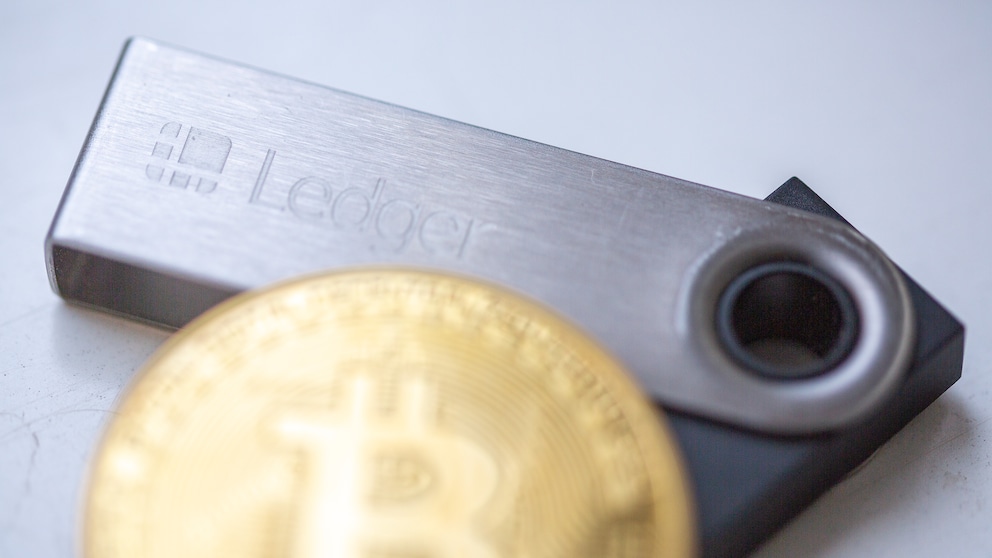
A hardware wallet allows you to collect, exchange, or send cryptocurrencies like Bitcoin or Ethereum. This small device can be described as a digital wallet for cryptocurrencies. The private keys needed to authorize outgoing transactions in the blockchain network are stored completely isolated on a kind of USB stick, rather than on a hackable PC or smartphone. To access the data, users also need a smartphone app or computer program.
Even misunderstandings about how hardware wallets work can’t hinder the success of these small design marvels. Many users mistakenly believe that the coins are stored on the wallet like data on a stick. However, this is not the case.
Read also: Important change at the tax portal Elster! Users must act
How secure is a hardware wallet?
A wallet doesn’t store the acquired cryptocurrencies but rather the access to them. The coins aren’t located in any specific place; they circulate globally on blockchains. You enter the wallet with a seed phrase and password. From here, transactions can be initiated, depending on the model, either online or even without any contact with a computer via QR codes. The latter is considered extremely secure.
If the wallet is lost, you don’t actually lose the wallet itself but the device on which it is installed. If you then buy a new gadget, you can restore the old wallet using the secret seed phrase.
The greatest risk for the user is likely misplacing or losing the paper with the seed phrase. This is no different for software wallets. Therefore, by human standards, nothing is considered safer than a hardware wallet when it comes to storing crypto.
Among hardware wallet providers, the French manufacturer Ledger has been a global leader. However, an update is now causing trouble for the industry giant. Ledger recently introduced a three-factor system to recover access to the wallet if the user loses their access code, the so-called seed phrase. Previously, this was a major problem with self-storage: If the digital key is lost, no one can help. The coins remain locked away forever, and the crypto assets are lost.
Ledger aimed to address this issue by offering a recovery option. What was meant to be helpful has turned into a PR disaster. Crypto influencers have called for users to stop using products from the popular manufacturer. They consider the mere possibility of third-party access to the wallet as a fundamental security risk. Ledger now has to wait for the uproar to subside. To regain user trust, the company has announced plans to fully release the code, which was previously only partially open source. This will allow experts to check for potential security vulnerabilities in the new system. It is unlikely that the short-term excitement will cause lasting damage to the hardware wallet giant.
Read also: Digital money – where can you pay with cryptocurrency?

The Best Software Wallets for Storing Cryptocurrencies

Digital Money: Where Can You Pay with Cryptocurrency?
What models are available?
All the discussions can’t stop the recent surge of hardware wallets. Competitors are positioning themselves. Established manufacturers like Trezor or SafePal are gaining ground in the race for customers.
New players are also entering the market with their own wallet projects. Among other newcomers, the crypto network 1inch wants to make a strong impact. The battle for the best hardware wallet is entering the next round. With its ZERO wallet, the Belgian manufacturer Ngrave has launched an impressive model that also impresses with a stylish interface. Ngrave calls ZERO the “coldest” wallet. Cold wallet is often used as a synonym for a hardware wallet, distinguishing it from a hot wallet, which is an app or browser extension installed on laptops or smartphones that can send and receive cryptocurrencies online.
All online contacts are generally considered risks. Therefore, more and more hardware wallets interact only via QR codes. This includes the TITAN model from the Chinese manufacturer Ellipal. Other interesting competitors in the market include the established Swiss manufacturer BitBox, which recently renamed the company after the successful BitBox model and was previously known as Shift Crypto. Also worth mentioning are the simply but elegantly designed wallet model from KeepKey and the stylish eye-catcher from Keevo. New manufacturers are constantly entering the growing hardware wallet market, developing new, innovative security concepts.
When is a hardware wallet worth it?
In addition to hardware wallets, there are also numerous software wallets. They come as apps or browser extensions on smartphones and laptops. The advantage is clear: you don’t need to purchase an extra device. Software wallets are also generally available for free download. If the wallet is accidentally deleted or a new phone is in use, a simple download can recreate the familiar wallet using the seed phrase.
Whether you prefer hardware or software is more a matter of taste—although hardware wallets often go the extra mile for the highest security standards. Whether it’s worth acquiring a hardware wallet ultimately depends on the value of the cryptocurrencies being stored. Spending 200 euros on a wallet hardly makes sense if only 50 euros worth of Bitcoin are on the wallet. Even potential value increases are only a limited argument. Prices for most hardware wallet models range from 50 to 280 euros. Many believe the extra security is worthwhile at least when dealing with a four-digit euro amount in crypto. However, hot wallet manufacturers are not resting and continuously strive to improve software security. Therefore, it must always be reassessed which purchase is sensible.
Also interesting: What is the lifespan of hard drives?
Whatever decision you make, one thing is certain: Hardware wallets are a growing market where innovation, design, and security needs come together in a particularly attractive way. If wallets seem too complicated or expensive, you can also store your coins on crypto exchanges. Among crypto enthusiasts, however, only one thing is considered safe: Not your keys, not your coins.