

February 6, 2026, 8:07 am | Read time: 4 minutes
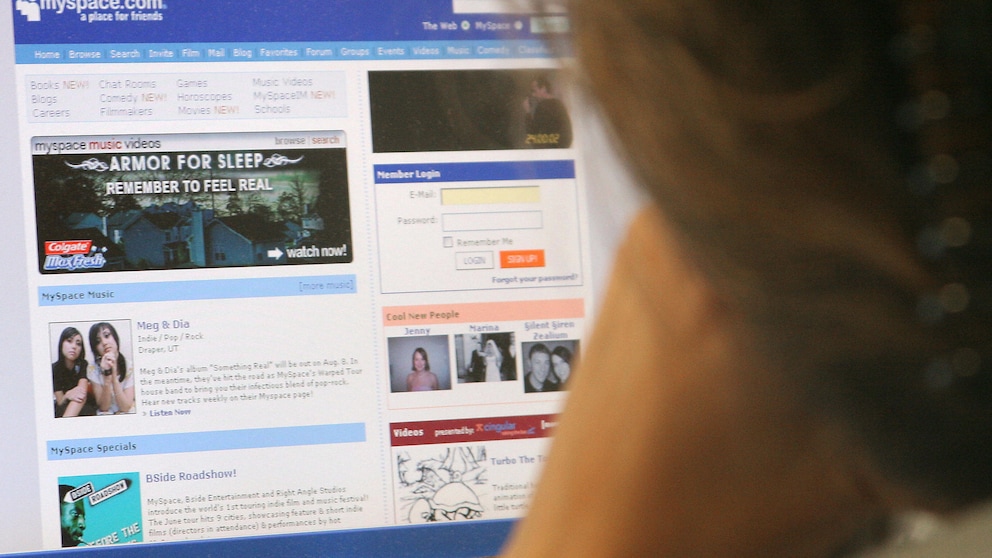
Myspace lives on. However, the significance of one of the first social networks has significantly diminished over the past 20 years. The glory of once being the most visited website in the world is now just a faint memory.
No joke: In 2006, people visited the Myspace website more often than Google Search. You might ask: Myspace? Never heard of it! Then you were probably born after 1995. The boom years of Myspace are long gone and are closely tied to the wild beginnings of the internet. The platform’s history shows what was possible on the World Wide Web back then. It also shows that those who fail to recognize the signs of the times quickly disappear from the scene.
Overview
Myspace – from Data Storage to Community Platform
When Tom Anderson and Chris DeWolfe pursued the idea of offering an online community in the early 2000s where users could upload and store data for free, the term social media was still unknown. Originally, the Myspace website served merely as free data storage, hence the name “My Space.”
Tom Anderson, in particular, maintained close contacts in the music industry at the time. His circle of friends included many artists, musicians, and bands. This soon led to the idea of transforming Myspace into a place for this target group. In July 2003, the new community went online.
Also interesting: John McAfee – from IT Genius to the Underworld
Platform for Music Lovers
Initially in the U.S., the website became the hottest spot on the World Wide Web. With its focus on music, the community hit the zeitgeist. Spotify, Amazon Prime, and others didn’t exist yet. Those who wanted to listen to music in digital form back then had to get their favorite band’s albums through illegal download platforms like Napster.
Myspace filled this gap. In no time, every musician or band worth their salt had a Myspace account. Record labels supported the hype by uploading exclusive songs to the platform. This, in turn, attracted fans and made Myspace the social network for all music lovers.
Of course, lesser-known artists also recognized the opportunities Myspace offered. For many bands, the platform became a way to gain greater recognition. The music-focused social network anticipated a development that platforms like YouTube or Soundcloud serve today.
Also interesting: What Happened to Napster, Second Life, and Others
Rupert Murdoch Takes Over Myspace
The community kept growing. In the early days, up to 230,000 new members signed up. Media mogul Rupert Murdoch took notice of this rapid development. His News Corporation bought Myspace for an astounding $580 million.
At the time, Myspace was one of the most valuable portals on the internet. Allegedly, Mark Zuckerberg offered Myspace founder Chris DeWolfe his portal Facebook, which started in 2004, for sale. DeWolfe declined. If the story is true, it’s a decision he likely regrets to this day.
With Rupert Murdoch’s acquisition, the Myspace success machine initially stayed on course. However, the new owner tried to broaden its focus and expand its target audience. Myspace opened up to more media content like movies and increasingly developed into a multimedia platform.

Myspace Could Suddenly Make a Comeback

What Ever Happened to the Platform “Wer kennt wen”?
Platform Rests on Its Own Laurels
This strategy seemed to work. The numbers continued to rise. Myspace had also established itself in Germany. Shortly after its launch in January 2007, the platform already reported 2.5 million members. However, trouble was already looming on the horizon. Facebook had grown into a formidable competitor. In 2008, Facebook surpassed Myspace in membership numbers.
This turning point brutally revealed what Myspace had forgotten amid all the hype: to continue developing the network and keep it attractive for members. Facebook was already doing this much better. Even then, Mark Zuckerberg demonstrated a knack for trends worth copying. However, Facebook didn’t just copy features from other platforms; it developed even better solutions.
By now, Myspace members were leaving the platform in droves and joining Facebook. In response, Myspace tried to differentiate itself from the social media competitor. However, Facebook was already far ahead.
Myspace is Now One of Many Social Networks
By summer 2011, Rupert Murdoch and his News Corporation had had enough. He sold Myspace for $35 million, a huge loss.
In 2013, the new owners, including singer and actor Justin Timberlake, attempted a complete overhaul of Myspace. This was briefly successful, likely due to the star power of Justin Timberlake. But soon, Myspace sank back into obscurity.
Myspace no longer stood out positively. Negatively, yes. In March 2019, it was revealed that during a server migration, most photos, videos, and audio files uploaded by users before 2016 had simply disappeared. Myspace is now just one of countless social networks on the World Wide Web. Will its glory days ever return?