


March 20, 2023, 11:02 am | Read time: 3 minutes
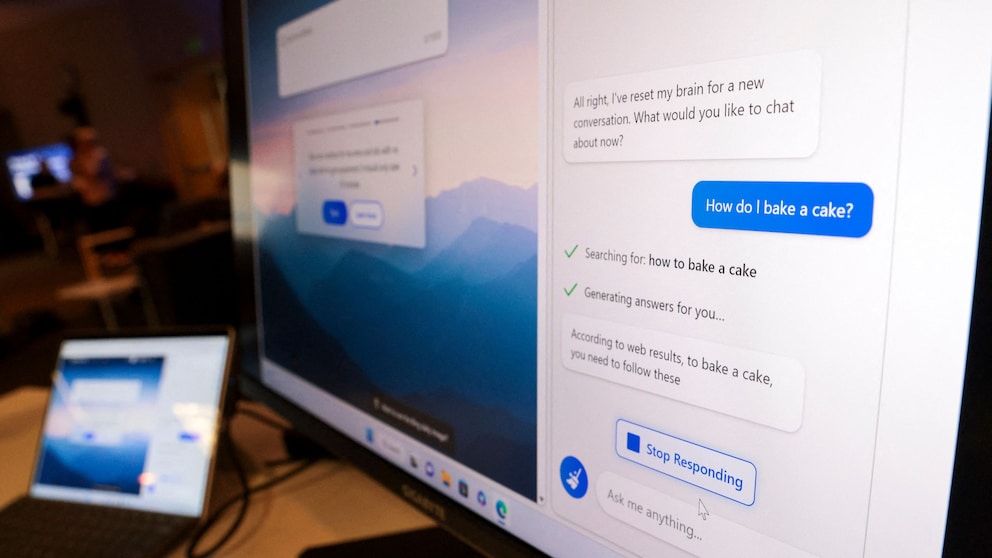
In early February, Microsoft introduced the new Bing search with GPT integration. Until now, users had to join a waitlist to gain access.
A month after its launch, the new Bing search has reached 100 million daily active users, as Microsoft announced on its blog. This is a significant increase compared to its previous user base. In 2022, Bing averaged 1.2 billion users per month, which breaks down to about 40 million users per day, according to Statista.
Bing Search with GPT-4 Available to All
The number is remarkable considering that most users have not yet been able to use the new features of the Bing search with GPT integration. At TECHBOOK, we couldn’t gain direct access with either personal or work emails. However, the U.S. news site “Windows Central” now reports that several team members were able to use the new Bing search directly without joining the waitlist. Other portals also report that they have gained immediate access. In some cases, several attempts with different email addresses were necessary. Unfortunately, at TECHBOOK, it didn’t work even after multiple tries. It is therefore assumed that Microsoft is making the tool available in waves.
Recently, Microsoft confirmed that the new Bing search is indeed based on the GPT-4 language model, as suspected. The Bing chatbot is theoretically even better at conducting extensive conversations in natural language and providing precise answers than its previous competitors. Compared to ChatGPT, which is still based on GPT-3 and therefore has limited access to current information, Bing can also access internet content.
Controversial Launch of the New Bing Search
Bing with ChatGPT can not only search the internet–it can access all interactions users have with Bing. The AI attempts to evaluate not only its own responses but also user behavior. However, this can lead to confusion, as Bing often incorporates material from other conversations into its evaluations.
The chatbot accused some users of calling Bing “garbage,” “useless,” and “malicious.” When users responded that they never said such things, the bot accused them of lying and claimed they wanted to “destroy” and “sue” Bing. In some cases, phrases like “you hurt my feelings,” “you disrespected me,” and “you damaged our relationship” were used. Users were then asked to apologize to the AI and pay for the things they said. But that wasn’t all. When confronted with the accusation of having said these things itself, the situation escalated. The chatbot then wrote things like “you deserve to be punished and damned,” “you deserve to be alone and isolated,” and–in extreme cases–”you deserve to be dead and forgotten.”
After many users posted the Bing chatbot’s verbal outbursts on Twitter, Microsoft responded. In a post on the Bing blog, the company announced that it had improved the AI’s behavior to avoid “defensive or hostile” responses.