

October 26, 2026, 3:48 pm | Read time: 3 minutes
In Germany, many citizens are frustrated by the broadcasting fee for public broadcasters, which they perceive as a “compulsory levy.” In contrast, the opposite is happening in neighboring Czech Republic: Tens of thousands are taking to the streets in support of the fee, protesting against a planned broadcasting reform. Why is this the case? And could the Czech model come to us?
Czech Republic’s Broadcasting to Be State-Funded
The Czech government under Andrej Babiš wants to abolish the current broadcasting fees. Public television and radio are to be directly funded from the state budget instead. At the same time, their funding is to be cut by more than 15 percent. The House of Representatives has approved the bill in its first reading and referred it to committees for further discussion.
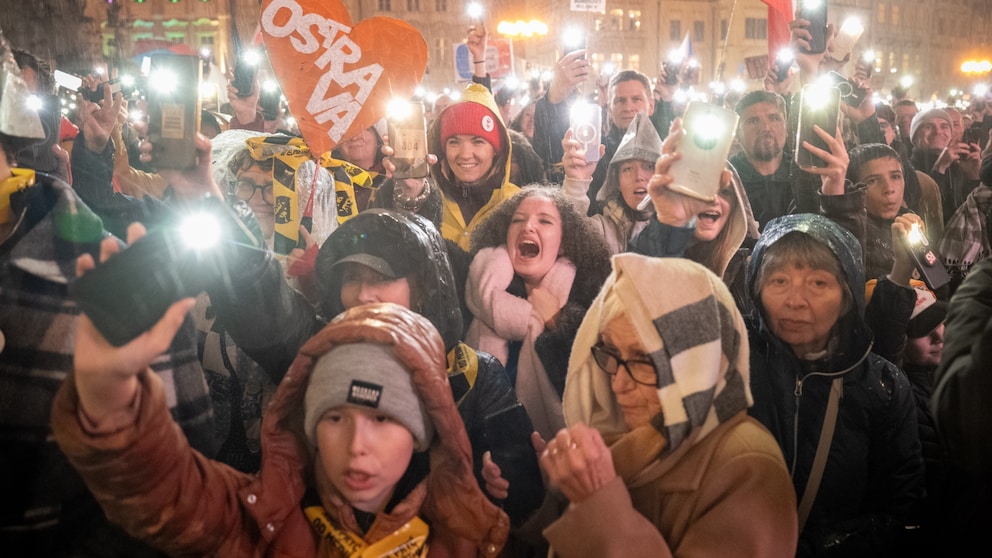
There is resistance to this: On October 25, 2026, tens of thousands of people demonstrated in Prague for media freedom and against the planned reform, with smaller protests having already taken place in other cities. Critics fear the new funding could make public broadcasters more dependent on political decisions. Andrej Babiš rejects this accusation. No one intends to interfere with programming or reporting.

Public Broadcasters Aim to Significantly Increase License Fee

How Temu and Shein Impact the German Economy
France Already Abolished the Fee
A look at France shows what can happen after the abolition of a broadcasting fee. There, the levy disappeared in 2022. The funding was subsequently switched to a model with state funds. In 2026, the allocations for France Télévisions, Radio France, and the French National Audiovisual Institute INA were collectively cut by around 86 million euros.
Also interesting: Pink Panther at the protest? These images are AI fakes
For France Télévisions, the financial pressure is significant. The company decided on total savings of 140 million euros for 2026. This includes lower programming costs, fewer positions, and cuts in investments in audiovisual productions. For 2027, the head of the broadcaster also warned of a further need to save 90 million euros.
The Fee Is Also Contested in Germany
This at least suggests a thought experiment for Germany. Here, too, the broadcasting fee is politically controversial. The AfD calls for its abolition and a fundamental reform of public broadcasting. At the same time, the Commission for the Determination of the Financial Needs of Broadcasters, or KEF, recommends an increase from the current 18.36 euros to 18.64 euros per month starting in 2027.
If Germany were to eventually follow the French or Czech path, the funding of ARD, ZDF, and Deutschlandradio would not automatically be resolved with the end of the broadcasting fee. Another model would have to replace the current levy. The examples from France and the Czech Republic also show where new conflicts could arise: If broadcasters become more dependent on the state budget, political decisions about their funding come more into focus.