

July 30, 2020, 5:00 am | Read time: 4 minutes
Are all HDMI cables the same? Unfortunately, no. For years, this cable has been responsible for delivering picture and sound to our TVs and has had to be improved over time to meet increasing technical demands. As a result, not every HDMI cable supports 4K content. TECHBOOK explains what to look for when buying one.
The HDMI cable is the backbone of the home entertainment system. It connects game consoles, Blu-ray players, or streaming boxes to the TV, ensuring that picture and sound reach the screen. But not all HDMI cables are created equal: Different speed classes cause confusion—because not every cable provides enough bandwidth for 4K and more. Prices vary greatly depending on construction and material—so what should you look for when buying a new HDMI cable? TECHBOOK explains what matters.
These are the three types of HDMI
HDMI cables are divided into three different speed classes: HDMI Standard, HDMI High-Speed, and HDMI Premium High-Speed. These designations have replaced the version numbers of cables in recent years, classifying them more clearly and understandably for customers than the previously used designations like Version 1.0, 1.4, or 2.0.
You can identify the cable version by a seal from the HDMI Licensing Organization, which indicates the type of cable on the packaging.
The basic version is called HDMI Standard, or HDMI 1.0. It supports a transfer rate of up to 2.25 Gbps, which is sufficient for transmitting an HD signal (1080p). However, this HDMI version is somewhat outdated now—the bandwidth of this cable is not enough for a 4K signal. If you still find such an HDMI Standard cable on the market, it’s better to go for the next higher speed class, as HDMI Standard offers no price savings.
If you still have this type of HDMI cable at home and are using it with a Full HD TV, you don’t need to change anything. But if you plan to buy a 4K TV, you should also replace the cable.
Read also: The 7 Best OLED TVs
HDMI High-Speed is the second-fastest HDMI class. It corresponds to cables with version numbers from 1.3 and higher. This HDMI class supports 4K, 3D, and Deep Color. With HDMI High-Speed, you’re prepared for almost anything you might encounter in the home entertainment sector. At least 10.2 Gbps of data per second must flow through this cable to earn this seal.
You get even more bandwidth with HDMI Premium High-Speed—also known as HDMI 2.0: This speed class was specifically introduced for transmitting 4K video at 60Hz and guarantees that the necessary bandwidth of around 18 Gbps is actually available. Version 2.1, with a maximum bandwidth of 48 Gbps, is even suitable for 8K resolution and a refresh rate of 120 Hz, although this is still rare.
Read also: 8K, HDR10+, SUHD, QLED – Acronym Madness When Buying a TV
So if you have a compatible TV at home, make sure to connect devices like an Ultra HD Blu-ray player with such a cable.

Common Mistakes People Make When Buying a TV

QLED, 8K, HDR, Micro-LED: What Do These TV Acronyms Mean?
How long should an HDMI cable be?
In general, you should try to buy cables in the length you actually need. HDMI cables have a copper core, and the longer the cable, the greater the resistance the signal must overcome. If you also want to lay the cable in the wall, make sure to choose a well-shielded cable so that power lines don’t cause artifacts in the picture.
If you notice picture errors with overly long HDMI cables, it can also help to add a so-called HDMI repeater to the signal chain, which amplifies the signal. However, this should only be necessary for cable lengths of more than 15 meters.
Also interesting: How Important Is the Hertz Number Really for TVs?
Are gold-plated connectors better?
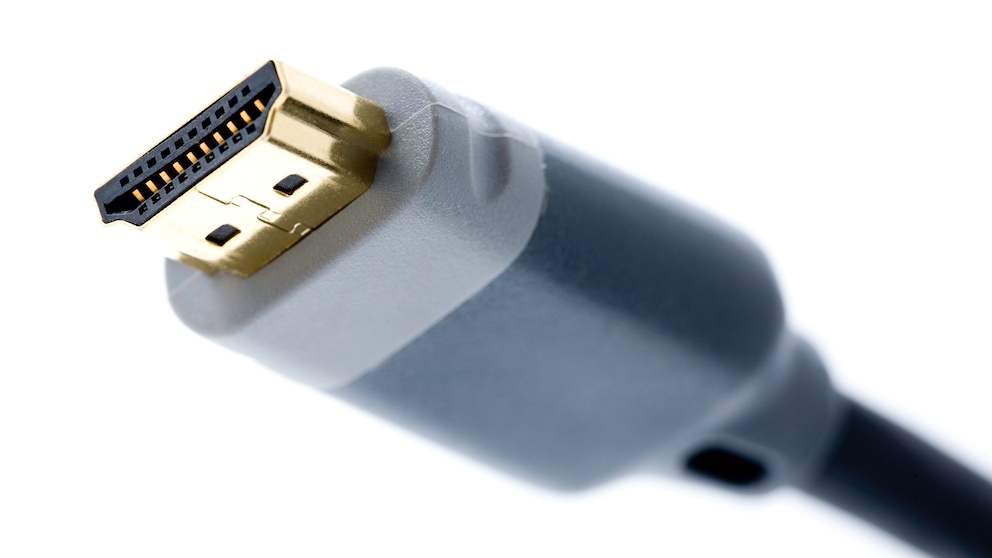
Gold-plated HDMI connectors are often offered at a higher price than regular ones. Manufacturers like to claim that gold improves the transmission and thus the signal of the cable. In reality, this is just an empty marketing promise. However, gold-plated connectors can increase the durability of the cables.