

May 25, 2023, 9:55 am | Read time: 3 minutes
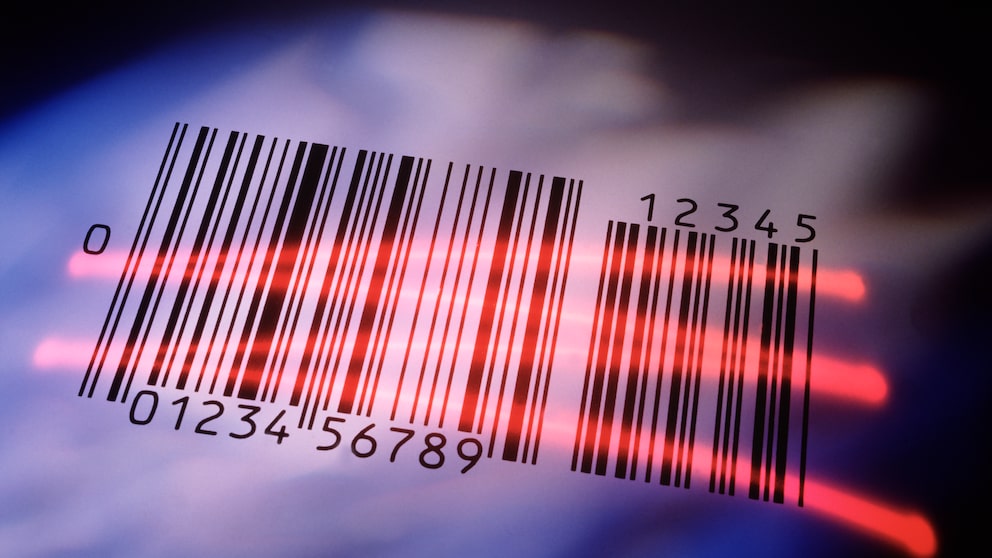
It consists of black, vertical bars of varying widths. We’re talking about the barcode or UPC. The code printed on goods automatically transmits the price to the register and recently celebrated its 50th birthday. Now, the end of the beeping at supermarket checkouts is looming.
As early as the early 1950s, people in Switzerland and the U.S. were trying to develop a universal code that would include the price in coded form. The first patent dates back to 1952. Initially, no one was interested in the new technology for labeling goods. But in the early 1970s, the well-known American supermarket chain Walmart, among others, began to push for the widespread introduction of a universal barcode.
First Barcode Launches in 1973
This accelerated development. In 1973, the so-called Universal Product Code (UPC) was finally introduced. The barcode consists of 12 digits and a check digit. Up to 30 characters can be stored behind the UPC. Additionally, the new code can be printed and read on all goods and products. That’s why it was a pack of gum whose barcode was scanned in a supermarket in Ohio in 1974. This was to demonstrate to the industry that the new barcode worked flawlessly even on small products.
Soon, similar barcodes were developed in other parts of the world. In Europe, for example, the European Article Number (EAN)–or simply EAN code–spread from 1976. It is fully compatible with the American UPC.
The introduction of a universal barcode also accelerated international trade. A globalized world of goods, as we know it today, would be unthinkable without the barcode.
End of the Barcode in Sight
After 50 years, however, the barcode is facing its demise. The American organization GS1, which oversees standards for all existing barcodes worldwide, reports that the barcode will soon be replaced by a coded data matrix. This new code resembles the well-known QR code and functions similarly.
Read also: How does a QR code scanner actually work?
According to GS1, this offers advantages for both the industry and customers. A significant improvement for manufacturers: Up to 3,000 characters can be stored in the code. Possible information could include
- shelf life,
- manufacturing details, or
- ingredients used.
At the same time, customers can easily read this information with their smartphones. This promises a completely new shopping experience for customers, according to GS1.
The organization has set a timeline for the industry. The barcode and the new QR code are to coexist initially. Starting in 2027, the new code is expected to replace the old barcode. However, the organization is not committing to a strict timeline. The transition is intended to be flexible. According to the GS1 resolution, the new code may be used starting in 2027, but there is no mandatory requirement.
So the good old barcode will remain for a while, along with the beloved beeping sound at the checkout when the code is scanned.