

October 28, 2023, 5:34 am | Read time: 3 minutes
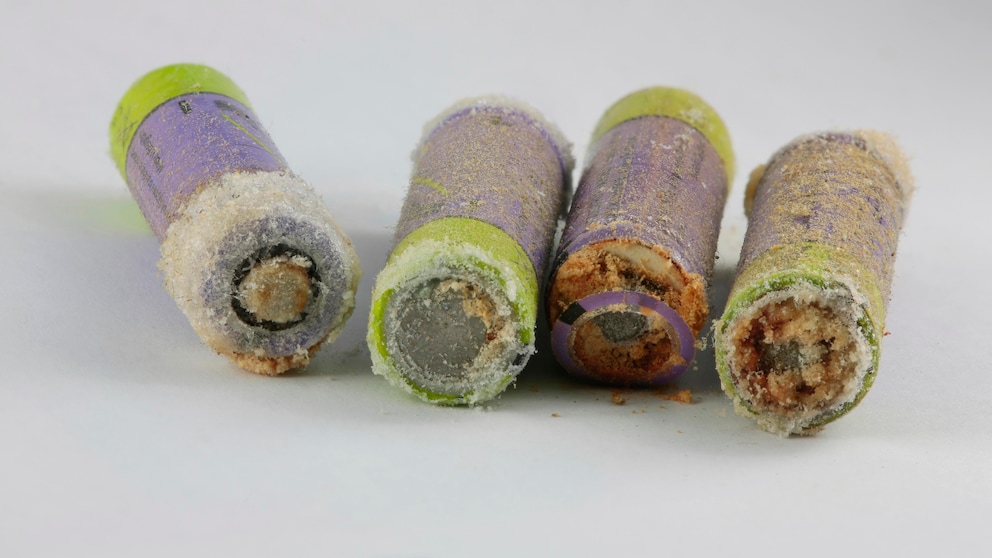
Everyone has probably experienced it at some point: Older batteries, such as those in remote controls, leak. But why does this actually happen? TECHBOOK explains.
If batteries remain in a device for a long time, they can leak and create quite a mess. In the worst-case scenario, the contacts become so sticky and rusted that the devices no longer work. What fewer people know: Even new, unused batteries can leak. But why is that? And what about rechargeable batteries?
What the Expert Says
“The batteries that leak at the end of their life cycle are mainly outdated zinc-based primary batteries (single-use, such as zinc-carbon or zinc-chloride batteries),” explains Markus Börner from the MEET Battery Research Center at the University of Münster to TECHBOOK. If they leak, it can even damage the device in the worst case. The leaking liquid is the so-called electrolyte. It regulates the charge transport between the positive and negative poles. In the case of a zinc-carbon battery, the contained ammonium chloride can leak out.
Also interesting: 11 batteries tested – inexpensive ones often better than brand products

What to Consider When Choosing EV Batteries

Almost everyone does it! This error destroys your laptop battery
Why Can Batteries Leak?
But why does the liquid leak from the battery? There can be two reasons for this. On the one hand, it is due to the zinc in the zinc-carbon battery. In a cup shape, the zinc encloses the battery. However, the zinc is gradually degraded over time. When a discharge occurs through the use of the battery, the exterior, the zinc, is attacked, which can create holes. Through these, the battery liquid can leak. These holes usually form at the flat negative pole.
On the other hand, the electrolyte also attacks the outer zinc when the battery is at rest, if it is not used. If the battery is already very depleted, the electrolyte can easily eat through the empty negative pole and leak. After about one and a half years, it can happen that the electrolyte then leaks from the battery. However, leaking batteries are a thing of the past. “Newer alkaline-manganese primary batteries (based on zinc and manganese) should not exhibit this effect under normal circumstances,” says Börner.
If batteries have leaked, the residues should be removed, and if they come into contact with the skin, hands should be washed thoroughly. The device in which the batteries were located should be cleaned with a damp cloth. You can prevent this by removing the batteries from devices that will not be used for an extended period.
What About Rechargeable Batteries?
Lithium-ion batteries, or rechargeable batteries, unlike regular batteries, cannot leak at the end of their life cycle. This is due to the electrolyte in the battery, which does not consist of a corrosive, or eroding, acid. “However, in the event of an accident, the electrolyte can leak from any battery type,” explains Börner. In general, using rechargeable batteries is preferable to using regular batteries because they are more environmentally friendly.
If rechargeable batteries can no longer be charged and batteries are empty, they should not be disposed of in household waste but in special boxes provided by retailers or municipalities. Some metals in the battery can thus be recycled, and pollutants, such as lead or mercury, do not enter the environment.