


February 24, 2023, 5:35 pm | Read time: 8 minutes
The “NFT” market has grown rapidly in recent years. TECHBOOK explains what it’s all about and how it relates to crypto.
NFTs have become a billion-dollar business. While the transaction volume was just $16 million in 2020, Statista forecasts a value of more than $3.5 billion for 2023. That’s a massive increase of 21,775 percent in just three years. Despite their growing popularity, NFTs remain a mystery to many people. We explain how they work.
Overview
The Term “NFT” Explained
NFT stands for “Non-Fungible Token” and describes a non-exchangeable asset. This contrasts with exchangeable assets, such as currency. Fungibility, or exchangeability, is a term from economics and finance. It refers to the ability to exchange an item for another item of comparable value. For example, four 5-euro bills can be exchanged for one 20-euro bill without changing the value. Non-“fungible” assets, NFTs, are the exact opposite. Each NFT is unique and cannot be replaced by another item.
A good example of such items is famous paintings. You can’t simply replace a van Gogh with a poster from the museum shop. The poster doesn’t have the same value as the real painting.
Why Buy an NFT When the Image Is Freely Available Online?
Almost anyone can view, copy, and save an image online. However, an NFT gives buyers something that can’t be copied: ownership of a work. NFTs can be thought of as collectibles, like paintings, stamps, comics–but in digital form. At first glance, it seems like you’re buying something that’s already available for free online, such as images and videos. A slam dunk by LeBron James was sold as a trading card for $208,000, yet the video is freely available online.
The issue is that a collectible in real life is tangible. A painting like the Mona Lisa may look different from copies in poster form. Digital NFTs, however, are visually indistinguishable from their copies. Only an underlying encryption guarantees that it’s the original. An NFT is valuable only because others assign it an imaginary value.
In the context of the LeBron dunk, this means the trading card with the video is the official NBA clip. Having the official clip is the prestige that gives the card its value. Only those who have this card truly own the clip. Everything else is an imitation.
How Is It Ensured That an Original Isn’t Simply Copied?
NFTs are part of the Ethereum blockchain, the foundational framework for the cryptocurrency “Ether,” the second most valuable in the world after Bitcoin. Although other blockchains have since introduced NFTs, the Ethereum network remains the largest NFT platform.
NFTs are a type of cryptocurrency. Unlike Bitcoin, Ether, and others, they are unique. They have a kind of digital signature–similar to the signature of a great painter. This allows the original to always be recognized as the original, even if there are many similar copies.
The blockchain is comparable to an account ledger, but it takes place online and purely digitally. It is a secure way to track the sale of digital objects. Unlike in an account book, NFTs are stored as a sequence of numbers and letters. This virtual certificate contains information about the owner of an NFT, as well as the sale date and to whom it was sold. With the purchase, your transaction of the money spent on an NFT is added to the list of previous transactions. Storing this data in the blockchain guarantees the authenticity and uniqueness of the NFT.
Read more about blockchain: Cryptocurrency Bitcoin and the Blockchain Explained
Who Really Needs NFTs?
This solves a problem that creatives on the internet often face. They can ensure that their works aren’t simply copied online. By creating a unique original, its value increases. Only one authentic original of each NFT can exist.
The goal is to create artificial scarcity. A good example is a streaming service like Spotify. Musicians receive only small amounts for their songs on Spotify. However, if a song is available as an NFT only once as an original on the internet, its value increases immensely. There may be copies of the song, but only one person can actually own the original. Additionally, the creator of an NFT can specify that a certain amount goes to them with each resale of the token.
Creatives can also offer things through NFTs for which there was previously no sales platform, such as GIFs or stickers for sending via messenger. NFTs can essentially be anything that can be digitally stored. Currently, the focus is on digital art.
NFTs Driven by Speculation
NFTs also offer savvy collectors a way to make money. Like in the art market, one can buy an NFT and speculate that its value will increase. Someone, for example, purchased a “Gucci Ghost” for $3,600 on the site “Nifty Gateway” and is now asking $16,300 for it. The original price to create the image was $200.

What Is Ethereum? An Overview of the Cryptocurrency

Trading Bitcoin and More – An Overview of the Best Crypto Exchanges
What Types of NFTs Are There?
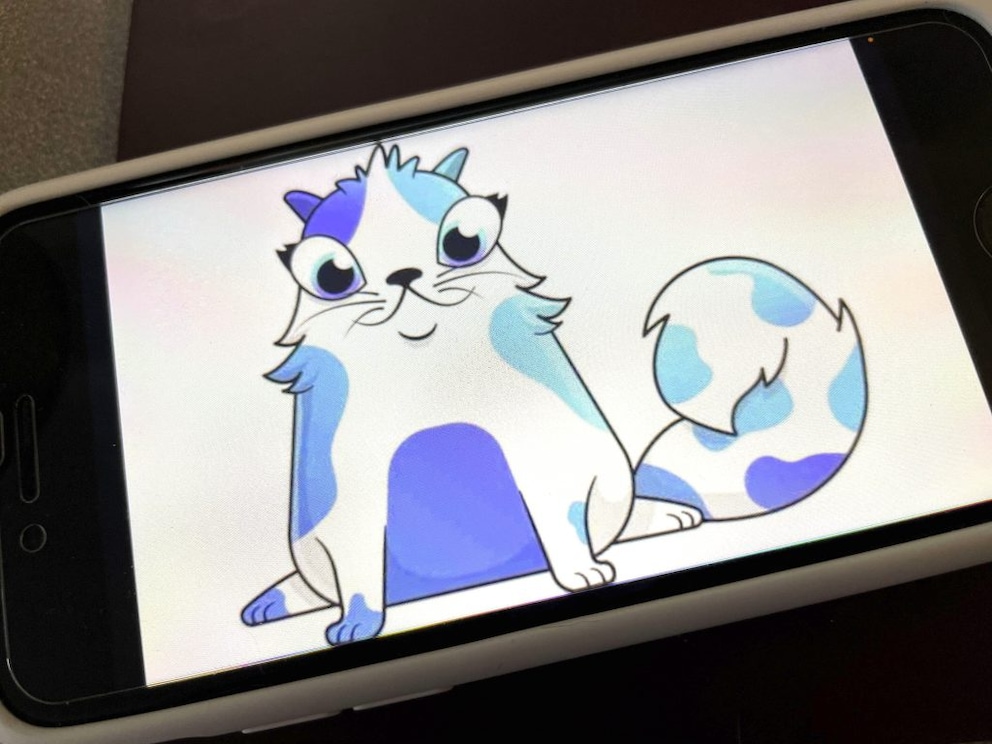
NFTs are used in digital art and sports collectibles, but also in video games. One of the first applications to utilize the NFT principle was the digital collectible game “CryptoKitties” from 2017. Players could buy, trade, and breed collectible cats. Each new cat was an NFT, ensuring authenticity and uniqueness.
The original copy of the “Nyan Cat,” a popular meme from 2011, part cat, part Pop-tart (an American sweet pastry), was sold in February for 300 Ether (about $600,000) in an online auction. The U.S. band Kings of Leon released a digital-only album and earned $2 million. Twitter founder Jack Dorsey’s first tweet was sold in March for $2.5 million. Even the New York Times offers articles as NFTs for a modest $560,000.
Christie’s auction house also auctioned its first purely digital artwork in the form of an NFT for $69 million in March–a collage named “The First 5000 Days,” which was 13 years in the making.
The U.S. NBA demonstrates how NFTs work as trading cards with Top Shot. Users can collect short videos of basketball highlights. Since October 2020, NBA Top Shot has generated more than $333 million.
Just because an NFT is unique doesn’t mean that every object exists only once. Trading cards can exist multiple times, just like in real life. Thanks to the blockchain, it’s tracked when each individual card changes ownership.
Problems with the NFT Market
Who Guarantees That a Work Remains Unique?
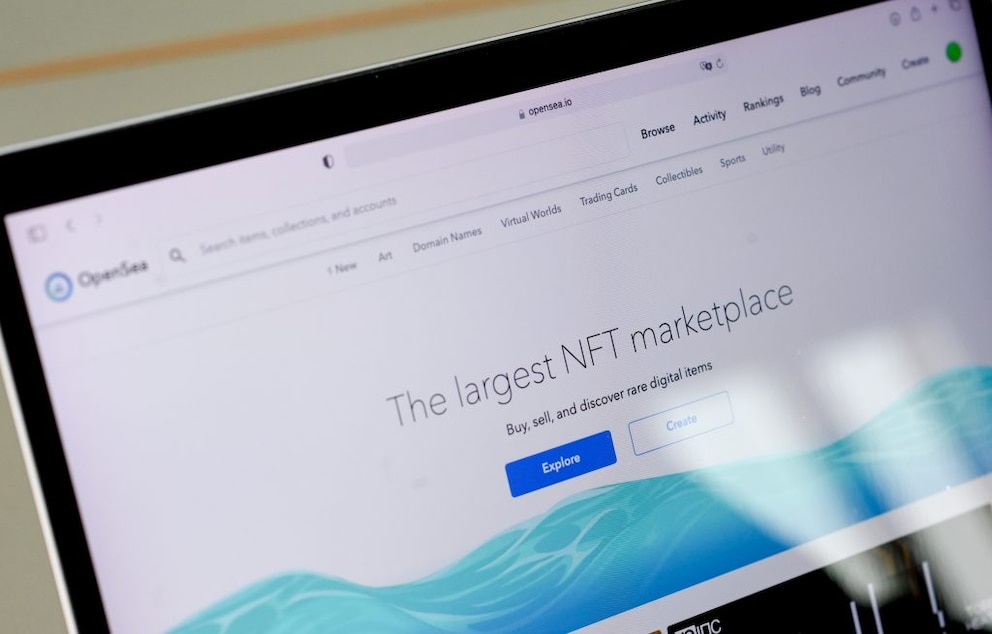
Buying an NFT from an artist doesn’t mean they lose their copyright. This is one of the potential issues with NFTs. What if someone decides to sell the same artwork you’ve already purchased a second time? The young NFT market currently offers no solution for this. Therefore, it’s important to ensure the seller is trustworthy. Known sales platforms like Nifty Gateway, OpenSea, and Rarible should be the first point of contact.
Enormous Energy Demand
Like other cryptocurrencies, NFTs require increasingly large amounts of energy because blockchains are extremely demanding in terms of computing power. Some creatives have already announced they will no longer create NFTs in the future to avoid further increasing energy demand.
NFTs Are Not Protected from Deletion
Instead of buying a painting to hang in your living room, purchasing an NFT means acquiring a kind of ownership certificate–not the NFT itself. The certificate in the blockchain contains all information about authorship, transactions, and ownership of an NFT and is not erasable. However, the NFT must be stored somewhere on a server.
When you buy an NFT, you essentially receive only the access code to the NFT. If the website is deleted or the server where the NFT is stored is moved, this code leads to nowhere. In this case, owning an NFT is nothing more than a dead link on the internet.
The Question of Value
It’s also questionable whether owning a unique NFT alone makes it valuable. While a buyer holds the original, genuine NFT, they cannot prevent others from copying and sharing the image online.
Are NFTs a developing digital bubble? Proponents see NFTs as the next digital revolution. But many questions remain unanswered. If I buy an NFT, who guarantees that it’s worth the money? The value of an object is only given as long as there are people willing to spend money on it. Like other cryptocurrencies, NFTs have no real-world equivalent. If everyone suddenly decided to cash in their NFTs, who would buy them?