

February 19, 2021, 1:14 pm | Read time: 6 minutes
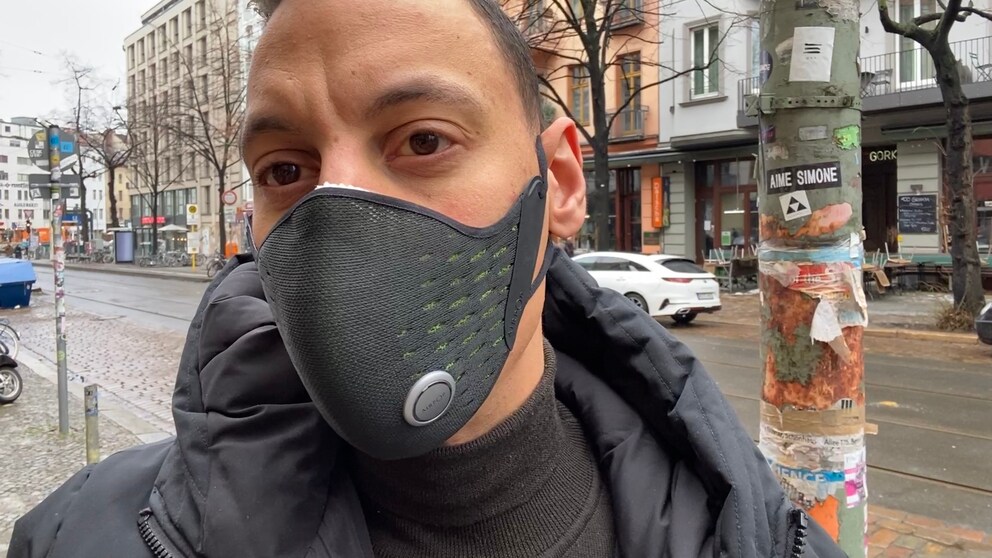
Airpop is a pioneer in smart masks, introducing the Active+ Halo, a face covering that promises to do much more than protect against COVID-19. TECHBOOK tested the €150 wearable in advance.
Face coverings, or simply masks, have become an essential part of our lives outside our homes. It was inevitable that a smart mask with an app would emerge sooner or later. This is now happening in early March with the “Airpop Active+ Halo” arriving in Germany. Despite the high price, it offers a range of features and accessories.
Overview
What the Airpop Active+ Halo Promises Buyers
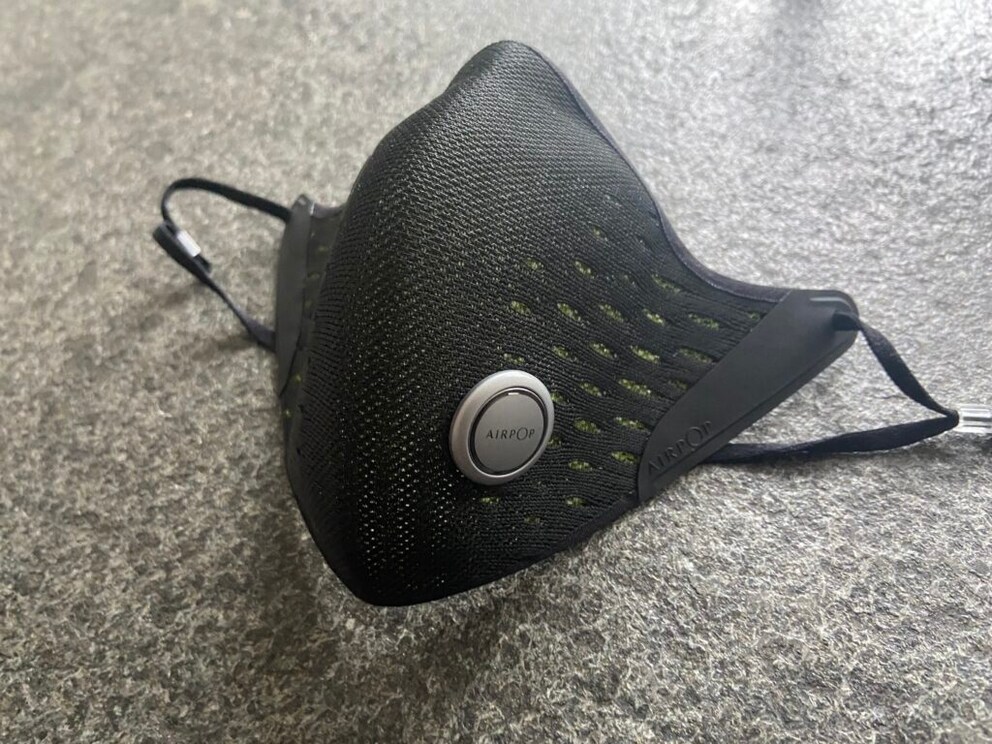
- A washable, fairly sturdy fabric mask (mesh) as a cover
- Four filters to insert into the mask (each with a wear time of 40 hours)
- A smart sensor (Halo) in the mask cover that interacts with the smartphone app:
- to measure breathing rate
- to display filter lifespan
- to show particulate pollution in your city
- and thus display filtered pollutant particles
- KN95 certification, making it usable in Germany like FFP2 masks

The 8 Best Bluetooth Sports Headphones Compared

Apple has unveiled the new AirPods Pro 3
The Airpop Active+ Halo in Everyday Testing
In practical testing, the TECHBOOK editorial team identified four areas to examine the Airpop Active+ Halo. This results in an overall impression of the product and thus our conclusion.
Cost and Sustainability
At first glance, the high purchase price of €150 for the mask with four filters is overwhelming. In return, users get a wear time of 160 hours (40 hours per filter). Additional filters can be purchased in packs of four for €25.
Compared to FFP2 masks, which should be replaced after one day, at least the filter prices are not bad. Assuming you get 30 FFP2 masks for €25 and wear each for 4 hours, you get 120 hours of wear time compared to 160 hours with Airpop filters. In any case, Airpop will generate far less mask waste. A one-to-one comparison of costs is difficult, however, as FFP2 mask prices vary greatly.
The filters from AirPop also offer wearers proven protection against bacteria and particulate matter in the air. This is already the first indication of the actual purpose of the Airpop Active+ Halo!
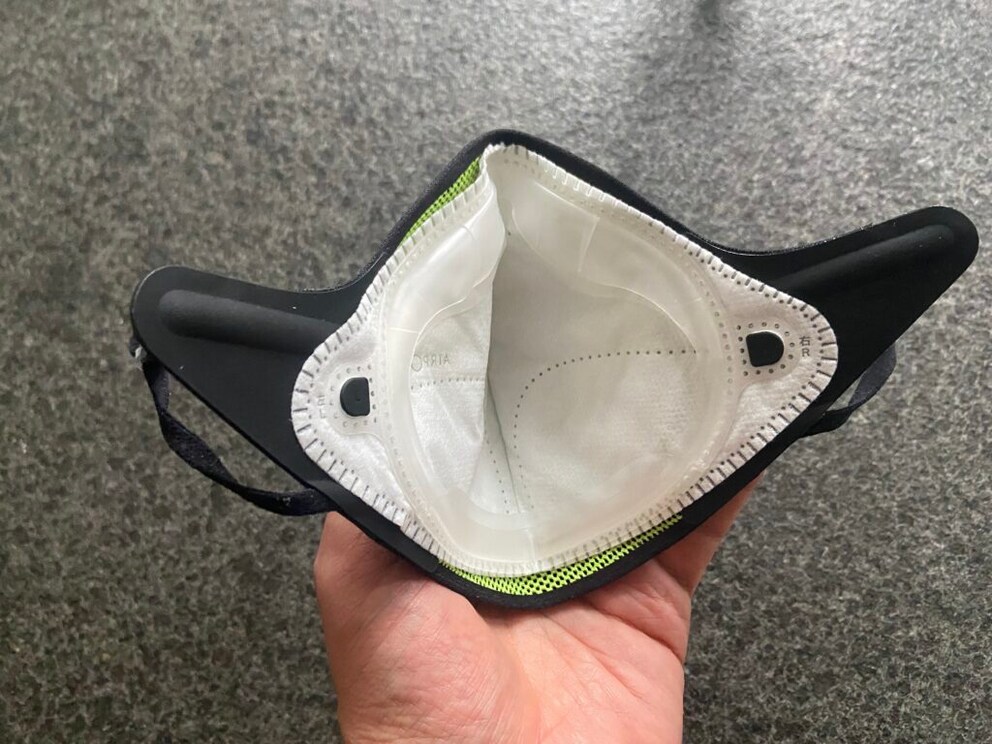
Subtracting the filters from the purchase price of €150 leaves €125 for the actual mask and the Halo sensor, which is powered by an included button battery. For a product manufactured in the Far East with the given specifications, this is quite a hefty price, which can at least be amortized over long-term use through the filters.
Setup, App, and Data Privacy
Setting up the mask worked smoothly in the test: establish battery contact for the sensor, download the app, connect and set up the mask via Bluetooth. Then scan the QR code on the filter pouch so the app can register how long the filter will last. Once the sensor and filter are stored in the app, it’s just a matter of putting them together and getting started.
Regarding data privacy, we mainly look at what data the app collects. And here, one must say that it feels quite transparent. You register with your own phone number, a procedure that initially leaves a bad taste. The app also wants location access and, through breath measurement, ultimately collects health data as well. It’s a bit too much for us.
Comfort and Usability
This point is particularly important for the Airpop Active+ Halo. As you might quickly notice, it is primarily not a face covering meant to compete with FFP2 masks. Rather, it’s about wearing the mask in everyday life to protect against air pollution and bacteria. Good news for small faces first: The straps can be adjusted in length.
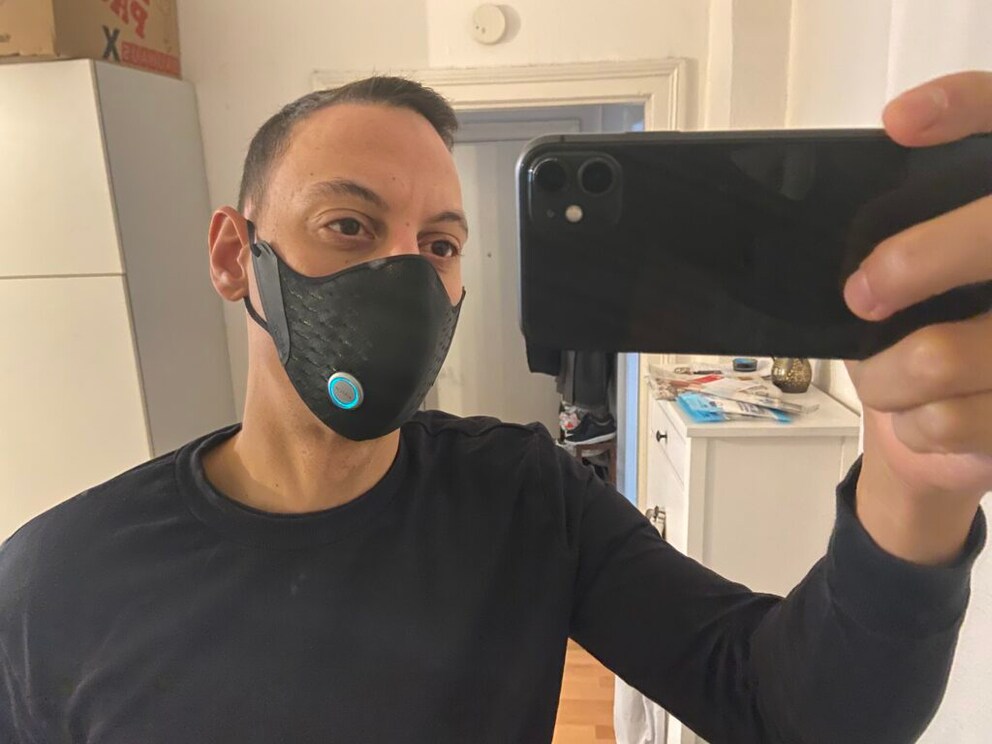
In the test, however, the mask unfortunately did not fit well. This is, of course, very individual depending on the face, and there are other opinions on the internet. In our case, it felt like one to two centimeters of mask length were missing. This led to the rubber ring on the inside of the filter pulling uncomfortably on the nose.
Overall, protection against particulate matter and bacteria comes at the expense of comfort.
Smart Features
According to the manufacturer, the smart features are still in the optimization phase. A final judgment on functionality can only be made at the release in March. The breathing tracker, as announced by the manufacturer, did not yet provide reliable results.
Also interesting: The 5 Best Fitness Trackers Compared
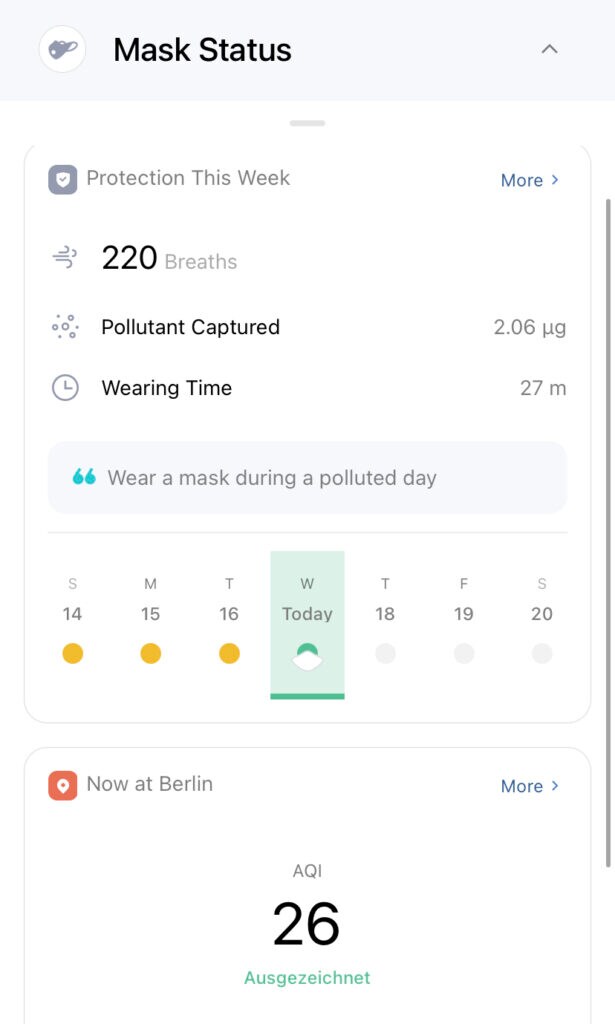
Once it works, different activities can be selected via the app (iOS and Android). For example, the mask can be worn while jogging to measure breathing activity. For athletes, this offers an optimization opportunity. However, since breathing with the filter is more difficult, it should be removed during sports.
Read from the colleagues at FITBOOK: What the VO2max Value Reveals About Your Endurance
Conclusion + Video on the Airpop Active+ Halo
In the end, our test conclusion is mixed. The Airpop Active+ Halo is innovative and actually a useful health wearable. However, the target audience in Germany is likely very niche. While air quality is an issue here, it’s not to the same extent as in countries for which the mask was developed.
Throwing Active+ Halo in the same category as COVID-19 masks not only does it a disservice but ultimately leads to confusion and, as the test shows, disappointment. However, those looking to protect against bacteria and polluted air now have a COVID-compliant option to do so. In that sense: Not for the masses, but great for the individual.