

April 25, 2024, 8:02 am | Read time: 5 minutes
There have been repeated calls in the U.S. to ban TikTok. Now, a law is in the works that could lead to a quasi-ban of the popular app. TECHBOOK has the background on the current developments.
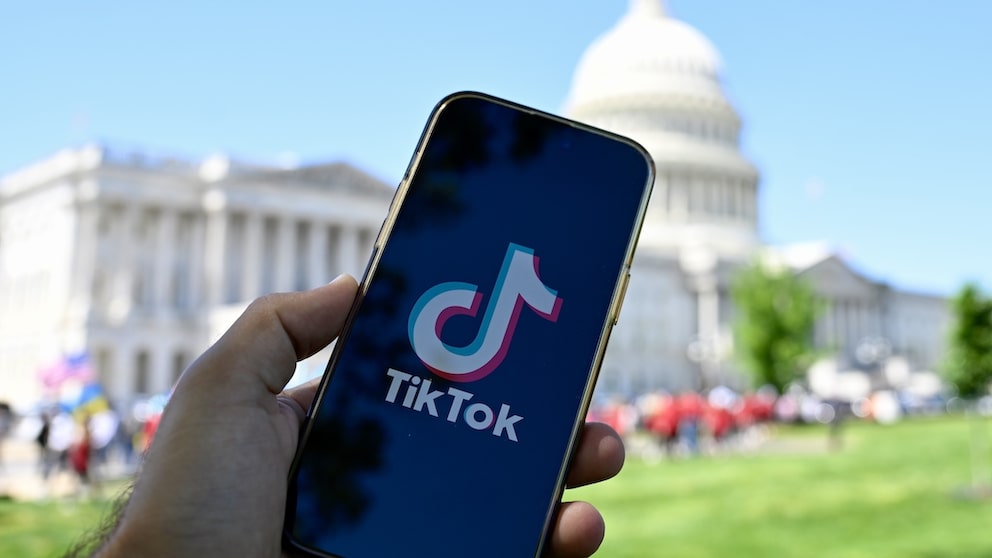
TikTok is no longer a newcomer among Instagram, X, and others. With short videos and a clever algorithm, TikTok knows how to entertain its audience, but it also serves as a search engine, tutorial repository, and advertising platform. However, since its debut in 2018 and rapid rise, TikTok has faced much criticism—especially regarding data protection, as the app is backed by ByteDance, a Chinese company. Now, the U.S. Senate has passed a law that aims to force the sale of TikTok’s U.S. operations. Otherwise, a de facto ban looms.
Overview
Democrats and Republicans Agree
The U.S. and TikTok have a contentious history, as U.S. politicians from both parties, as well as intelligence and data protection experts, repeatedly accuse the company of being a Chinese espionage and propaganda tool. TikTok denies the allegations. After a bill was passed by the U.S. House of Representatives in March but not taken up by the Senate due to legal concerns, the second attempt has now been successful.
Last weekend, the House of Representatives and on Tuesday, April 23, the U.S. Senate approved a new legislative package. This included support for Ukraine, Taiwan, and Israel amounting to $95 billion. The approval of the “TikTok Law” is thus part of a larger negotiation package between Republicans and Democrats, alongside other important decisions.
With a vote of 79 to 18, the Senate decided that ByteDance must sell its TikTok U.S. operations within 270 days. An additional 90 days are included for sales initiation or deadline extension. This would give ByteDance a year to respond to the new law. The fact that this deadline falls after the U.S. presidential elections in November 2024 is likely to benefit both Joe Biden and Donald Trump initially. If ByteDance does not divest from TikTok, the law would prohibit app stores from continuing to offer the app, effectively amounting to a ban.
Accusations Against ByteDance Persist
The background for this drastic step is the concern that TikTok is transferring large amounts of data from U.S. citizens to China. For example, Senator Marco Rubio, a member of the Intelligence Committee, said: “For years, we have allowed the Chinese Communist Party to control one of America’s most popular apps, and that was dangerously shortsighted.” According to its own information, TikTok has 170 million users in the U.S. In Germany, there are about 20.9 million, primarily 14- to 19-year-olds.
ByteDance, on the other hand, denies being under the command of the Communist Party and points to the 60 percent of Western TikTok investors and the company’s headquarters in the Caribbean Cayman Islands. However, U.S. politicians argue that the Chinese founders, despite holding only a 20 percent stake, have higher voting rights and thus corresponding control over the company. The remaining 20 percent belongs to TikTok employees. Whether ByteDance would even sell TikTok is doubtful. According to media reports, the parent company has so far rejected this step, preferring to accept a ban in the U.S.

Will Elon Musk Soon Take Over the US Division of TikTok?

Could TikTok Really Be Banned in Germany?
Does the Ban Restrict Free Speech?
TikTok responded to the law with “regret” and accused Congress of restricting the “free speech rights of 170 million Americans”—under the guise of the also-passed foreign aid. Similar criticism is voiced by civil rights groups such as the Electronic Frontier Foundation and the American Civil Liberties Union (ACLU). Jenna Leventoff of ACLU said: “We are deeply disappointed that our politicians are once again trying to trade our First Amendment rights for cheap political points in an election year.”
In addition to free speech and expression, critics also see the income of artists and small web shop operators at risk. There is already a precedent for a TikTok ban potentially colliding with constitutionally protected free speech. A court in Montana ruled in November 2023 that a ban on TikTok in that state would violate users’ right to free speech and overturned the ban.
TikTok has now announced a similar course of action following the Senate vote. According to the head of TikTok’s Public Policy department, the company plans to legally challenge the new law. Whether courts could overturn the new law remains to be seen. President Joe Biden signed it on Wednesday.
TikTok as a Pawn in the U.S. Election Campaign
The election campaign in the U.S. is already in full swing seven months before the November election. For Biden, the TikTok issue is a double-edged sword, as he can demonstrate his tough stance against China. On the other hand, a potential TikTok ban primarily affects young people, whose votes Biden desperately needs. Especially since he is already battling the narrative of being too old. Perhaps for this reason, his campaign team has opened a TikTok account.
It’s different for his challenger Donald Trump, who is not on TikTok. During his presidency, Trump also sought a tough approach and tried—albeit unsuccessfully—to force ByteDance to sell TikTok through ban threats. Now, however, he criticizes the new law, which was significantly advanced by his Republican party friends.
While courts in the U.S. will likely decide the future of TikTok, the EU has launched its own investigations. However, the focus, in addition to data protection, is primarily on the health and safety of users. The Digital Service Act (DSA) classifies TikTok as a relevant online service subject to stricter regulation, as TECHBOOK reported.