


March 31, 2026, 12:27 pm | Read time: 5 minutes
Apple was founded in 1976 and has a long corporate history with ups and downs. Along the way, many interesting products were created, though many have been forgotten.
Successful products like the Apple I, Macintosh, iPod, iBook, and even the Newton are still fondly remembered by many. However, there are a number of obscure products from Apple’s history that most people have never heard of. TECHBOOK presents the best of them.
Overview
Apple PowerCD (1993)
Before the iPod and Apple Music, Apple tried its luck in music with the PowerCD. The CD player was nothing more than a rebranded Philips CDF-100–without any design changes.

Even cheap-looking stereo speakers and a remote control with the Apple logo were included. At least you could connect the PowerCD to a Macintosh and read Kodak’s Photo CDs and data CDs.
Apple eMac (2002)
Wait, isn’t that a typo? Shouldn’t it be iMac? No, in fact, in 2002, Apple tried to sell a special version of the “Sunflower” iMac G3 specifically for the education market–the “e” in eMac stands for “Education.”

Later, the computer was sold on the mass market as a cheaper iMac alternative, but it wasn’t really in demand. One criticism was the small amount of RAM. It came with just 128 megabytes from the factory–barely enough to run the then-new Mac OS X smoothly.
iPod Hi-Fi (2006)
Those who witnessed the rise of the iPod might remember the plethora of sound systems and speaker docks with slots for the popular MP3 player. Few know, however, that Apple built its own iPod dock. In 2006, the iPod Hi-Fi was introduced, a portable speaker with a dock for the iPod. The dock featured two 80-millimeter drivers and a 130-millimeter woofer and could be used both on battery power (with six D-cells) and plugged in.
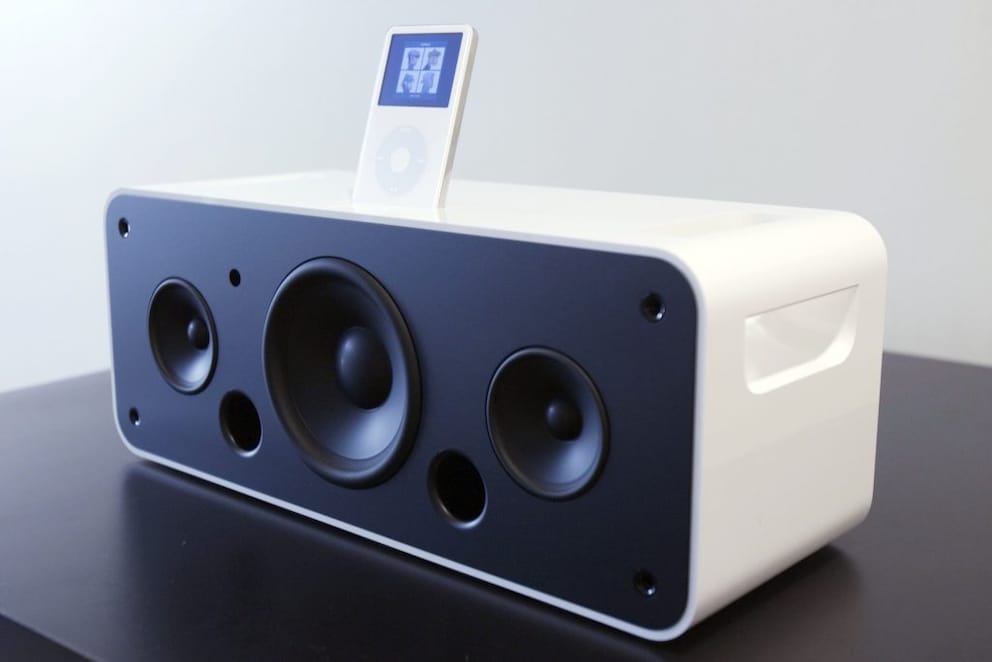
Critics praised the rich sound of the iPod Hi-Fi, but criticized its limited functionality. Additionally, the dock was not exactly cheap at $349. For comparison, the original iPod from 2001 launched at $399. The iPod Hi-Fi was not a success for Apple. After just a year and a half on the market, the company discontinued the dock at the end of 2007.
The Apple Collection (1986)
In the early years of the company, it was not uncommon to find Apple logos on the most unusual products. After Steve Jobs’ departure and losses in the core computer business, Apple expanded into many different areas. In 1986, the company introduced a complete catalog of Apple products. But instead of computers and hardware, it featured clothing, accessories, household items, and even toys.
Our favorites from the catalog are undoubtedly the windsurf board, the umbrella, the sunglasses, the beer glass, and the polo shirts–all, of course, with the Apple logo. The top contender, however, is the wristwatch, which also features the motto “Think different.” As perhaps the first “Apple Watch,” it could fetch a lot of money today.
Also interesting: The biggest Apple flops of all time
Macintosh TV (1993)
Today, watching linear TV on a computer is easy via the internet. In 1993, however, that was still a distant dream. Apple’s solution to the problem: a Macintosh and TV in one device. With just one click, you could switch between the desktop interface and cable TV. Of course, a remote control was included–the Macintosh TV’s remote came in a credit card format.
The all-in-one Mac, which integrated a 14-inch screen, computer hardware, and drive, hit the market for just under $2,000. That equates to about $4,000 today and is likely why the Mac TV didn’t catch on with consumers. After just four months on the market and 10,000 units produced, Apple discontinued the device.

Karl Lagerfeld had a “nanny” for his 500 iPods.

The Best Cameron Diaz Movies to Stream
Apple Pippin (1996)

Okay, this is practically an antique, yet the Pippin was one of Apple’s biggest failures. The Pippin was developed by the company in collaboration with Bandai. It was originally intended to be an affordable Mac for gaming. What resulted was an overpriced game console with internet access and a desktop operating system that sold–believe it or not–only 42,000 units. You don’t even have to compare that to the 100 million units sold of the original PlayStation to see that the Pippin was an absolute flop. Fifteen months after its launch, the Pippin was put out of its misery and discontinued–shortly after Steve Jobs returned to Apple.
Apple QuickTake (1994-1997)
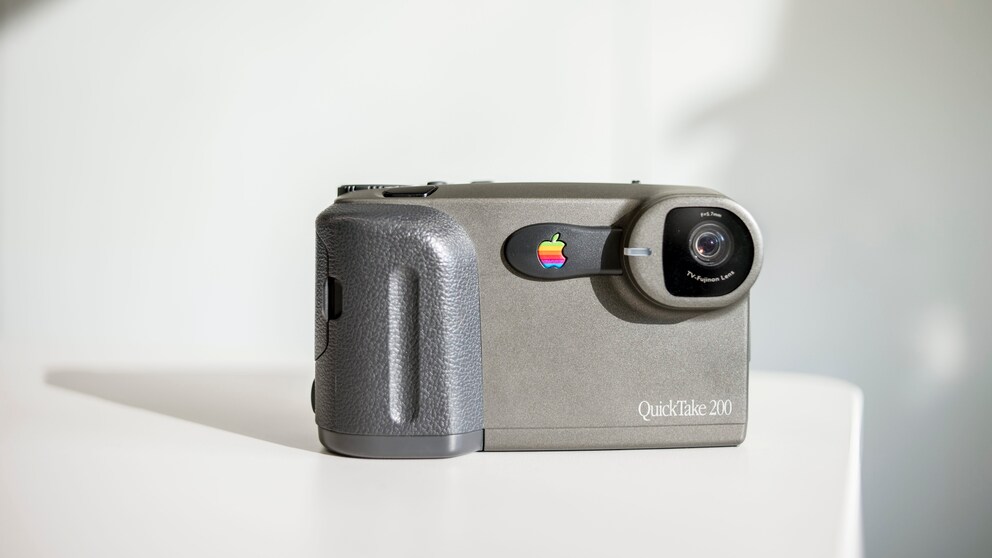
For many, the iPhone already replaces the outdated digital camera. But would that still be the case if Apple had never discontinued the QuickTake? In the early ’90s, the company was a pioneer in the camera market. The QuickTake was one of the first digital cameras for consumers. The first model, the QuickTake 100, was launched in 1994 for a then-affordable $749. It was manufactured by Kodak and Fujifilm and had a resolution of a mere 0.3 megapixels. Appropriately, it had a massive 1-megabyte storage. At full resolution, the camera could store just eight photos.
Apple had two more models manufactured. The QuickTake 150 could store 16 full-size images thanks to improved compression. The last model, the QuickTake 200, even had expandable storage, allowing up to 40 images to fit in the camera. It also had a small LCD on the back to display already captured photos.
As more manufacturers, including Kodak and Fujifilm, began launching their own digital cameras in 1997, Apple lost its pioneering position. It was also the year Steve Jobs returned to Apple and immediately cut a number of products from the portfolio. QuickTake was also a casualty of this reorientation.