

September 7, 2022, 11:41 am | Read time: 4 minutes
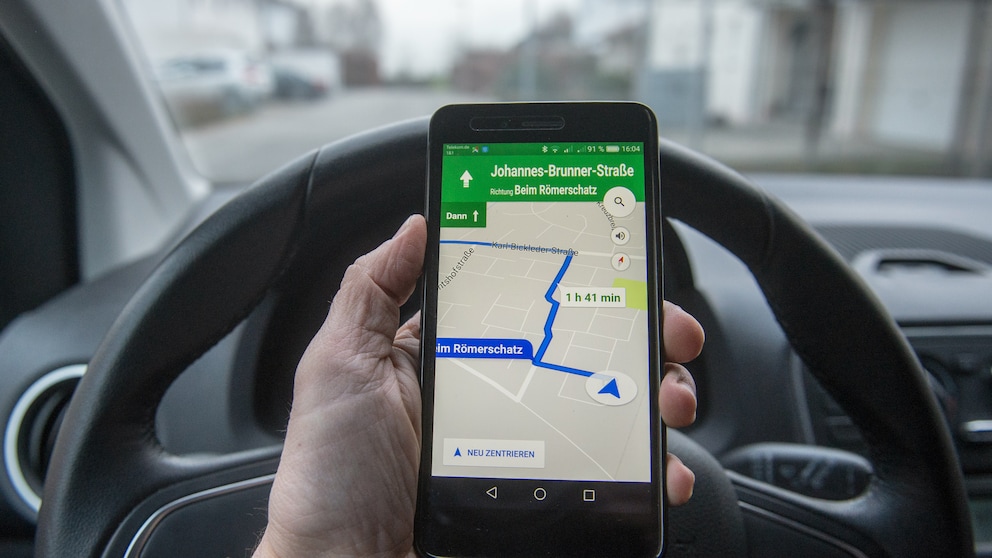
Google continually updates its Maps service with new features. New are alternative route suggestions that are not only more climate-friendly but also promise lower fuel consumption. However, users need to take action themselves to get particularly accurate suggestions.
Just in time for summer vacation, Google had enabled climate-friendly route planning for a number of countries, including Germany. Now, another update for Google Maps can further help reduce fuel consumption.
Stay informed with the TECHBOOK newsletter–sign up now!
Overview
Users can now enter vehicle info
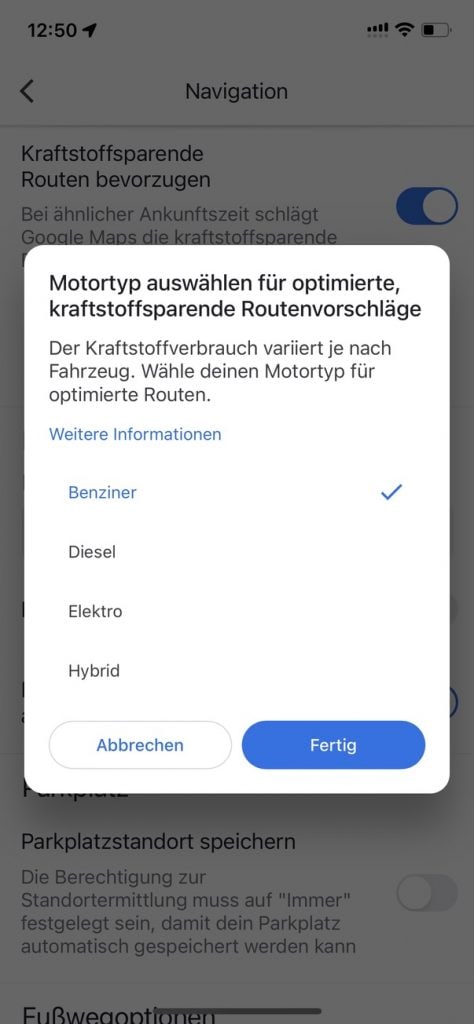
Google had already announced the feature, and now it is available in Germany. To further increase fuel efficiency, users can now specify their car’s engine type. Options include gasoline, diesel, hybrid, and electric. The choice of engine type can influence the calculation of the most climate-friendly route. For example, diesel engines are particularly efficient on highways. Cars with hybrid or electric drives, on the other hand, are suitable for stop-and-go traffic, such as stopping at traffic lights in the city. These types also benefit from regenerative braking on hilly roads.
The engine type can be selected in the settings under Mobility>Navigation>Engine Type. By default, “Gasoline” is selected. Google recommends the following settings:
- If you drive a car with a combustion engine, you should select “Gasoline” or “Diesel.”
- If you have a hybrid or plug-in hybrid that primarily runs on fuel, you should select “Hybrid.”
- If you have an electric car or a plug-in hybrid that primarily runs on electricity, the “Electric” option is recommended.
Read also: Hidden feature in Google Earth shows historical maps
Climate- and consumption-friendly routes
Since March 2021, it has been possible in the U.S. to choose not only the fastest route but also the one with the lowest CO2 consumption. An AI calculates this route based on fuel consumption, among other factors. This applies to both combustion and electric cars.
The feature takes into account not only the route length but also other factors such as road incline and traffic jams to help optimize potential fuel consumption.
The Keyword Germany
At Google I/O 2022, the company had already announced plans to bring the climate-friendly feature to Europe this summer; TECHBOOK reported. After a wait in Germany, the update is finally here. This is certainly exciting both for the climate and for personal finances. If the travel time for the fastest and the most environmentally friendly route is close, Google Maps will automatically select the latter option after the update.


Google Maps Expands Offerings for Cyclists

Google Maps Introduces Practical Update for EVs
How does Google determine which routes are climate-friendly?
Google Maps incorporates numerous factors into route calculation. These include how much fuel or electricity cars typically consume in the respective region. Traffic flow, including notorious congestion points, also plays a significant role. Additionally, Maps considers the condition of the roads, such as how steep the hills are on the route and whether they are local or long-distance roads.
The calculations include insights from the National Renewable Energy Laboratory of the U.S. Department of Energy and the European Environment Agency.
Google Maps introduces “Preferred modes”
In the U.S., the functions described above have been available for some time and were accompanied by a general adjustment of the user interface. Some beta users reported that they could plan their routes in more detail by excluding certain modes of transportation from the outset.

Since mid-June, there is also–unfortunately still only in the U.S.–the option to filter by toll fees. This feature could be interesting for many on vacation here as well. While avoiding toll roads has long been necessary with the map service, it will soon be possible to obtain exact prices for individual routes. Whether the feature will come to us this summer is questionable. However, those spending their summer vacation in the U.S., Japan, Indonesia, or India can test the feature directly.