


August 10, 2026, 12:36 pm | Read time: 5 minutes
On Wednesday, August 12, a very special natural event will occur for the first time since 1999: a total solar eclipse. Parts of Greenland, Iceland, and Spain will be plunged into darkness by the moon. However, many other European countries will at least witness a partial solar eclipse—weather permitting. But what should you keep in mind when capturing the spectacle with your smartphone?
A total solar eclipse is a rare event that occurs only every few decades at a given location and lasts only a few minutes. It is therefore a popular subject for smartphone snapshots. However, there are a few things to consider—including how to protect the camera. The U.S. space agency NASA offers tips on how to successfully photograph the solar eclipse.
Overview
What Is a Total Solar Eclipse?
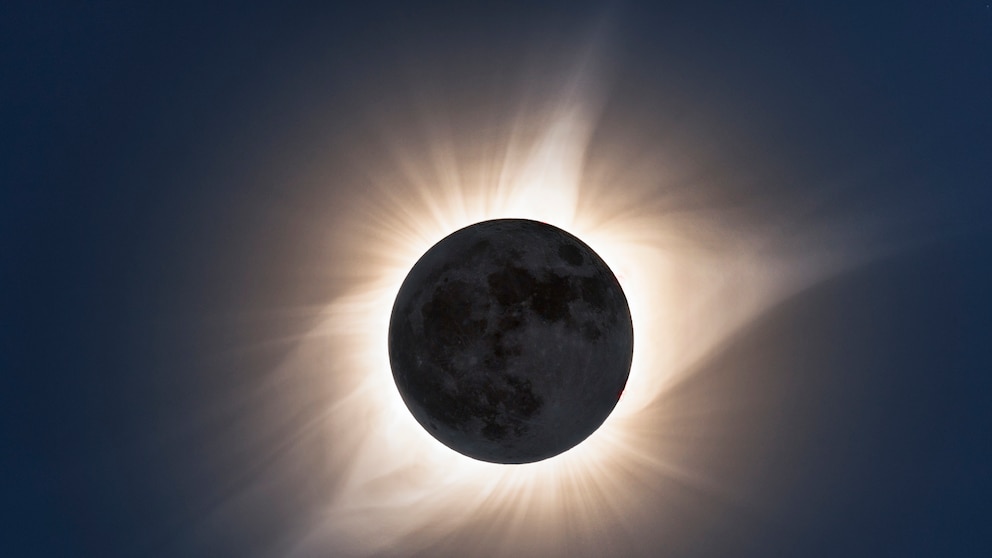
The special feature of a total eclipse is that the sun is completely covered by the moon. This phenomenon offers the only opportunity to see the corona—the sun’s outer atmosphere. Normally, this is obscured by the brighter light of the sun itself.
Where Can You See the Total Solar Eclipse?
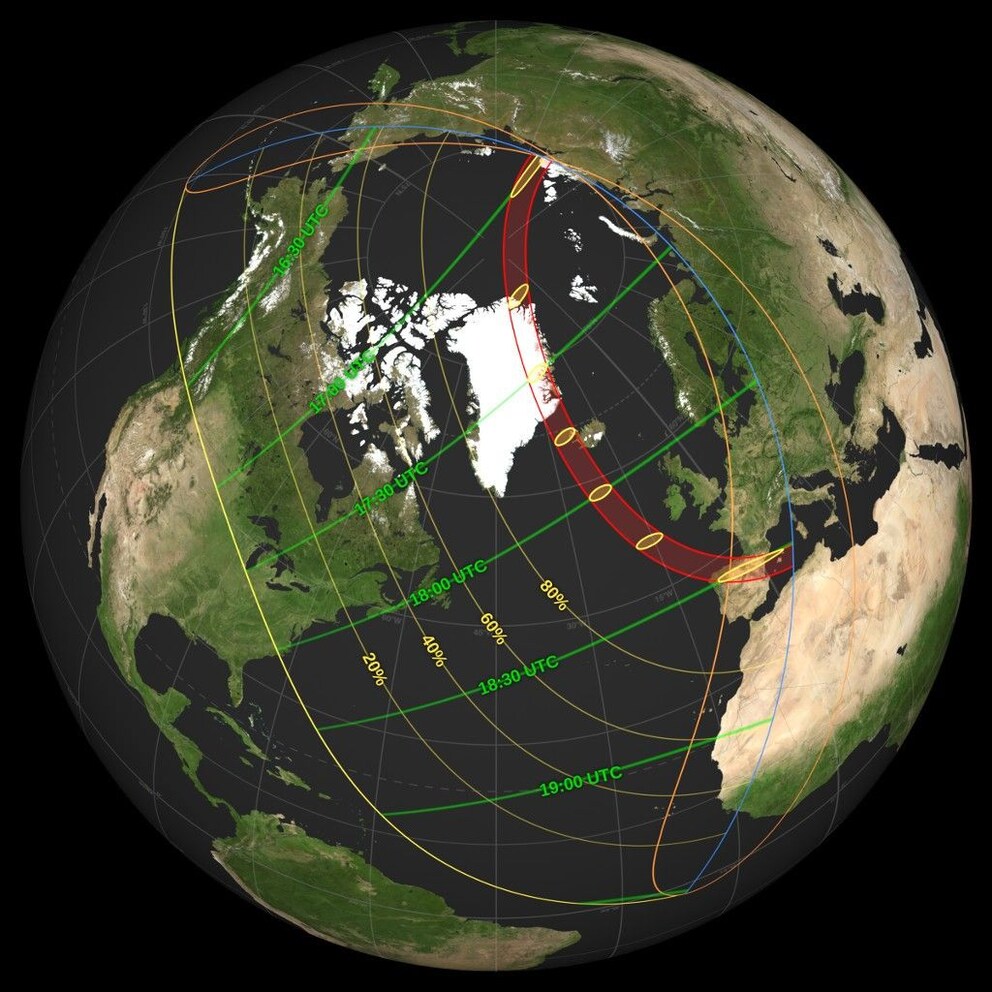
The path of totality—the course of the eclipse during which the sun is completely covered by the moon—begins on Wednesday at 5 p.m. local time in northern Russia. From there, it moves counterclockwise across the Arctic Circle over eastern Greenland. It then leaves the Arctic region and appears over Reykjavík at 5:48 p.m. At 6:26 p.m., it reaches the European mainland, passing through Spain (and a tiny corner of Portugal), the Balearic Islands, and the Mediterranean, ending just before Sardinia.
With good weather conditions, a partial solar eclipse with 90 to 99 percent coverage can be seen in Portugal, France, Ireland, the UK, and Switzerland. In parts of the Netherlands, Belgium, Luxembourg, Germany, Austria, Slovenia, Croatia, and Italy, coverage is around 90 percent.
The best view of the partial solar eclipse in Germany is from Freiburg, where coverage is 90 percent at 8:17 p.m. Munich and Stuttgart also have good views with 89 percent coverage. In Hamburg and Berlin, coverage is still nearly 85 percent at 8:08 p.m. The exact path and coverage in your city can be tracked on the time zone portal “timeanddate.”
How to Photograph a Total Lunar Eclipse with Your Smartphone
Get the perfect Perseids photo with these tricks
4 Tips from NASA for the Perfect Photo
Do Not Point the Camera Directly at the Sun
Like the human eye, the camera sensor in a smartphone can be damaged by direct sunlight. The risk is particularly high when using additional magnifying lenses.

NASA therefore recommends using a solar filter to protect the camera. This is a special ND filter (neutral density filter) with at least 16 stops. These are often sold as solar eclipse filters and darken the image to allow a photo to be taken directly of the sun.
Alternatively, solar eclipse glasses can also be used for the smartphone camera. These are intended to protect the human eye when looking directly at the sun but also serve as a filter substitute.
Remove Filters for the Solar Eclipse Photo
Once the sun is completely covered by the moon and only the corona remains visible, filters or solar eclipse glasses can be removed. During the brief moment of totality, there is no risk of damaging the smartphone camera.
Since the filter darkens the image, the corona may not be visible through it. So, if you want to capture the phenomenon perfectly, don’t forget to remove it beforehand.
Adjust Exposure and Focus
Virtually all smartphone cameras offer the ability to manually set focus and exposure. Especially with the unique opportunity to capture a photo of the solar eclipse, you should take advantage of this.
As the name suggests, a solar eclipse creates sudden darkness—and thus challenging lighting conditions for a camera. It is therefore important to adjust the exposure accordingly to make the sun’s corona visible. For distant objects, it is also likely that autofocus will not work as expected. Manually tapping to focus is therefore advisable.
Additionally, using a tripod to stabilize the camera is recommended to avoid blurry shots.
Don’t Just Look Up
The interplay of visible corona and moon shadow creates an almost eerie light that envelops the surroundings. Where light is filtered through the leaves of trees, “miniature eclipses” appear as shadows on the ground.
NASA also advises photographing not only the phenomenon itself but also the amazed people to capture the experience and the emotions associated with it.
Total Solar Eclipse in Germany Not Until 2081
The next total solar eclipse in Europe will be visible in southern Spain on August 2, 2027. For most other countries, including Germany, it is a once-in-a-century event that will not occur again until 2081.