


August 15, 2025, 11:16 am | Read time: 2 minutes
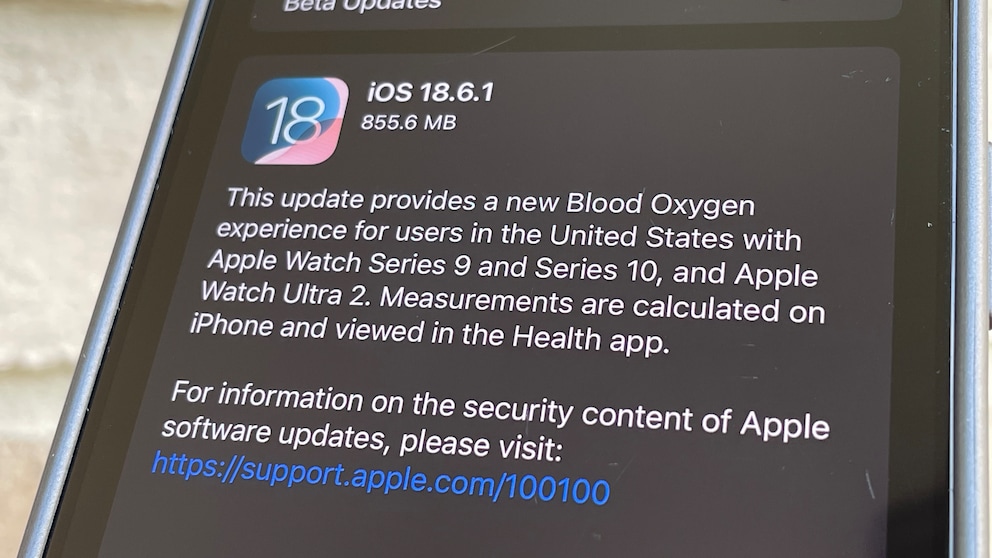
Apple has released the iPhone update to iOS 18.6.1. Along with watchOS 11.6, it includes important changes for users in the U.S. TECHBOOK explains whether the installation is worthwhile in other countries as well.
Blood Oxygen Measurement Returns to Apple Watch
In the U.S., Apple had to disable the blood oxygen saturation (SpO2) measurement in 2023 due to a patent dispute and even temporarily pull the Apple Watch Series 9 and Watch Ultra 2 from sale. The health technology company Masimo had filed a lawsuit, claiming its pulse oximetry patents were infringed. According to Apple, “a recent decision by the U.S. Customs Authority” allows the SpO2 measurement to return to the Apple Watch.
The company now circumvents Masimo’s technology by ensuring the processing of measurement data no longer occurs locally. The Apple Watch still measures the raw data, but the conversion to the SpO2 percentage display happens only in the Health app on the iPhone. After the measurement, the Watch therefore refers users to the iPhone to view the results. Countries outside the U.S. were and are not affected. Here, the processing of measurement data continues to occur locally on the Apple Watch itself. Users can read the results directly from the smartwatch without needing to open the Health app.
Is Installing iOS 18.6.1 Worth It?
iOS 18.6.1 does not include any new features or bug fixes. Issues such as the dimming of the home screen background after unlocking still occur for some users. This bug is already fixed in the beta version of iOS 26.
Although iOS 18.6.1 is listed on Apple’s support page for security updates, there are no entries for any patches. Instead of a link to the content, it simply states, “This update contains no published CVE entries.”
It is quite possible that iOS 18.6.1 includes bug fixes and security changes. However, since Apple apparently does not deem it necessary to specify them, they are likely not of great significance. TECHBOOK therefore considers the update not essential–at least for users outside the U.S.