

April 12, 2022, 5:00 am | Read time: 4 minutes
Smartphone manufacturers often include a SAR value in their product descriptions. This indicates the radio frequency power of a smartphone. Users can thus determine whether their phone’s radiation exposure is within the norm or possibly too high.
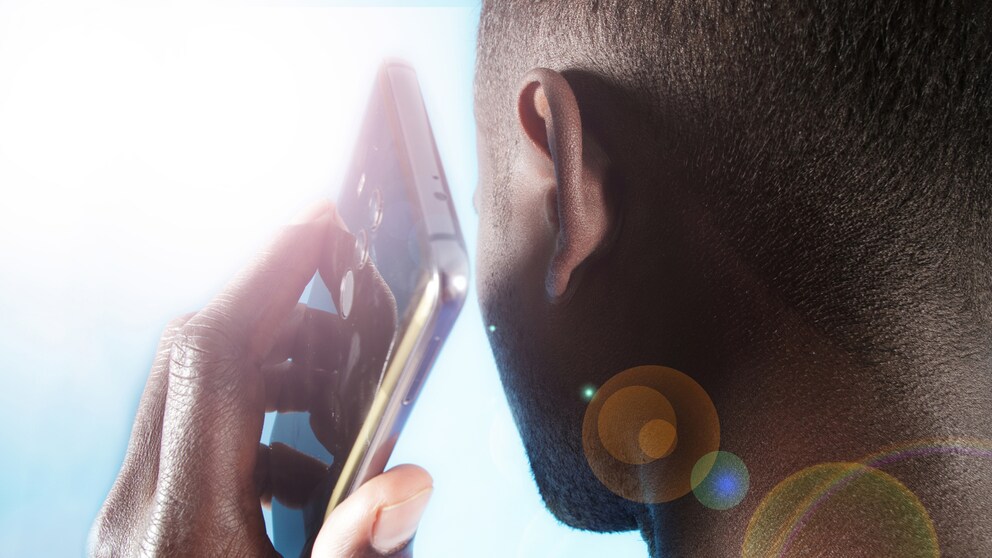
When sending data–such as during a phone call or sending a WhatsApp or Facebook Messenger message–radiation is inevitably generated. The electromagnetic field created during operation emits radio waves, which are absorbed by the body and converted into heat. The term SAR value, “Specific Absorption Rate,” indicates the amount of energy ultimately absorbed by the body. This is expressed in watts per kilogram (W/Kg).
What Your Smartphone’s SAR Value Tells You
The SAR value indicates not only the absorbed energy amount but also the device’s maximum transmission power. In daily use, the radiation value is usually below the specified maximum. However, in areas with poor network coverage and reception, the value is often higher because the device must emit stronger waves to reach a transmission tower.
Therefore, the SAR value emitted by a phone is never constant. Not only does network reception cause fluctuations, but also the number of transmission towers in the area and shielding by walls affect how strongly a phone must transmit. In principle, the more sources of interference there are, the stronger the emitted radiation. However, whether a device transmits more or less in the GSM, UMTS, or LTE network is not disclosed by the manufacturers.
The SAR value is now a prominent specification for smartphones. However, it is also measured in other devices that emit radiation, such as a Wi-Fi router or a microwave. An additional specification that is also of interest to concerned phone users is the radiation factor: This indicates the average radiation level, which is generally significantly lower than the absorption rate.
In principle, the value shows the power transferred to a ten-gram area of the human body in the worst-case scenario, when the device is very close to the head.
Health Risks from Cell Phone Radiation
For years, research has been investigating how harmful cell phone radiation is to health. However, there is no consensus on specific risks. Studies sometimes contradict each other. For example, an increased cancer risk is suspected but cannot be definitively confirmed. Additionally, the radiation is said to negatively affect sleep.
Frequent callers, in particular, should be cautious despite the not definitively proven effects, as they are exposed to most of the radiation near the head. Furthermore, the phone should not be placed directly next to or under the head at night.
Also interesting: Warning! These popular smartphones emit the most radiation

Current Smartphone Models That Emit the Most Radiation

Apple Announces Surprise Update for Older iPhone
How High Can the SAR Value Be?
The World Health Organization (WHO) has set a limit for cell phone radiation: At the head, and thus in the critical measurement zone, a maximum of 2 W/Kg is allowed. A European standard for uniform measurement and meaningful data was introduced as early as 2001. Since then, the measurement procedure has been the same for all devices.
In 2002, the “Blue Angel” environmental label for mobile phones was introduced, which awards phones with particularly low radiation. To receive the label, the following criteria must be met (as of 2017) according to the Federal Office for Radiation Protection:
- SAR value of a maximum of 0.5 W/Kg at the head during calls and a maximum of 1.0 W/Kg when carrying the mobile phone on the body
- basic duty of care in handling conflict minerals
- socially responsible device manufacturing
- sustainable, environmentally friendly, and recycling-friendly production
https://oembed/techbook/affiliate/7deef7f2a4ef6ef8f2faa6a3af3cd24037cc405061b6ec60ae1752efd2320775/b6e44ea0-940f-43c7-93ea-971f6546c765/embed
How the SAR Value Is Determined
To determine the SAR, the device is tested at maximum transmission power on a model of the human head. Inside the model is a liquid with electrical properties similar to brain tissue. Highly sensitive probes measure the field strength within the model, first identifying the area of maximum SAR value, and then determining the electrical field distribution in the volume area.
Similarly, the value is determined on the body by positioning the device in a typical carrying position on a model filled with electrolyte mass. As mentioned earlier, Europe measures on ten grams of tissue; in the U.S., for example, it is only one gram. This usually results in a slightly higher value in the U.S. measurement.
If you want to find out the SAR of your smartphone, you can find the relevant information either directly in the manufacturer’s product descriptions or at the Federal Office for Radiation Protection. The agency regularly publishes its investigation values in a comprehensive list.