


June 4, 2025, 11:39 am | Read time: 3 minutes
In March, the EU Commission identified nine core technologies that Apple must open to third-party providers. This is based on the Digital Markets Act (DMA), which sets specific interoperability requirements for so-called gatekeepers. Will the company withdraw features from Europe in response?
The EU Commission has identified Apple as a gatekeeper, capable of controlling the market and hindering competition due to its sheer size. As a result, the company had to allow the use of alternative app stores and free choice of browsers in Europe. However, Apple is now appealing the commission’s decision that it must open nine of its core technologies to third parties. The reason: to protect European customers from a poorer user experience.
European Customers Face “Poorer User Experience”
As reported by “Reuters,” Apple has filed an appeal against the EU order. In a statement obtained by “9To5Mac,” the company writes:
“These deeply flawed regulations, which target only Apple–and no other company–will severely limit our ability to deliver innovative products and features to Europe and lead to a poorer user experience for our European customers. We are appealing these decisions on their behalf to maintain the high quality our European customers expect.”
Back in March, I warned that the EU’s requirements for Apple go too far. In response to a TECHBOOK inquiry, the company had already indicated that these decisions would have negative consequences for European users. They “make the introduction of new products and technologies in Europe significantly more difficult.”

Editor on New EU requirements for Apple: “This Goes Too Far!”

Apple Removes Long-Standing Wi-Fi Feature with New Update
Could Apple Withdraw AirDrop from Europe?
It’s not new that Apple sometimes implements innovations outside the U.S. with delays. However, in recent months, the trend has been that it takes even longer. Notable examples from the recent past include Apple’s AI suite Intelligence, which only arrived in Germany with iOS 18.4 in April, and iPhone Mirroring, which is still unavailable nearly a year after its announcement.
Renowned Apple blogger John Gruber has now spoken out on his “Daring Fireball” blog, painting a grim picture for the future of the iPhone in Europe:
“If AirDrop were brand new, users in the EU wouldn’t get it, I suspect. And if this mandate holds, EU users could lose AirDrop.”
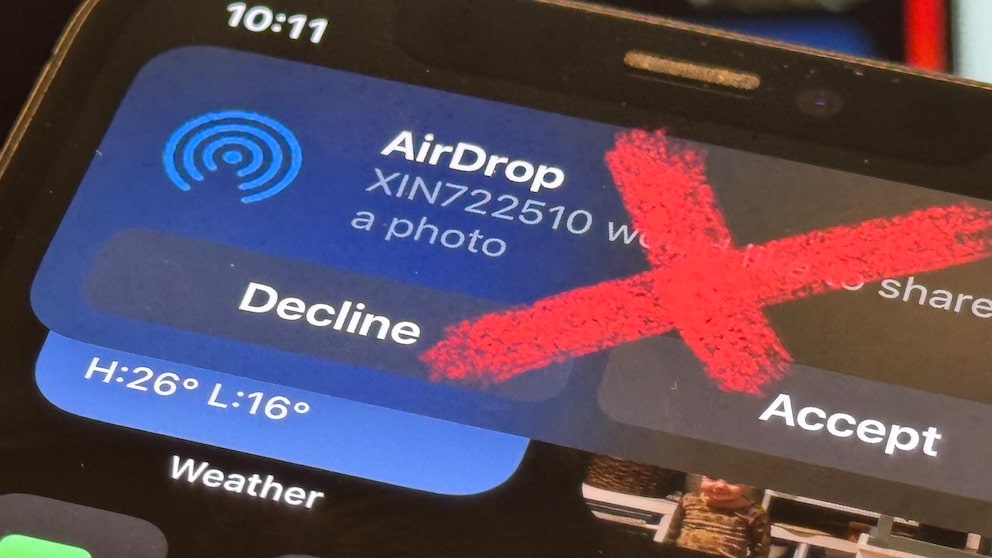
AirDrop is one of the nine connectivity features that Apple must open to third parties according to EU regulations. The commission requires the company to provide the underlying technology so other providers can use it for their own data transfer alternatives.
Currently, there are no signs that Apple might actually withdraw existing technologies from Europe. But from the vaguely worded press statement, it can be inferred that the company might not be able to “maintain the high quality” if the EU Commission prevails. Whether this means existing features could also disappear from the iPhone remains unclear.
Apple Is Particularly Affected by DMA Requirements
In fact, the iPhone manufacturer is currently the only company forced by the EU to open its core technologies to third parties. These are technologies that are Apple’s intellectual property (IP). Some of them–such as AirDrop, AirPlay, screen mirroring, and automatic audio handoff–are industry-leading.
The company also warns that opening the systems could potentially give third parties access to more data than Apple itself. For example, notifications in iOS are displayed on-device–the text is encrypted and does not leave the device. If third parties are to gain access, the text must run unencrypted through another company’s servers.