

March 21, 2026, 3:48 pm | Read time: 3 minutes
A classic lithium-ion battery doesn’t last forever. After many charge cycles, its performance noticeably declines. But that’s not its only drawback: The electrolytes are flammable, and the required raw materials are sometimes expensive and only available in limited quantities. Additionally, there’s a risk of the battery overheating significantly, which can cause fires in extreme cases. A possible alternative is a new system nicknamed the “tofu battery,” which Chinese researchers are currently working on. TECHBOOK explains what’s behind it.
Why “Tofu” Battery?
The novel battery system is the work of scientists from the City University of Hong Kong and the Southern University of Science and Technology. They published details in a scientific paper in the journal “Nature Communications.”
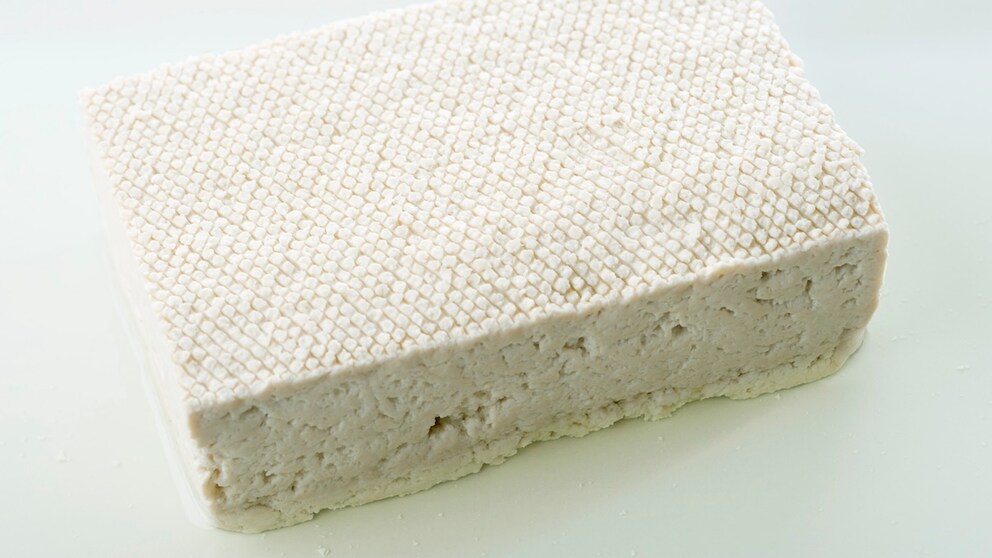
The so-called tofu battery is based on water and uses a neutral electrolyte, unlike conventional lithium-ion batteries that rely on organic solvents. This explains the colloquial name. No, there’s no actual tofu in the battery. But the solution contains magnesium and calcium salts, which are indeed used in the food industry for tofu production.
Why the Electrolyte Is So Important
The chemical composition of the electrolyte is crucial for the concept. The researchers use an aqueous solution with a neutral pH of about 7, which offers a significant advantage. In many conventional batteries, the electrolytes are highly acidic or alkaline, leading to unwanted chemical side reactions that attack the materials and increase internal resistance. This results in long-term performance losses. A neutral electrolyte significantly reduces these processes. At the same time, the battery is more environmentally friendly and easier to dispose of.
For the negative electrode, the researchers developed a special material made from covalent organic polymers. This structure allows the divalent magnesium and calcium ions to be particularly quick to insert and remove from the material. This process works over hundreds of thousands of charge cycles without the electrode suffering significant damage. Combined with a suitable positive electrode, a complete battery cell is formed. This achieves a voltage of around 2.2 volts and an energy density of about 48 watt-hours per kilogram.

What to Consider When Choosing EV Batteries

Almost everyone does it! This error destroys your laptop battery
Lab Results: Tofu Battery Endures 120,000 Charge Cycles
In the lab, the scientists tested the cycle stability of the tofu battery, meaning how long it can reliably store power. They subjected the system to more than 120,000 charge and discharge cycles. For comparison, many conventional lithium-ion batteries lose significant capacity after just a few hundred to a few thousand charge cycles. In contrast, the tofu battery showed hardly any performance loss. If you were to charge and discharge the battery once a day, 120,000 cycles would theoretically equate to an operational lifespan of more than 300 years–at least based on lab tests.
From Lab Prototype to Smartphone?
Theoretically is the keyword. In other words, it’s still uncertain if and when the tofu battery can actually be produced industrially. As the researchers emphasize, it must first be determined whether the system can be manufactured on a large scale.
However, it seems clear that even if the tofu battery eventually hits the market, it won’t end up in smartphones or laptops. Even though many users might wish for a battery that lasts for centuries in those devices. The researchers see its greatest potential in stationary energy storage, such as for power from wind or solar plants. There, a particularly long lifespan could be a decisive advantage. Such storage systems often need to operate reliably for decades. If batteries need to be replaced less frequently, costs and resource consumption decrease.