

November 16, 2025, 8:37 am | Read time: 4 minutes
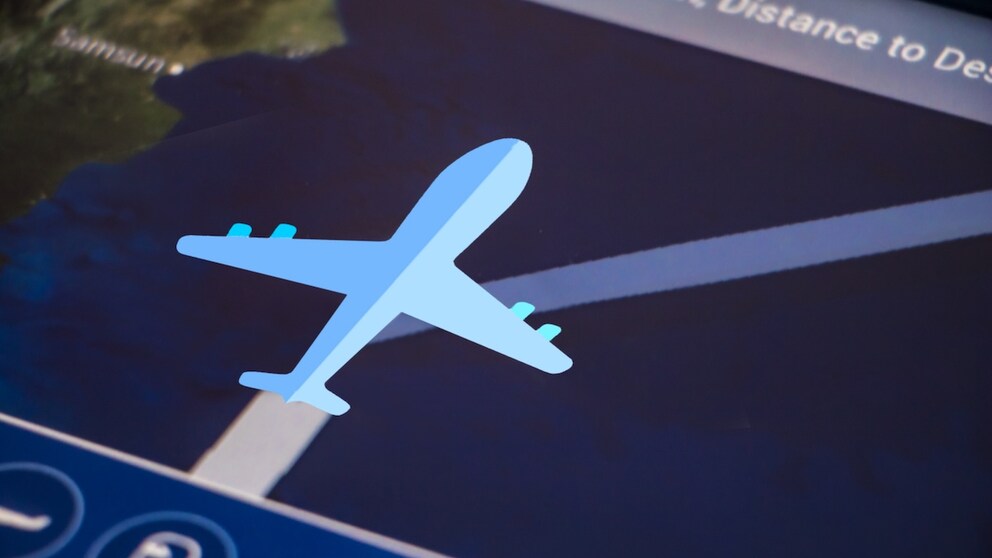
Many of us use them to track in real time where a plane is currently located–for instance, when family, friends, or partners are traveling. Flight trackers (also known as flight radars) can also provide information about potential irregularities before your own trip. But how exactly do these interactive maps work? TECHBOOK asked an expert.
Flightradar24, FlightAware, RadarBox–there are now numerous so-called flight trackers. Their core business model involves collecting relevant flight data and providing it to airlines. Aviation expert Heinrich Großbongardt explains this in a conversation with TECHBOOK.
Airlines primarily use this information for statistical purposes and to monitor their own aircraft. However, the interactive maps are now also accessible to private users, either browser-based or as apps for smartphones or tablets. They show in real time where planes are and their destinations. Additionally, they provide details on speed, altitude, or aircraft type. Conversely, the apps can also be used to identify planes spotted in the sky. The functionality is based on providers merging data from various sources and automatically evaluating it.
Expert Explains How Flight Trackers Work
According to the expert, ADS-B (Automatic Dependent Surveillance–Broadcast) forms the basis of all flight trackers. All modern commercial aircraft are equipped with this system. “An aircraft sends a packet of information about itself every second,” explains Heinrich Großbongardt.
The data includes the aircraft type, registration, and flight number, as well as details about the flight path, such as exact position, altitude, horizontal and vertical speed, and flight direction. This is primarily intended to keep air traffic controllers informed. With this direct information, they get a much more accurate picture of the traffic situation than would be possible with radar. But access is not limited to them.
According to Großbongardt, “Broadcast” in ADS-B means that the data is transmitted indiscriminately, without a fixed direction or target. “Therefore, anyone with a suitable receiver within radio range can receive it.” Since the radio signals from aircraft are limited by the curvature of the Earth, their direct range to ground stations at cruising altitude is about 350 to 370 kilometers.
Read also: How to Activate the Secret Flight Trick on iPhone
Satellite-Based ADS-B Receivers in Areas Without Ground Stations
Worldwide, companies like Flightradar24 or FlightAware operate large networks of ADS-B receiving stations. Part of this infrastructure comes from volunteers who privately operate small antennas and feed their data. This creates a dense, global network that captures millions of flight data in real time.
Over the ocean and generally in remote regions where there are no ground stations, other technologies are used: Here, satellites from the Iridium network come into play as relay stations, explains the aviation expert. These satellites receive signals from all aircraft within a radius of about 4,000 kilometers. The data is automatically forwarded to a ground station and from there distributed to air traffic control, airlines, and flight tracker providers.

Bluetooth Name Causes Airplane Emergency
Flying Taxi Aims to Drastically Reduce Travel Time in New York
How the Apps Are Used
Users who also want information about flight routes and the like only need to enter the flight or tail number of the aircraft. It’s even easier if they are interested in a plane in the sky. In this case, they simply need to point the smartphone with the installed flight tracker app at the relevant spot. The app matches the positions of all registered aircraft with the exact location. Often, augmented reality (AR) functions are also used: The real environment of the camera is displayed on the screen and supplemented with digital information such as flight number, altitude, or speed.
Also interesting: What is GPS and How Does It Work?
Important Purposes of Flight Tracker Apps
Flight trackers or flight radars also serve significant safety functions. According to Heinrich Großbongardt, thanks to them, it is nearly impossible for an aircraft to disappear without a trace.
A well-known example is the case of MH370 (more on this from our colleagues at TRAVELBOOK). “Even in crashes over the sea or in remote regions, the last known position of an aircraft can be determined to within a few kilometers,” the expert explains. Additionally, the system facilitates accident analysis: Even before the flight data recorder is evaluated, ADS-B data provides initial clues about the sequence of events.