


November 21, 2023, 9:52 am | Read time: 5 minutes
The “grandchild scam” is a widespread fraud scheme that police have been warning about in large-scale campaigns for some time. Recently, there have been more cases again. Even editors from the TECHBOOK team have received such messages.
Originally, scammers using the so-called “grandchild scam” limited themselves to phone calls. But now they also use SMS and WhatsApp for the scheme. For this reason, the state police inspection (LPI) Jena has launched an information campaign to warn about the scam via WhatsApp. Other agencies also warn about the scheme, which often appears in slightly altered forms. TECHBOOK provides an overview and reports firsthand cases.
Overview
How the Grandchild Scam Works on WhatsApp
The classic grandchild scam has been around for years. Scammers look in the phone book for first names that suggest an older person, such as a retiree. Then they call these people, pose as a grandson or granddaughter, and ask for money. Often, a crisis situation is faked, and psychological pressure is applied to the seniors.
On WhatsApp, a variation of this scam is used, which is sometimes even harder to detect. It targets not only grandparents but also the younger generation—parents. Potential victims receive a message that begins like this: “Hello Mom, I have a new number…”. This is reported by the police in NRW. The seemingly harmless message always ends with a request for a money transfer.
Currently, More Cases Are Occurring
Even though the scheme has been circulating for some time and warnings have been issued repeatedly, cases seem to be increasing again. TECHBOOK has several cases on record. The conversation history shows how well the scammers can react to emerging situations.
Initiation via SMS
Several TECHBOOK editors recently received suspicious messages, in this case via SMS. An unknown number contacts them, suggesting a direct relationship with the greeting “Hello Mom” and wants to move the conversation to WhatsApp.
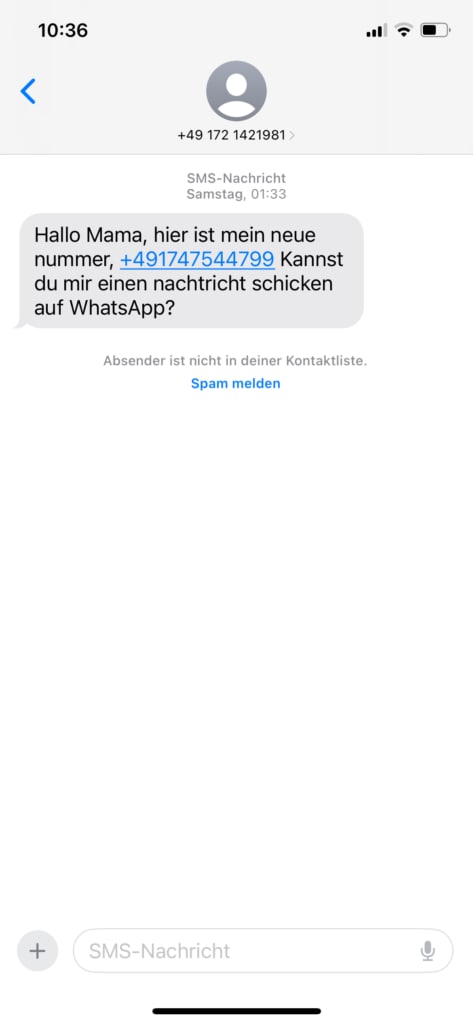
The messages led to some amusement in the TECHBOOK editorial team because, for one, a male editor received the same message. Additionally, the scam is easy to identify if you don’t have children.
Despite the amusement, it’s important to note that this type of scheme is considered easy to see through. However, it can be much more complicated. Scammers send out many such messages, some of which are more specific, like “Hello Mom, it’s your eldest” or similar. If they catch someone who actually has children who might contact them in a similar way, it becomes tricky.
Chat History Shows Grandchild Scam on WhatsApp
Current statistics suggest that this is a real problem, showing an increase in fraud cases via WhatsApp and estimating the damage in the millions.
TECHBOOK has another case on record where a real conversation with the scammers took place over WhatsApp.
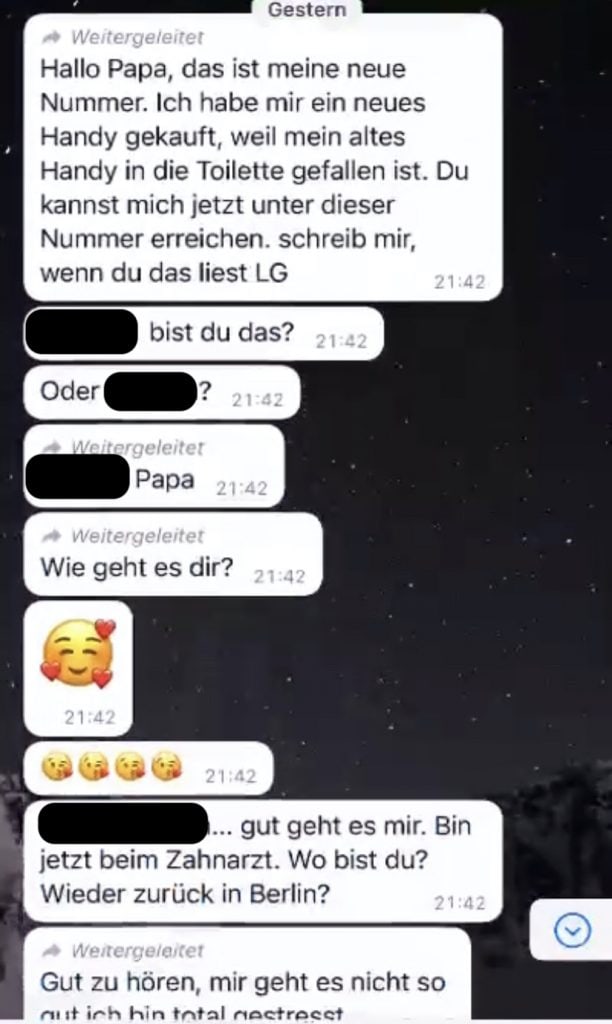
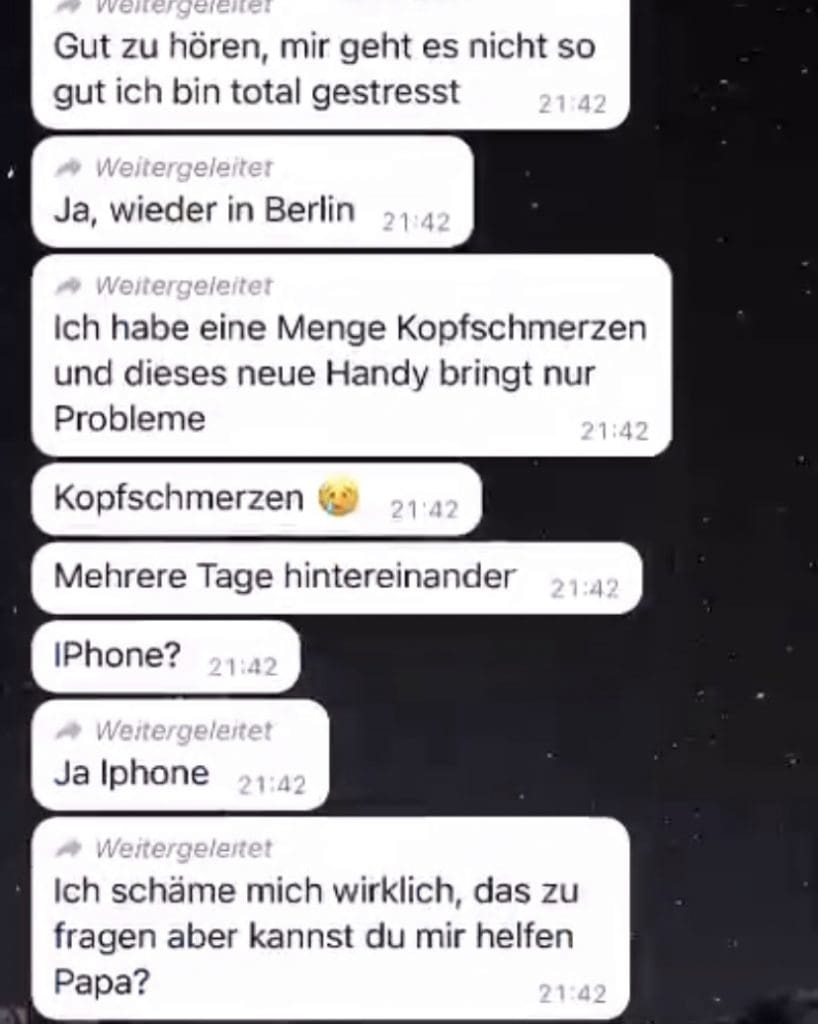
According to the scammer, they are writing from a new number because the phone fell into the toilet, a completely realistic scenario. A normal conversation unfolds, with the scammer responding to the victim’s questions, so no suspicion arises at first.
The request for money comes only after several messages and stems from the phone loss. Allegedly, some bills need to be paid, which is not possible due to lost data. The psychological pressure is expressed in messages like “I’m really ashamed to ask this…”. Typical are also escalations like “I really need your help” or “I don’t know who else to turn to”.

Beware of This Sweepstakes! The Latest WhatsApp Scams

How to Identify Scam Text Messages
WhatsApp Status to Protect Against Grandchild Scam
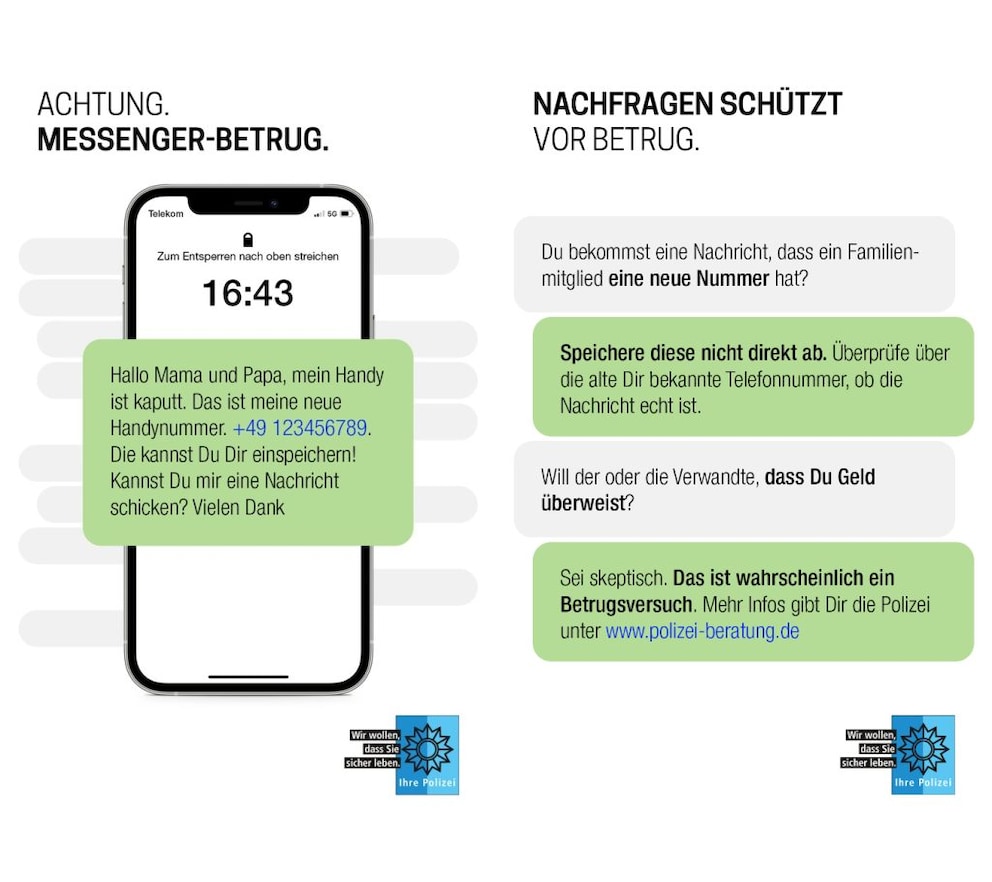
The police take the problem very seriously, as shown by a press release from LPI Jena. It provides image material to sensitize WhatsApp users to the grandchild scam. The agency aims to focus on prevention and urges users: “Please upload the attached templates to your status and make an important contribution to informing and warning your contacts about messenger fraud offenses.” The goal is to leverage “multiplier effects” by having younger people warn their older relatives and acquaintances about the scam.
The Best Protection Against the Scheme
In addition to the warning, the material also explains how to proceed in this case. First, users should not save the number but check via the already known number if it is still in use. Those without children can block the number directly.
Incidentally, WhatsApp also has a built-in feature that shows when one of your contacts changes their number. This can also help identify a fraud attempt.

If users are asked to transfer money, the police advise visiting the site “www.polizei-beratung.de” for more information.