

May 14, 2026, 1:13 pm | Read time: 3 minutes
When people find themselves in an emergency, it is often difficult to describe their exact location. This can happen during a walk in the woods, a car breakdown on a remote road, or an argument in a parking lot. In such moments, clear landmarks are often missing.
This is where a new approach by the police comes in. In a nationwide pilot project, emergency calls to 110 are set to be more precisely located in the future. The goal is to get emergency responders to the right place faster by using additional location data.
Few Changes to the Emergency Call Itself
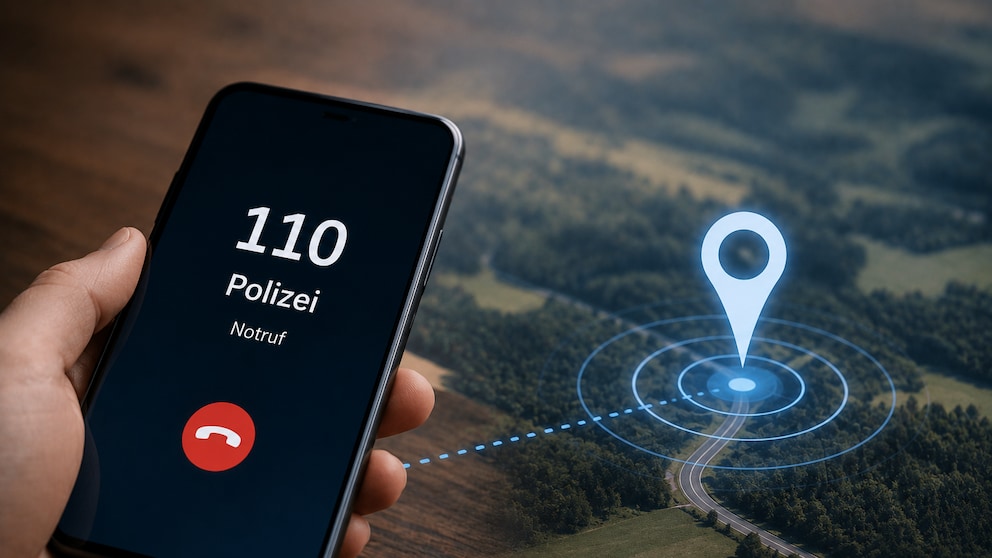
For callers, the process remains unchanged. Those in need of help still dial 110 and describe the situation. The crucial difference happens in the background. During the pilot phase, dispatch centers can access location data that compatible smartphones automatically transmit. Users do not need to launch an app or actively share their location. The technology operates independently at the moment of the emergency call and is intended to facilitate location tracking.
The basis for this is the so-called Advanced Mobile Location, or AML. This feature is available on Android devices from version 4.0 and on iPhones from iOS 13.3. When an emergency call is made, the device determines the location and sends it to a central storage location. Dispatch centers can use this information when there is a specific threat to life, health, or freedom, or when the data is necessary for pursuing a criminal offense.
Also of interest: Millions of Devices Threatened! New Trojan Monitors the Phone
No Permanent Surveillance
It is important to note that there is no permanent tracking. The function is activated solely in the context of an emergency call. There is no access to data in advance. According to North Rhine-Westphalia Police, the transmitted data is also stored for only 60 minutes and then automatically deleted. Movement profiles are not created. Thus, the use is limited to acute emergencies.
The pilot project aims to demonstrate how reliably the technology functions in everyday life. AML has been in nationwide use for the Europe-wide emergency number 112 since October 2019. Implementing it for 110 is more challenging. Since policing in Germany is a matter for the federal states, each must establish its own legal framework and integrate the technology into their dispatch centers. When the more precise location transmission will be available everywhere is currently unclear.