


June 13, 2026, 7:06 pm | Read time: 6 minutes
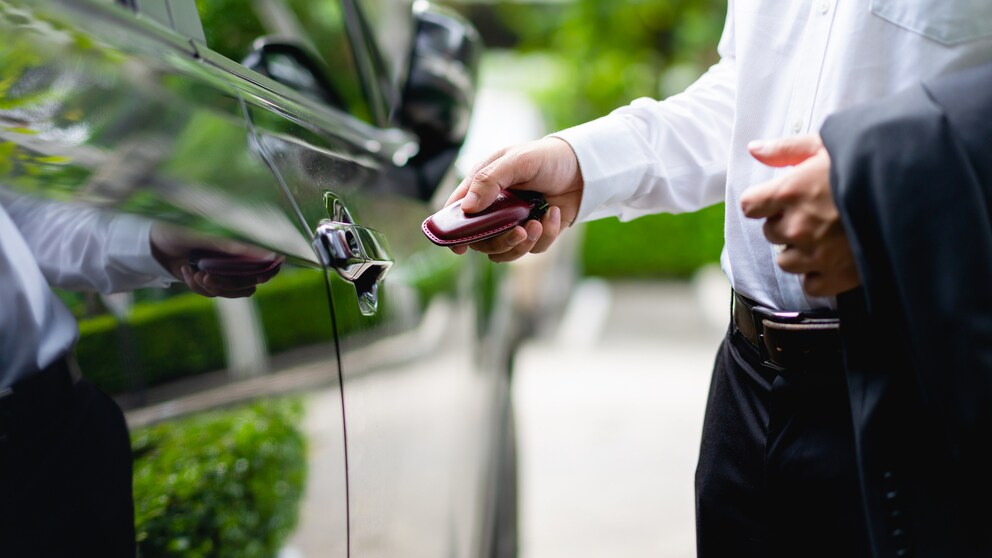
A key that automatically unlocks the car? While it sounds extremely convenient, it poses a serious security risk. And this is despite Keyless Go increasingly becoming the standard in newer cars. TECHBOOK took a closer look at the issue.
Many modern cars and motorcycles now have a Keyless Go key, also simply called Keyless or Keyless Entry. To open the vehicle, you just need to carry the remote on your person. The hassle of rummaging through your pocket or even pressing a button is a thing of the past. However, the convenience key has a major security flaw: car thieves can easily exploit the radio signals to unlock the vehicle. TECHBOOK reveals how you can effectively protect yourself and your vehicle.
Overview
ADAC: Only 44 out of 616 Cars Secure
Car manufacturers tirelessly promote Keyless Go as a convenience feature. And they are fundamentally correct, as it eliminates the need to open and start the car with a key. Instead, carrying the transmitter with the built-in radio chip is enough for the car to open as if by “magic.” However, experts also see a high security risk in this radio technology.
Thieves can relatively easily intercept the radio connections and open vehicles effortlessly, even if the key is 50 or even 100 meters away. Since cars with the Keyless function can be started with just a push of a button, they don’t even need to be hotwired in the traditional sense. Even if the thieves drive the stolen vehicle out of the key’s range, the cars continue to run as long as the engine isn’t turned off.
These types of thefts have been occurring for years, as have warnings from the ADAC. Besides the actual theft, the Keyless system presents another pitfall: If the police recover the stolen car, it usually shows no signs of a break-in. This could lead to issues with insurance, potentially even accusations of insurance fraud. The ADAC conducted a self-test to determine which vehicle models with Keyless systems could be illegally opened and driven away. Only 44 of the 616 cars tested were “better protected.” Since 2016, the ADAC has been continuously updating its list of tested vehicles.
Why You Should Hold Your Car Key to Your Head

ADAC warns of current car trend
How Easily Foreign Cars Can Be Hacked
For Keyless Go to work, the vehicle is assigned an individual radio key stored on the Keyless Go key. As soon as the driver approaches with the key, the car recognizes the radio code and unlocks automatically. To open the car, you just need to press the door handle. The colleagues at AUTO BILD recreated the technology for about 90 euros, which scammers now use to easily trick this system. A so-called radio range extender ensures that the key’s signals are extended. This way, the radio signals reach the car, even though the key–and with it the car owner–is relatively far away. The chip in the remote control grants permission to open, and the thief or AUTO BILD colleagues are already sitting in the foreign car.

Based on its tests and observations, the ADAC has seen a major problem with Keyless Go radio technology for years. Thieves only need to be near a car equipped with Keyless Go with a small, easily concealable device to intercept and manipulate the radio signals. With the help of a second device, the range of the hacking tools can even be extended to hundreds of meters.
As shown in the video, parking lots are a popular place for car thieves to find their next target. The tricky part of the method is that even if you’re not on the go and the key is inside the house, it’s not automatically protected. Many people keep their car keys near the front door or windows. However, these do not block the radio waves, allowing thieves to literally steal the car from under the window.
What Helps Against Keyless Go Theft
Some car manufacturers are already using Ultra-Wide-Band technology (UWB), where the car recognizes the distance between itself and the key. If it’s too high, the car doesn’t unlock and no longer responds. Although more and more car models are equipped with UWB, ADAC’s test numbers show that you should still actively pay attention to the security features when buying a new car.
But what can you do if your vehicle has Keyless Go but not yet UWB? The basic principle is always the same: If you want to prevent thieves from manipulating the radio signals, you must contain them as much as possible. This works best by storing or packaging the key in such a way that its radio signals do not escape. Unfortunately, not every theoretically effective method is practical in everyday life.
How to Protect Yourself on the Go:
- Keyless Go should be deactivated if the convenience isn’t worth the risk. The vehicle’s manual should reveal whether and how this is possible.
- Aluminum foil. No, this isn’t a bad tinfoil hat joke. Wrapping your key isolates it from the outside world. This trick is probably the most feasible in everyday life, but the key must be completely wrapped in aluminum. You can easily check if the radiation is effectively blocked by approaching the car with the key. Ideally, the car doesn’t respond.
- There are now various bags and protective covers that take over the task of aluminum foil. However, you should thoroughly research whether they really shield the radio signals comprehensively.
How to Protect Yourself at Home:
- The radio key should be kept away from windows, exterior walls, and front doors.
- The car should be parked in a locked garage.
- A refrigerator is not only well insulated climatically, but radio waves from outside also have a hard time getting inside. However, this doesn’t apply to all refrigerators, especially those with glass doors are permeable to radio signals. Therefore, this solution is not really practical. Additionally, cold and moisture can damage the key’s batteries over time.
- A metal tin or a closed pot has the same shielding effect as a refrigerator. The same goes for the microwave, but it should never be turned on while the car key is inside.