

June 6, 2025, 5:59 am | Read time: 8 minutes
For many, one thing is indispensable for a good video game: a captivating story. Titles that prioritize this are often called story games. But what defines them, and which story games are truly worth playing?
The days when video games weren’t taken seriously as a narrative medium are long gone. There are simply too many good and successful games that excel primarily through their plot and storytelling. The TECHBOOK editorial team presents their personal highlights in the realm of story games.
How Do You Define Story Games?
Providing a universally accepted definition for the genre of story games is not easy. Broadly speaking, it includes games that focus on their narrative and storytelling. However, since much of this is subjective, it is more of an unofficial genre. The term story games has become established for many. So, what exactly characterizes these titles in detail?
Primarily, these are games that define their progress through advancement in the main story. In academic terms, this is referred to as the “criterion of success.” This allows story games to be mixed with many other genres. Popular examples include open-world or RPG story games.
Games that are fundamentally story games often feature a high degree of linearity. Typically, they also have well-developed characters and well-orchestrated storytelling. At many major video game award ceremonies, it is now common to have at least one story category–a testament to the significant weight given to this area.
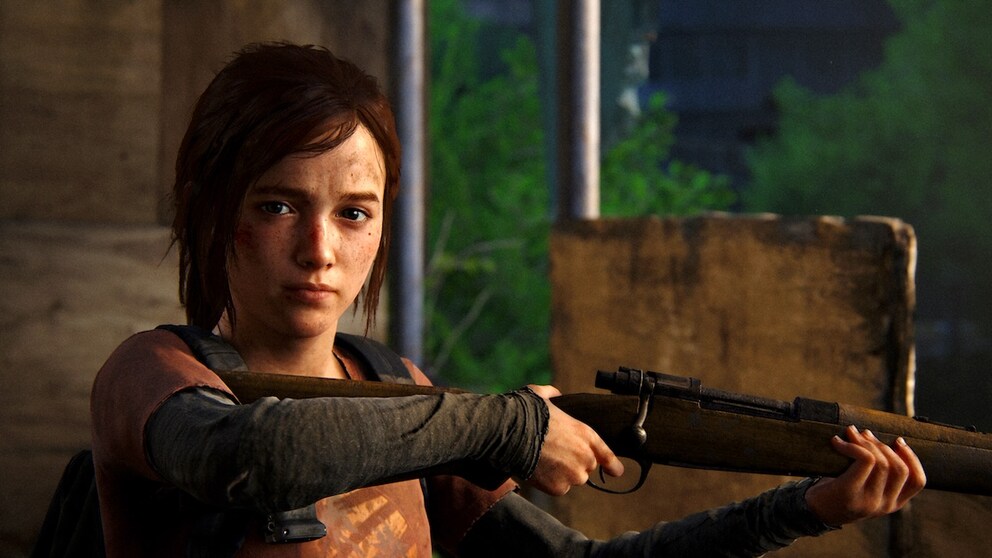
The Last of Us (Part 1)

For many, the first part of “The Last of Us” epitomizes a good story game. It’s no wonder that the successful network HBO turned the video game into a blockbuster series. The plot, the core of the title, almost seems clichéd on paper.
The game, released in 2013 by Naughty Dog, is set in a post-apocalyptic future. A large portion of humanity has been wiped out by a fungus or turned into zombie-like creatures. However, these are not the only threat in the military-controlled society, where people mainly live in quarantine zones. Internal conflicts, a harsh totalitarian regime, and rebellious groups make survival a real struggle.
Amidst this turmoil, the smuggler Joel is tasked with escorting the teenager Ellie across North America. The young girl seems to be immune to the fungal mutation after being bitten by a mutant. Could she possibly be the key to a widespread cure?
During the journey, Joel and Ellie grow closer, each grappling with their own traumas. “The Last of Us” masterfully stages this journey and emotionally engages its players. As mentioned, it sounds clichéd but is somehow not in its execution. The well-placed shifts in perspective further accentuate the story of this story game. The title also provides a perfect example of how video games can function excellently as a narrative medium.
What Remains of Edith Finch
The great thing about story games is that best-of lists often include smaller titles from indie studios. It doesn’t take a massive budget to tell good stories. A prime example of this is the 2017 game “What Remains of Edith Finch” by Giant Sparrow.
The titular character Edith returns to her family’s estate after years, following the deaths of all other family members. As Edith, the player explores the house, a secluded, mysterious mansion. While there’s little room for free exploration, the level design through the individual rooms of the house is meticulously orchestrated. This allows the storytelling to fully unfold its impact.
Each room not only features a unique, lovingly crafted design but also reveals, in various ways, how the respective resident met their end. This creates a range of scenarios, some realistic, others more like dream sequences. This leaves plenty of room for interpretation about how the family members actually died.
There’s a whimsical passage in the room of 10-year-old Molly or a small investigation in the basement bunker of her 53-year-old brother Walter. Barbara’s comic scenes are as unforgettable as Milton’s painted world. The theory that the Finches are cursed is always present. In the end, a diverse creative adventure emerges, where every detail of the game is oriented toward the story.
Dragon Quest 11: Echoes of an Elusive Age
“Dragon Quest” is one of the major JRPG series of recent decades. JRPG stands for “Japanese Role-Playing Game,” role-playing games from Japan. In this case, the game comes from Square Enix, the studio also behind franchises like “Final Fantasy” and “Kingdom Hearts.”
The eleventh main installment of the series, titled “Echoes of an Elusive Age,” was released in 2017. Players experience a classic hero’s journey, especially in the first part of the game. The protagonist discovers that he is the reincarnated Luminary and must save the World Tree Yggdrasil from evil as part of his destiny. The motif of the World Tree is central to nearly every part of the series. And not only that: he is, of course, also the lost son of a fallen kingdom!
It’s just unfortunate that no one seems to recognize this. Instead, he is accused of being the Darkspawn and must flee. Along the way, he gathers a small group of interesting characters to accompany him on his journey to the World Tree. And then–what makes the title one of the best story games in our view–everything suddenly changes. Not only does the story itself contain some nasty twists, but the endgame is also one of the most extensive and varied ever.
Pentiment
Few games offer such an intriguing mix on paper as “Pentiment.” The game by Obsidian Entertainment is a 2D adventure that comes in the style of medieval illustrations. This fits perfectly with the content, as the story is set in 16th-century Bavaria.
Players take on the role of aspiring artist Andreas Maler, who is working on his masterpiece in the monastery of the quaint town of Tassing. He becomes embroiled in intrigues within the monastery walls and is tasked with investigating two murders. The game is divided into three acts. In the third, players control the young printer Magdalene. Years after the previous events, she begins to unravel the town’s history and its secrets.
What makes “Pentiment” one of the best story games is the combination of unusual graphics and truly surprising storytelling. Both Andreas and Magdalene can significantly influence events with their decisions. This is particularly noteworthy because everything is interconnected, spanning game acts and narrated decades.
The 5 Best Open-World Games for Extensive Exploration

The 5 Best Open-World Games for Extensive Exploration
Baldur’s Gate 3
Larian Studios caused a stir with the 2023 release of “Baldur’s Gate 3.” This affected both the role-playing sector and the realm of story games. Like its predecessors, the game is based on the pen-and-paper game “Dungeons & Dragons.” And the core of such games is, of course, their stories–as is the case with this title.
The story is once again set in the game world of Faerûn, on the Sword Coast. The player starts as a prisoner of the mind flayers, dark creatures with plenty of tentacles. They have implanted parasites in the protagonist’s head, as well as in the other prisoners on board. These grant special powers but also seem to be ticking time bombs, eventually turning their hosts into mind flayers.
Also interesting: The Most Valuable Video Games in the World
The journey begins with the understandable desire to remove the parasites. In typical role-playing fashion, the player can recruit additional characters: the mysterious Astarion, the wizard Gale, the bloodthirsty Lae’zel, the warrior Karlach, the half-elf Shadowheart, and the warlock Wyll. What sets “Baldur’s Gate 3” apart is the incredible range of decision-making options available to players, with outcomes determined by chance. As in “Dungeons & Dragons,” many situations involve dice rolls. The result determines whether, for example, a persuasion attempt succeeds, with players having the opportunity to level up skills and improve certain rolls.
This results in a wide range of possible player experiences within the main storyline. The strength of “Baldur’s Gate 3” is that everything still comes together in a coherent way. Along the way, countless great stories emerge. Even the smallest side quest can become a real adventure. The promise that the next imaginative story could be waiting around every corner makes the title one of the most versatile and best story games ever.
It’s All About the Story
So many video games are worth playing primarily because of their stories. This article could have listed many more titles: “Horizon: Zero Dawn,” “God of War,” “Bioshock,” “Plague Tale: Innocence,” “Life Is Strange,” “It Takes Two,” or even “Clair Obscur: Expedition 33.” Especially with this unofficial genre, much is in the eye of the beholder.
What makes a good story, and what defines it? Which stories do you remember even years later? And which games do you play repeatedly–or perhaps consciously only once?